Seasons in a Riverside City

A windy day walk on my own, humming softly under my breath. The gusts blow my voice away and make it sound like it is coming from somewhere else, mixing with the percussion of the pampas grass which hisses like wire brushes on a drum. The clouds layered over the sun give the river a dull chrome sheen. Suddenly the sound of the opening song from The Lion King blasts across the water’s surface from the direction of the Triana bridge. “The Circle of Life”, except it’s in Spanish. As the sound grows stronger I see that it is coming from a little sail boat with a Jolly Roger flag flapping at the top of the mast, and a man in full pirate get-up at the rudder. “There’s a pirate ship!” some tourist yells behind me. Yes, obviously. But I find myself enjoying the familiar sound of English above the usual staccato chatter of Spanish background noise. “El ciclo sin fin” fades out of earshot and the pampas grass swishes in my ears again, along with the soft company of a quiet little song I hum into the breeze.

*

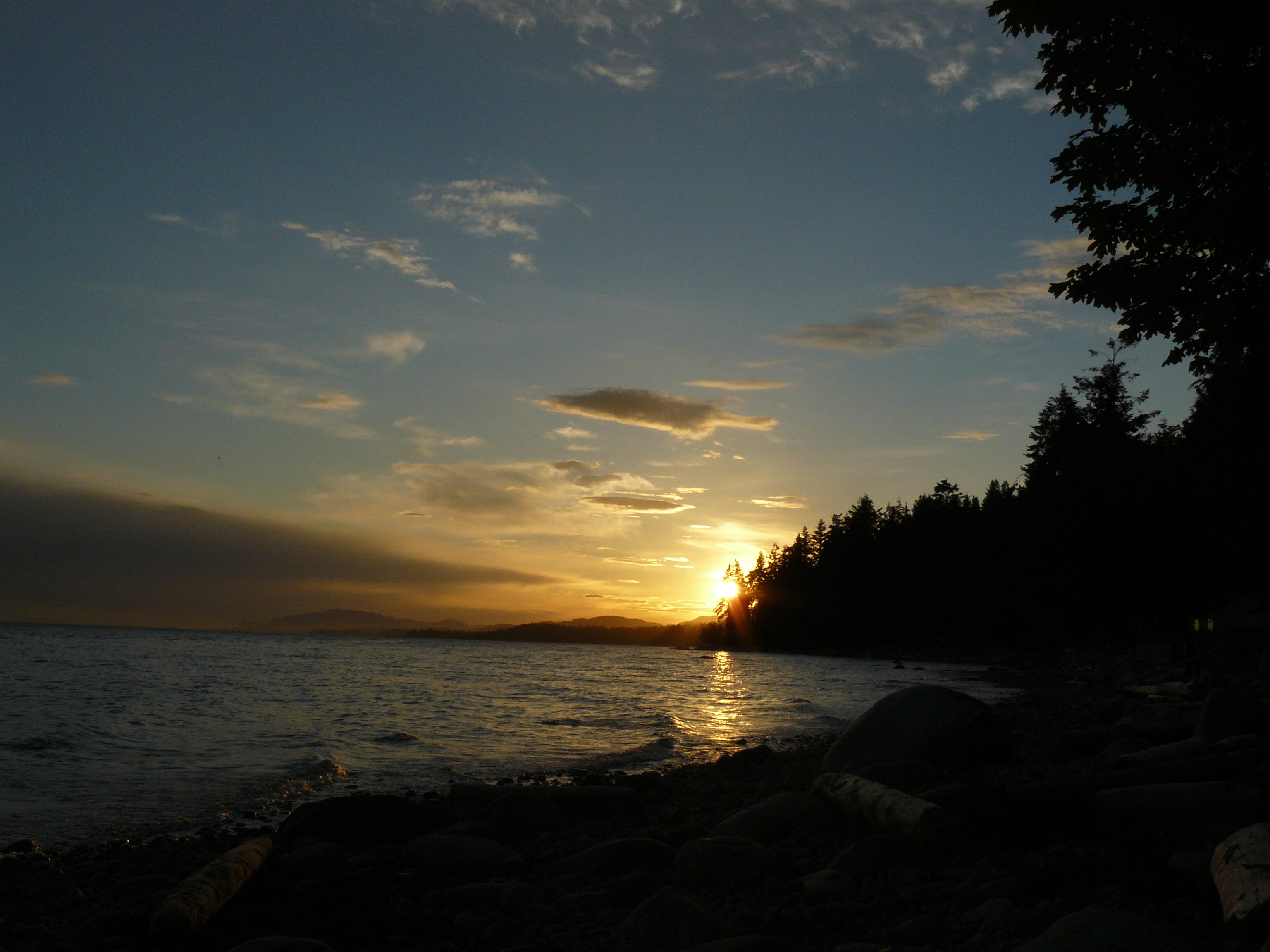
A spiderweb glistens in the sun and looks like diamonds strung on a fishing line. The sun sinking beyond the hills looks like a drop of burning red paint, spilled over the canvas and leaking out over the entire sky. We humans try to capture life in art and then use art to describe life, both in the attempt to express that immense Something that we feel. But both are really an attempt at the impossible, trying to bottle the immense beauty of the earth in a jar and make it manageable. Something inside my chest expands like a boiling pot, surging up through the throat with a force too big to ignore. Which is why I am running after the twilight sky with a butterfly net.

*

The boardwalk beside the river, which people stroll, cycle and jog along in droves during the morning and evening, is deserted. The midday air buzzes with stillness and it is the first time in weeks that I have been outdoors and not surrounded by people. I feel as though I am walking on another planet, and am wildly aware of every sensation. My hands and feet pulse with relentless pressure, and I think they look nearly double in size. A thumping begins to rise in my temples and I must slow my pace. When I return to the comparatively cool air of our apartment (thirty degrees), the throbbing in my extremities diminishes slowly and my muscles quiver as though I had just hiked a steep mountain. I feel exhausted but strangely alive, tingling with the surreal experience of walking through a baking hot ghost town. The extreme conditions have shaken me awake and captured my entire attention. Amazing, I whisper to myself. Amazing.

*

Will the leaves turn red? Will the long dry days turn cool and moist? Will we harvest any dreams sown earlier this year? Spanish roles so much easier off the tongue these days, though the accent here still renders the background noise a formless din. If we get in close and sharpen our ears to a conversation, words suddenly rise up like street signs in the fog, and we can usually make sense of them. Young people gather in clusters across the dry grass of the riverside park, cradling one-litre bottles of beer in their laps and playing music on their phones, sometimes on a guitar. Families still push strollers along the streets at 1AM and generations gather at little tables on open patios. The nights are still warm and I do not think the autumn chill will blow through these parts for a while yet. But as we near the year’s later months, I think of my goals in writing, yoga, Spanish, travel, and cultivating presence throughout these journeys… and I cannot say how I will feel about them all by the end of the year, but I have hope for the harvest.

Journeys

The first morning I woke up back in Sevilla I had to wait a few moments before I remembered where I was. The heat reminded me soon enough, and made me miss waking up in the cool Danish mornings beneath a nice big, proper blanket, and looking outside at the lush green countryside. Denmark happens to be experiencing one of its coolest summers in years, and we had several days of rain while we there. Although the Danes were longing for beach weather—and we enjoyed the few days that were actually sunny just as much as they did—the rain was very soothing for Rob, Anna and me, coming either from roasted southern Spain or drought-stricken BC.

Back in the dry heat of Sevilla (which is experiencing one of the hottest summers in years, incidentally), I reflected longingly but happily on our visit to Denmark. Whether it was raining or shining, I just loved being around trees again—big, leafy, happy green trees—and running water, the sighing ocean, open meadows and fields swaying in the breeze. Northern Zealand, as the area is called, is also an extremely idyllic part of the world, which is home to some of the most enchanting and adorable houses I’ve ever seen. Rob described it as stepping back in time, and it really does feel like that for someone coming from a young country like Canada or Australia, where castles and thatched roofs are few and far between. Denmark is also known for its modern architecture, and for the most part, even the simplest buildings there have style.

Sevilla’s charm is entirely different, but it is also fun to be back in this lively culture among all its al fresco dining and ornate architecture. I’m ready to get back into our Spanish experience and embrace our remaining time here. I still miss Canada and all my family and friends of course, but I’ve been away enough time to have gotten into the swing of things and not long for home so sharply. The intensity of the initial ache has been replaced by a sweet and gentle longing, almost enjoyable. I have experienced this feeling before, having lived in both Denmark and Mexico for nearly a year each time, and I know to savour it. I have never lived abroad before as long as I plan to this time, and I have no doubt there will be times when the ache for familiar faces and places becomes overwhelming. But right now I’m feeling at peace with my surroundings, and quite aware of the fact that our time here is likely to go by before we know it and we’ve got to take advantage of it. Spanish is a beautiful language, and this heat won’t last forever. Soon it will be fall, and then winter, and time to move on.

I have made no secret of that fact that the plan to live several years abroad frightens me. I see now that this fear caused me to resist being in Spain—as exciting and exotic a place as it is—given that it signifies the journey has begun. I had been looking forward to our trip to Germany and Denmark with an excitement I could hardly contain, particularly eager to be reunited with loved ones and walk familiar ground again. I am happy to discover that—now that it has happened—I do not feel simply let down that it is over, but rather strengthened and warmed, and happy to be here. The experience has helped me accept where I am, and to appreciate it on a deeper level. In fact, I’m totally in the mood to dig my hands into this lively, boiling hot city, and soak myself in its crazy Andalusian Spanish. ¡Viva, España!

DSCF3569 - Copy

Cricket Lore

Insects know their purpose
So much so it can boggle the mind
How can you be so sure
Crickets
Their perfect summer song
waivers only in self-protection
Ants, spiders, yellow jackets
They act with a certainty
backed by eons of interacting
with the earth as one
Dragonfly, praying mantis
They do not try
To tame this green planet
Ladybugs.
Beetles.
What strange and beautiful names we give to insects.
June bug, silverfish, cockroach
Wasp     butterfly     no-see-um.
Poetry in motion.
Words as intricate as spiders’ webs,
sitting
on the page
like dew drops      suspended      in spider homes.
or
Those strings of silk that hang from the trees
in spring
With little caterpillars dangling at their ends,
ready to drop onto your clothes
unnoticed.
Three out of every four creatures on this earth are insects.
We spend much time
stamping on them
sweeping them out of corners
spraying ourselves with poisons
to keep them away
But they have the true reign over this planet.
Cicada
Grasshopper
Bumblebee.
Nature’s raw beauty and brutality.
Damsel flies, wood bugs
and
demodicids          those tiny bugs
that live in the roots of our eyelashes
so small
we could never notice them if we tried.

The muse may very well be a spider
Weaving words like
Threads
Sometimes close together
or     spread
far     apart
Sometimes exquisite
Magical as the dew that
Reflects the sun’s first light
Sometimes
A sticky mass of confusion
Ready to break apart
at the gentlest affront
Better luck next time

As summer marches proudly
Over the mountains
Into our gardens
The talk of the town
Mosquitoes birth themselves
In still water and hum towards
Campsites and family of deer.
Termite, tick, moth.
Grasshopper, lacewing, horse fly.
The warmth sends us
hurrying from our homes
like bees from smoke
moths toward the flame
Our pale winter hides
may be burned by hot May sun
but at last
with the summer breeze on our skin
the smell of salt and warm earth
cottonwood and blueberry
at last we begin to remember
who we are
and where we came from
listening to the crickets
singing their stories of creation
into the night

Written May 2014

Photo by Steven Bethune

Baby Loves Surprises

I have neglected my blog lately, so let me start with apologies to my few but faithful followers! I will do my best to cover the highlights of the last couple weeks with a little rhyme…

First stop, Munich, to visit a friend;
She’s called the place home for six years.
Now she’s putting that to an end,
A new adventure, changing gears.

So we flew to München to see her first,
And explore the city out and in;
Ate a few pretzels, drank litres of beer,
Then we caught a bus up to Berlin.

Berlin is a fascinating place,
With a famous history to be sure,
But also the home to a new face
Of music, nightlife and counterculture.

Next stop: Danmark!
Just a short flight,
But we could not tell my family
Until the time was right.

We told white lies
About our holiday plans,
Said we were visiting
More southerly lands.

Why all this sneaking, you ask?
Well, it was a worthy task,
For Anna, my dear sister
(Oh how I have missed her),
The day after us was due to arrive;
Our presence was to be a surprise!

Rob and I hid when we heard Anna knock,
My excitement was barely contained,
When she saw me she stepped back in shock,
Her mouth opened and she exclaimed.

Then we hugged like a pair
Of magnets so strong,
We cried into our hair
And laughed warm and long.

Then up behind her Rob sneaked
For the second surprise,
Well, Anna happily freaked:
more hugs and joyous cries.

Since then we have had such a hyggelig time
(Which means cosy and nice in Danish rhyme):
Cycling, feasting, exploring the sights,
Then sleeping so quiet and peaceful each night,
Out in Mormor and John’s garden house,
Tucked up like a snug little treasure mouse.

We have been busy as scuttling grouse
With a painting project as well
(The newly red and white garden house
Is indeed looking rather swell).

A few more days in this northerly land,
Before Rob and I return to hot Spain,
Soaking up Denmark´s beauty so grand
And seeing beloved Anna again!

photo 2 photo 1

Australian Immigration Throws a Curve-Ball

A certain item has been looming unattended on My List for several months now. Fellow list makers will know what I am talking about… a list of deadlines, personal goals, exercise ideals, clear-out and organizational plans, engagements, chores, projects, budgets to be calculated, trips to be organized, passports to be renewed, topics to be researched, etc. Often great care is taken in constructing such lists. Mine is well-organized and neatly written (thanks to regular reorganizing and rewriting), and now includes different categories and colour coding, a few characteristics which betray how many ways I can find to put off actually doing the things written there. Sometimes I get motivated and am able to cross off several tasks at a time. Usually, however, things sit there a while. The biggest dog on my list these days is undoubtedly the application for Australian residency, and it has gotten quite comfortable there on the page. Every time I think about it I groan inwardly (sometimes outwardly too). It constitutes an extremely involved process and I simply haven’t felt up to delving into it all.

Like most travel visas, it includes police checks, health exams, bank statements, exhaustive forms to fill out, etc. But this one being a “Partner Visa”, it also includes statutory declarations from family and friends proving Robin and I are seen as a couple socially; statements from each of us detailing how we support one another personally and financially; documents showing joint ownership and/or tenancy; proof of shared expenses and utilities; records of joint taxes and other official documentation of our relationship; statements regarding how we met, how we dealt with any periods of separation, and phone records to prove our communication during that time… the list goes on. Now some of that could actually be kind of fun, such as gathering photos of our travels together, showing our matching passport stamps, or getting tested on personal facts about one other during possible interviews. Nevertheless, on the whole there are far too many hoops looming before us not to feel rather daunted.

Today, however, Rob and I both decided to get to work. The Australian Immigration website says that processing time takes about five months, so while we still have enough time, we actually have to get that thing sorted pretty soon if it’s going to be ready by early next year. We also know from experience that visa delays are all too likely (and considering that, we really should have applied already! Oh well), so we identified some tasks to start on this afternoon. For my part, I decided to get the lay of the land by combing through the application checklist, which we printed off at school a few weeks ago and has been waiting for attention ever since.

I spread the four pages out before me, along with two highlighters that I bought especially for the occasion. Certified copies of identification, passport photos, minimum of two statutory declarations signed by two authorized witnesses. Okay, I think. Doable. I write a little note to look up who can act as a witness, and then plough valiantly onward with my highlighters. Medical tests from a doctor approved by the Australian government. Green—must look up list of approved doctors’ locations. Form 47SP Application for Migration, 27 pages, and Form 40SP Sponsorship for Partner, 16 pages. Yellow—already downloaded. I write a little “T” beside 47SP and “R” beside “40SP”. The fee. Green—better look it up one of these days. Payable by certified cheque, credit card, or money order. For current fees please check the Australian Immigration website. Hmm, alright. Might as well do that now. I turn to my laptop, type in the address and continue highlighting as the page loads. Rob and I have spent a bit of time lately looking at our budget (another item on the list), so adding the cost of the visa to our expenses will help us get an accurate sense of how much income we need to generate to see this year out. We have come to the rather stressful conclusion that our plans already exceed our current funds, so while the work we have is definitely helping, we will probably need to find more. The website loads and I find the visa section. Click. Then the list of visa fees, by type. Okay, which visa is it… ah, here it is. Click. Some information on what this particular visa allows you to do. Where’s the fee?  I see a link for a Visa Fee Calculator in the sidebar and click on that. Select Partner Visa 309/100. Loading. My computer is getting old and it takes a moment. Then a number pops up the screen. That can’t be right. I scroll up and down, looking for some other number that makes more sense. There is no other number. But there’s NO way. That CAN’T be right…..

$6865!?!?!?

@#%&!

The Visa Fee Calculator must be malfunctioning. I go back to the original list and hunt through the visas by type, name and number. I discover that the price I was shown applies to a different visa, for someone applying for partner residency from within the country (poor people!), and the one I’m looking for costs….

$4630.

I see.

***

Rob came home from class as I was entering a state of outrage and disbelief upon making this discovery. We both did some googling. It couldn’t be right, we thought. But as it turns out… it was. Apparently Australia has been criticized for its astronomical prices for partners applying for residency. When questioned about it, the government claimed their prices were similar to the UK’s and Canada’s. According to what we found out, however, that just ain’t true. Canada charges $550 for the equivalent permanent residency application. In the UK, it’s £956 (approximately $1860). So no, even though their fees are nothing to scoff at, they are not that similar at all.

But those sinvergüenzas at Australian Immigration are getting away with it nonetheless! What can we do?

Well, we’re still figuring that out. I might have to look at a work visa instead and investigate if I can find some kind of job I could and would like to obtain with an employer who would be willing to sponsor me. The fee for a sponsored work visa is $420. But I don’t know where I want to work… I have been looking forward to the freedom of checking out different options once I get there. Maybe I will end up applying for a Working Holiday visa of one year, which costs the same but doesn’t tie me to one employer, and doesn’t require that I have a job before entering the country. By the end of the year, we can figure out a plan. Find me a work sponsor or save like the Dickens for that bloody partner residency application (non-refundable fees, by the way). Ufff. I’m not sure. It will take a bit of ruminating.

After some good ranting and raving, Rob and I settled down in the middle room (the one with the air conditioner) to do some yoga. As nearly always happens after practicing yoga, we felt a lot better afterwards. Moving through the postures with breath and presence, observing the sensations, the emotions, the thoughts—no matter what they are—always helps to change one’s state of mind and being.

Sitting here afterwards, I feel much better equipped to shrug my shoulders, even laugh (a little) at the whole thing, and accept that life throws unexpected challenges in our paths all the time. But that doesn’t mean that things won’t work out one way or another. I have noticed lately, that maintaining a practice whether or not I feel like it, and weathering the ups and downs of my doubt regarding what to do in my life, has allowed me to more easily and frequently connect with the unchanging consciousness within, with the open, peaceful space inside. Although my fear and knowledge of the world’s suffering makes me afraid to say it, more and more I see life as inherently positive. Despite some lurking superstition that it’s dangerous to say something is going well for fear of ‘jinxing’ it, I dare to say that it is good to be alive. Will I be able to continue feeling this way even during harder times? Am I waking up to something, getting longer glimpses of that True Nature, that beautiful connected consciousness that is in all of us and is everything? Such a state of being is promised to reveal itself the more we dwell in the present, which is what practices like yoga/meditation and other philosophies and religions can help us do… different pathways that all lead to the summit of the same mountain. (And surely we can bush-whack our way up too.)

Whatever the reason, the moment seems pretty good. I’m listening to a lovely song (this version of Skin on the Drum: https://www.youtube.com/watch?v=8qc3XdQ6HEM), and the words are flowing easily. I don’t know how things are going to work out, and these words may end up being a big ol’ pile o dung, but I don’t care. I’m enjoying my own presence.
Dreamsongs

Six silver coins flash in my pocket
Seven smiling cats flash their claws
A suspension bridge wobbles and sways
Above rocky and treacherous jaws

A night a day
A place inbetween
Awake asleep
Not what it seems

A house on fire that hangs in midair
A forest I know
But I don’t
I must get to the bottom of this
I must run but
My legs won’t

Skies at the edge of the world are churning
Creatures who burst from the seas
Larger than tsunami waves looming
Blacker than hearts of ebony trees

Dressed in moonlight I fly through the night
Higher and higher over mountains below
I land on the peak to ski down the slope
Gliding like lightning on sparkling snow

A garden like the Queen of Hearts’
Beside a friend I long ago knew
Chatting as if no time had passed
Since the dense wood split our paths in two

A blurry hand
Before my face
Am I dreaming?
What is this place

A sheet a pillow
My forearm is numb
The light from the day
Already begun

Waking up with a song in my head
I can’t run but
I can walk much faster than this
Lyrics coiling round the bed
Oo-wee    oo-wee
Sleep and waking blur and twist

The day turns solid and the
Dreamlands float away
But otherworldly whispers linger
And the song still plays

DSCN1032

Moving Through

This blog post—if it ever gets written—has been one of the tougher pieces I have come up with for this website. To be honest, it often feels tough to put something together that I feel comfortable allowing eyes other than mine to see, but these sentences mark my fourth attempt at this writing this post. Having discarded the first three, once again the glaring question raises its head as I stare at a mostly blank Word document: what now?

I do not know where I am going with this. I know, however, that I missed putting anything up last week because everything I wrote just didn’t work. Something was missing.

I have read in several books on writing that if a piece lacks heart it shows immediately. There needs to be some real human emotion behind the words to give it a pulse. Even in fiction, something has to be at stake for the author, that allows him or her to breathe life into the characters, that drives events into being in just the right moment, and makes the story that which it is. In other words, if the writer is avoiding something it will show, even in pieces that do not resemble his or her life whatsoever. Furthermore, you must have genuine interest. You cannot expect readers to be interested in what you have written if you are not.

I do not claim to always interest my readers or to consistently infuse what I write with pulse and passion, but I do aim to write authentically. Sometimes that is more challenging than others. The closer we get to deep fears, the more resistance builds. The closer I get to revealing dark and tender places inside me that still wince when touched, the more I suddenly find I don’t know what to write about. Writer’s block: an infuriating hurdle but also a very effective protection mechanism. There is no risk of revealing myself—and facing the fear of disapproval, rejection or indifference—if I don’t know what to write about.

But the truth is, this week I do know what I want to write about; I just don’t know how.

I don’t know how to write about death. Some of my earliest memories include death, although one may be an image I created upon hearing the story so many times, that has come to represent something that I feel more than remember. The effect of those early losses—of my great grandmother, from a stroke while she was dancing with me, and then my Gram, from cancer, a few months later—must lie at the root of my at-times frantic fear of losing loved ones. I remember times as a child running to my room to sob my heart out when either of my parents was late coming home, imagining all sorts of terrible accidents that could have taken them away from me. It has required patience, trust, conversation, therapy, awareness and simply time to come to the point where I can speak about this fear of loss calmly, without going to pieces.

When I was in grade 11, a wonderful teacher of mine died suddenly and unexpectedly. He was an excellent and creative educator, and a seemingly healthy and active father, husband and musician. He collapsed one day while going for a run and never woke up again. It was a sad shock, and I remember writing messages along with hundreds of other students in memorial of him, on a huge piece of paper that was taped along the hallway. Then a few days later we had an assembly to honour him, which finished off with photographs and some of his favourite music. This last part struck some deep chord in me and I lost it. I cried and cried, and could not stop. His wife was there and came over to comfort me. I remember thinking, it should be the other way around! Get it together! But I couldn’t. I missed my bus home and one dear friend stayed with me the whole time, as other teachers came up to me, compassionate but somewhat perplexed. They didn’t know we were so close, some said. We weren’t. I admired him and loved his classes, but I didn’t know him much better than most other students. It’s just there is this river of grief inside me, and when it is tapped, it surges up and overwhelms me. I must simply wait as it runs its course, until it recedes at last and calm returns. But even then I sense that somewhere inside it continues flowing, ready to surge up from the depths in response to this world’s sadness.

Just last week I discovered that a young man from my hometown took his life. We went to school together, for a few years in elementary and then in high school. He was very close with some of my best friends, and known by nearly everyone in the community thanks to his talent as a musician and environmental activist. I never knew him near as well as I would have liked, and in hindsight I wish I had said hi more often. Death makes everything look different in hindsight. If only this, if only that. And the shock and sadness of losing someone to depression adds a whole other layer, a deeper shade to the regret that death often initially gives rise to. Imagining the suffering that leads a person to end it all is awful.

He was not the first person I have known to commit suicide; sadly both one of my Dad’s best friends and his close cousin had their lives claimed by depression in late middle-age. Though there is no comparison in loss, there does seem to be another layer of remorse when hearing of the death of someone very young. In this mysterious world, every minute of every moment new life surges into being, and every minute life leaves. But every life is so precious, and one of the most basic human reactions to death is a shocked and surreal disbelief. We cannot contemplate the end of consciousness. It just doesn’t make sense. Maybe that’s because death is not the end, at least not for our essence. I hope not.

Whatever the case may be, I send my love and compassion for the families and friends grieving the loss of a loved-one, and do my best to honour the river that swells up inside my chest upon hearing such news. I hope too, with all my heart, that whatever happens to us after our lives end, it is filled with love, peace and belonging.

Everyday new life
Everyday new death
but every life is precious
as is every breath
Every loss is gaping
a chasm we must cross
Salty river of sorrow
among the stones and moss

The grief for the old
Flows deep and strong
but there is peace in deep water
and in having lived long
The water runs wild
when someone dies young
We cannot accept that
their song has been sung

Perhaps inside all of us
the sea of every loss
is kept
Entrusted by the universe
to guard each tear
ever wept

Could it also be that in each heart
the joy of every being lives?
The universe’s roots of love
The endless love that always gives

My heart opens to yours
And your heart
to mine too
We are made of the same
Ancient stardust
it’s true.

SONY DSC

Hungry

Last night the realisation hit me that I am hungry for nature. The narrow stone alleyways and ancient castles and churches may be fascinating, but they are no replacement for the sound of waves crashing along a rocky shore or the smell of giant Douglas firs and moist blankets of fallen needles.

I miss the mountains, the dark blue sentinels against the sky. I miss the clacking song of creeks and the wash of the sea against a patch of smooth round pebbles. I am thirsty for the rain that falls all day on cedars and hemlocks and firs and makes them grow taller than anywhere else. I am hungry for the soft grass of my backyard, the lilac and the plum tree I grew up beneath, the dirt road beside our family home leading down to a secluded corner of the beach. The sun often sets with a dramatic spill of orange and pink, spreading out across the horizon and morphing into different shapes and hues within minutes, as the burning ball of the sun suddenly drops behind the mountains, rushing to go to sleep as it reaches the finish line.

To my dismay, the river that once soothed me here in Seville has revealed itself as a murky, polluted soup of bags and bottles, unfit for swimming according to the signs in the park. The grass is parched and the trees along the river are planted in neat rows. The parks are manicured and there is no forest to speak of, and no place to get away from the throngs of locals and tourists taking advantage of spring before the deathly heat of summer hits. All the oranges have dropped and most streets are bare of greenery. I do not know where to escape from the sound of cars rushing by. Even along the river, the streets above echo with growling motors and squeaky breaks. The smell of cigarette smoke often drifts up to your nose as soon as you sit down on a park bench. I am going a bit mad these days.

I see a picture of my green home or some wild forest or beach and I begin to salivate. My soul is aching for a drink of that sweet, fresh, clean air of the country and the sigh of branches in the breeze. Finding my feet in a new country, a new culture, is proving challenging enough as I pose big questions such as what direction I want my life to go in, and how to lead a happy, productive, fulfilling life. But engaging in these human puzzles without a being able to escape and feed my spirit with the company of trees and ocean—and a little solitude to boot—feels like holding my breath. Like sleep deprivation. Like getting scurvy. This has been creeping up on me and even though the weather has cooled this week, I am feeling like a metaphysical peanut husk nonetheless.

But sometimes a thought lands in my mind with a heaviness that spreads down my body: I wonder if I will ever feel satisfied. If I lived in the cabin in the wild that I am currently yearning for, would I miss the bustle of the city? Would I miss the architectural jungles, the cafés and restaurants, the infinite variation of faces and personalities, the beauty of a bridge, the charm of a narrow street overlooked by balconies? I probably would, at least to some degree, as I seem to have a good dose of the-grass-is-always-greener syndrome. But I know it is not at the root of my yearning for contact with nature. Proximity to the natural world has always been my way of connecting with something bigger than myself, with a feeling of belonging and union, a deep sense of spirituality. I know that many people share a similar experience. I trust this need, and I do not worry that it is simply a case of wanting what I do not have. What worries me is that, wherever I go, I do not think anything outside of myself will satisfy this search, this restless search for… well, meaning. Very normal and human, I suppose. But some people appear to be a little more at peace in themselves, a little less itchy for movement, a little less antsy in their minds.

Then again, there would not be so many philosophies and practices for finding inner peace if we were not all in the same boat, more or less. I suppose that is why I practice yoga, enjoy learning new techniques to release myself from the grip of mental whirring, and also, why I write. The funny thing is, all these good and healthy practices for delving into this human condition and coming out better on the other side, are also endeavours that I resist. Even when I lived closer to nature—a ten minute walk from the beach, leafy Vancouver neighbourhoods or the idyllic Roberts Creek, mountains close enough to reach out and touch—there were times when I would feel a lack of connection, and I would know without a doubt that I needed to get out and walk along the beach or through a forest path. I would know I had been too distracted by all the things to do, all the interactions, all the thoughts, all the business of our western lifestyle. It would all start to weigh on me and I knew it could get much worse if I did not do something about it right then, and that no matter how I felt beforehand, going for a walk would help; maybe just a little, usually a lot, but either way it would help. And those were the times that I would resist it most. I would have to struggle against myself, internally whining that I did not feel like it, that it would be boring, that I was too tired, etc. But luckily, I usually pushed through, and it always helped.

These days my lack of connection has reached new levels, and I want nothing more than to find myself in a quiet green wood or isolated beach, and amble along for hours. Given the current circumstances, it is time to take the action available: hop on a bus this weekend to the Spanish coast, escape the city for a day and get some fresh sea breeze back in our lungs. One can hold one’s breath a lot better after a good dose of nature. Even writing about it makes it feel a little closer. I think I can hold out until the weekend after all.

P1060198

Hot Air

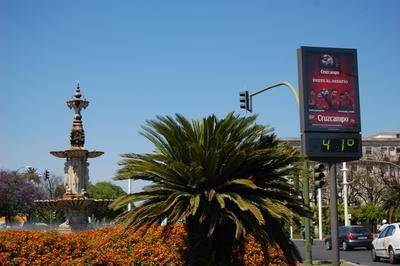
Creating a new routine in 40 degrees Celsius or more presents unexpected challenges for a west-coast Canadian. Back home, living by the sea keeps the temperature moderate; though we occasionally have heat waves into the mid-thirties, the average temperature in Vancouver during the summer would not be more than mid to late twenties. Sevilla recently experienced the hottest recorded temperatures in May ever. On one of these hot, dry afternoons—on my way to give some English lessons—I saw on a large digital thermometer that the air had reached 41 degrees by 3:30pm. The twenty minutes each way left me feeling crispy and exhausted. I came home to our apartment, with the blinds drawn to keep out the hot sun, drank a litre of water or so, landed on the couch and stayed there for a good five minutes without moving. The air is so dry outside that you do not really sweat until you come inside.

When Rob and I visited Australia during their summer a couple years ago, Melbourne also experienced a heat wave where temperatures neared forty degrees. Such heat waves are fairly normal there but luckily they are peaks in the average temperature and do not last the whole season. The air was dry like here, and I recall going for a run one morning, like a true green newbie, and coming back parched as a bone. As soon as I entered the cooler indoors I began dripping with sweat, while outside it had evaporated off my skin immediately. When the breeze blew, it was like standing in front of a giant hairdryer.

This aridity of Melbourne’s climate felt strange to me. I had travelled through hot towns in Central America where the temperature reached 38 degrees or so, but the climate was humid. Instead of feeling crispy you were constantly damp. Immediately after having a cold shower you started to sweat and there was simply no chance of ever having a dry forehead. I have always heard that humid temperatures feel worse, in that they really get into your bones (I have definitely experienced this to be the case with humidity in the winter; wet cold generally feels worse than dry cold). However, I am not convinced that I prefer dry heat. Maybe it has just been too long since I experienced those dripping afternoons of the tropics, but the task of crossing an arid landscape while the sun burns down with obscene intensity has begun to really scare me.

What scares me most is that the temperatures we just experienced are only the beginning. Sevilla is known for hot summers, ranging somewhere in the forties for at least a month or two. The other day my Spanish teacher told me he had once seen 53 degrees emblazoned on one of those digital thermometer signs (but luckily that is not the norm). The streets are deserted in the afternoons and everyone shuts up their windows as if something sinister were about to blow through the streets. I begin to wonder about our choice of Spanish cities, but there is no point in ruminating too hard on that. We made the decision based on a variety of factors and we are committed now, with Rob’s study visa tied to a great school here and our apartment leased until the fall. So we will just have to make do. We will visit my family in Denmark during the summer and perhaps we can work in a few other holidays. And besides that, well… time will tell. The fear of someone finding me like a dusty peanut husk in the street does frighten me. Alternatively, I fear escaping that fate only by hiding in a dim cave of an apartment all summer, fanning myself in a clammy heap in front of the one air conditioner. Again, time will tell.

From a bit of oral research, it appears that our hope lies in the mornings. The temperature cools through the night, and people get out for exercise and fresh air before midday. Looks like I will have to become an early bird for a few months, although with Spanish dinner culture not really coming alive until nine or ten… well, it is a puzzle we have yet to solve.

In the meantime I am enjoying the positively balmy days of 32 degrees or so, as the heat wave has temporarily given us reprieve. Yesterday I accompanied some friends to a beach about an hour or so away by car, and the air, the sun, the breeze—it was all perfect. It recharged me and filled my soul. There is hope yet. And the saying does go that what doesn’t kill you makes you stronger, right? Survive this summer and build character!

weather-seville-3

A City Named Pomegranate

We spent five days in the hilly city of Granada. Seeing the mountain range of the Sierra Navada in the distance filled me with a wonderful sensation of both calm and exaltation, making me realise how much I miss not only the sea, but the tall blue mountains of the Canadian west coast too. While in Granada, I loved looking out from a hilltop and seeing the great mounds of indigo topped with white. It was also deeply satisfying to climb the narrow and winding streets, feeling the muscles working and the heart-rate rising, in comparison to the also charming but very flat Sevilla.

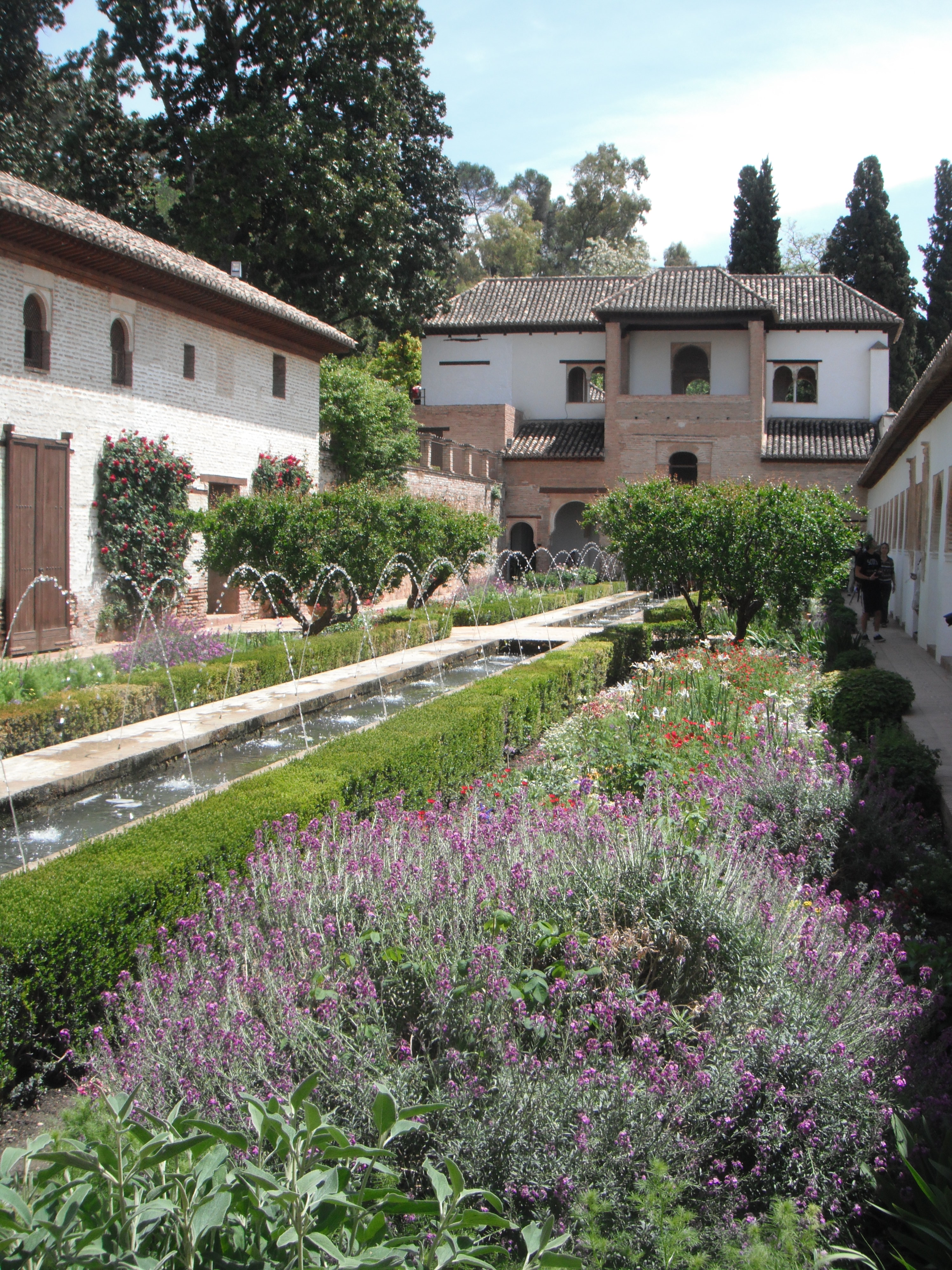
And of course, Granada is home to the famous Alhambra. I do not know where to begin in describing it. The collection of palaces, gardens and fortresses sits atop an enormous hill covered in deciduous forest, which in itself is stunning. Walking through the pathways beneath a luminous green canopy, listening to the sound of running water (Moorish fountains and streams abound alongside every  leafy passageway)—ah, I loved it. Although we only had tickets to enter the Alhambra grounds once (thanks to Robin heroically lining up at 6:20am!), I returned several times to the surrounding park to soak up the peace of trees and water.

DSCF3800

We visited the Alhambra the day after arriving in the city, entering the grounds just after opening time at 8:30am (those also hoping to purchase same-day tickets but who arrived after 7am probably did not make it in, judging by the long, thick, snaking queue that had formed when Robin’s parents and I joined him around 8am). We began wandering through the immaculate gardens in the clear, chilly morning, making our way to the Nasrid Palace for our entrance time of 10:30. Those Moorish kings really knew a thing or two about architecture! The vaulted ceilings, the archways, the brilliantly patterned and coloured tile-work, the minute details everywhere that form a breathtaking whole… an incredible place to visit. And throughout nearly every room and courtyard, the gentle babble of water flowed through fountains and troughs carved into the marble floors.

DSCF3825 DSCF4033 DSCF3826
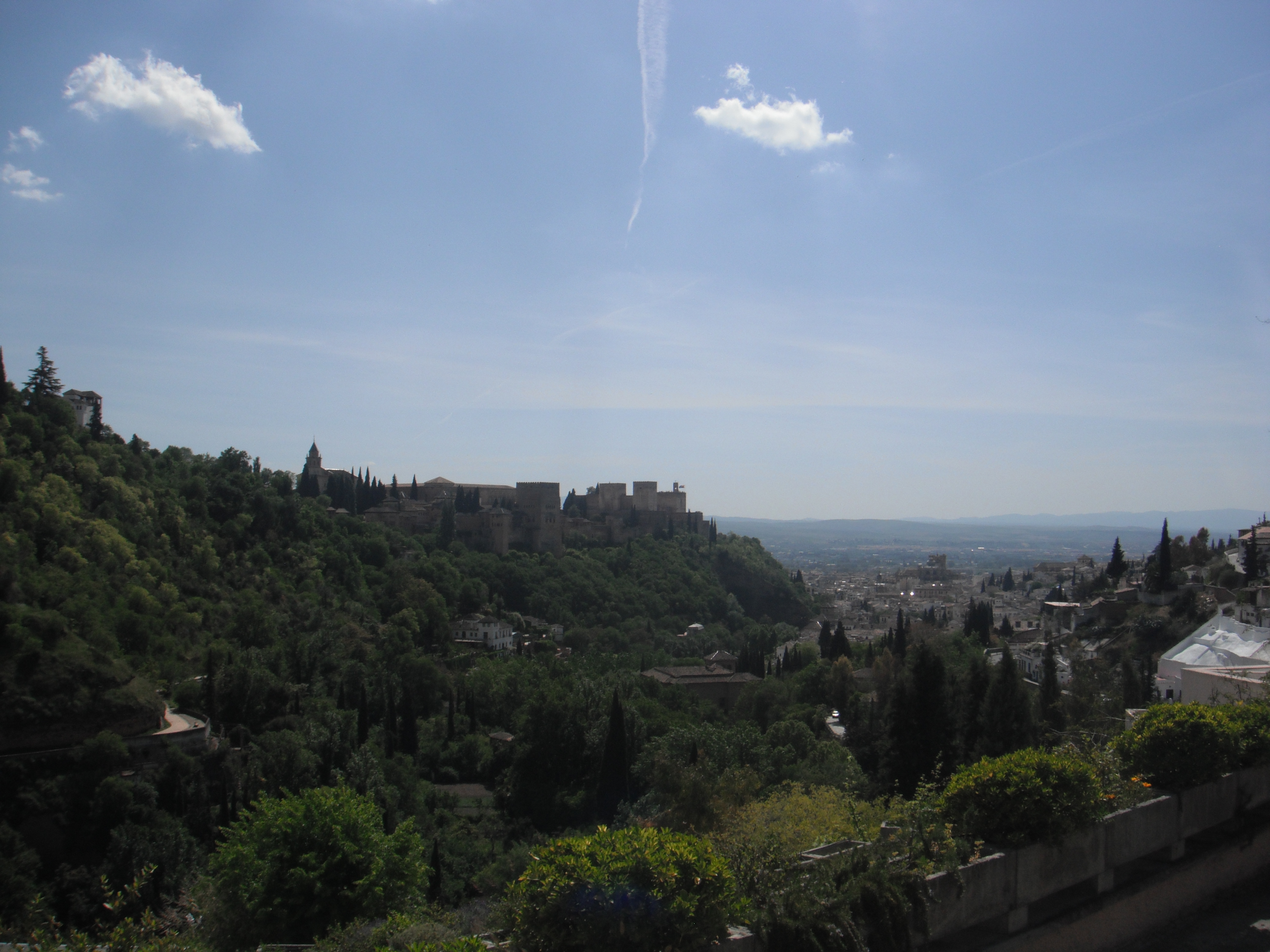
Furthermore, you could not ask for a better view of Granada than from atop the Alhambra. With the control of such a vantage point, it is no wonder that, when the Spanish began to push the Islamic rulers out during the Reconquista, this city was the last to fall.

DSCF3924 DSCF4124

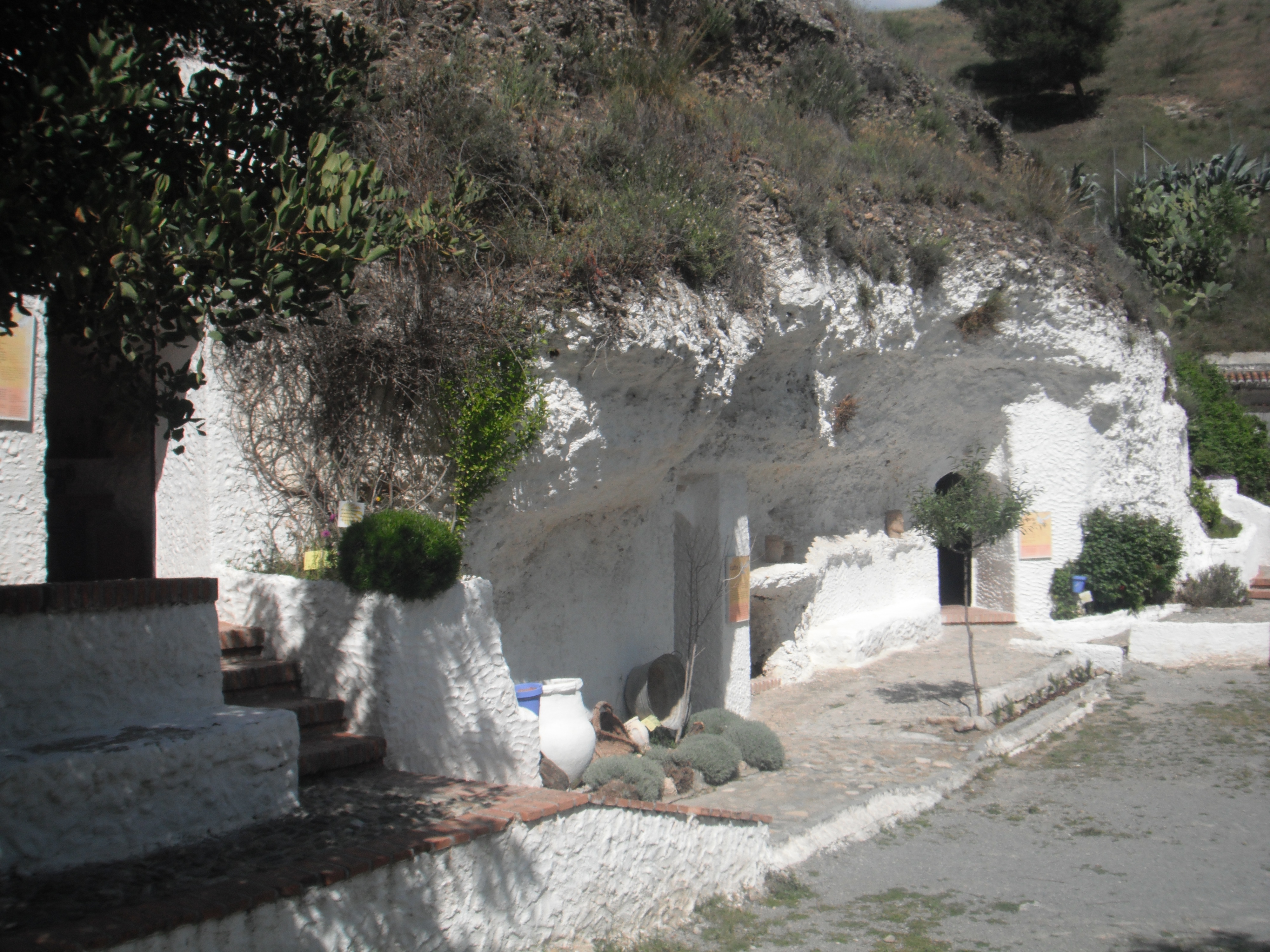
In order to obtain another beautiful view of the city and also of the Alhambra itself, we walked through the cobbled streets and up a hill to the Sacromonte district, which also happens to be the home of Granada’s Roma population (gypsies). These people suffered marginalization during much of Spain’s history, DSCF4127and were not permitted to live in the city with the Catholic citizens. Pushed out to the borders of Granada, they made ingenious use of the natural landscape—found in a semi-desert microclimate—digging caves into the hilly earth that became their homes and workshops, shielding them from the heat and costing very little to build. The Roma population continues to live in the caves in what has become a thriving neighbourhood. Many of the caves have been modernized, though some people still live in very rustic dwellings. Rob’s mum and I visited a fascinating little museum that exhibited some of the traditional caves, where we also learned that the Roma people and their music and dance traditions were key in the birth of Flamenco.
DSCF4128

Granada’s culture, architecture, landscape and delicious food left us all very happy with our time there, and I am sure we could have entertained ourselves for much longer. We said goodbye at the end of the week, Rob’s parents bound for Valencia and Barcelona and Rob and I for Sevilla. We caught the train back in the evening, with that post holiday mixture of satisfaction, wistfulness and readiness for your own routine again, which we are still in the process of building—an exciting prospect, really.