Tourist Tales

There is no better excuse to be a tourist in your own city than having visitors to show around. Not that Robin and I have been living in Sevilla long enough to have gotten over sight-seeing, but our focus has been more on establishing ourselves here and wandering the streets to get a general feel for the place, rather than seeing all the famous must-sees of the city, and we purposefully left the main tourist attractions here unvisited since we knew Rob’s parents would be coming in the spring. At any rate, we certainly have seen a lot cultural sites in the past couple of weeks.

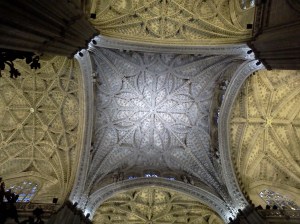
We started out with Sevilla’s enormous cathedral – the largest cathedral in the world, in fact, and third largest church in the world (since the other two are not the seats of bishops, they are not considered cathedrals… or something like that). In typical Andalucian fashion, it was once a Muslim mosque, though most of the structure was rebuilt in the Gothic style in the fifteenth century. The Catholics had already been using the former-mosque for a couple of hundred years at that point, having gained control of Sevilla during the thirteenth century, IMG1984but they decided to reconstruct almost everything under the pretext that the building was in much  need of repair. However, they did keep the original Moorish minaret, converting it into a bell-tower—and christened La Giralda—and the courtyard of orange trees, interspersed with fountains and irrigation channels. Local legend claims that the members of the cathedral who decided to rebuild in a purely Christian style said, “Let us build a church so beautiful and so grand that those who see it finished will think us mad.”

It certainly was awing to enter such a vast, echoing and ornate chamber, and the views from the top of the Giralda reached far across the city of white buildings and terracotta roofs. The cathedral also houses the remains of Christopher Columbus, although we read in Rob’s parents’ Lonely Planet that some of his bones may actually lie buried in the Dominican Republic as well, since DNA testing on the bones has revealed both burial sites as containing his remnants.

IMG1979   IMG1990

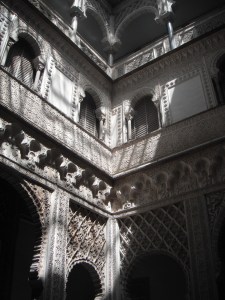
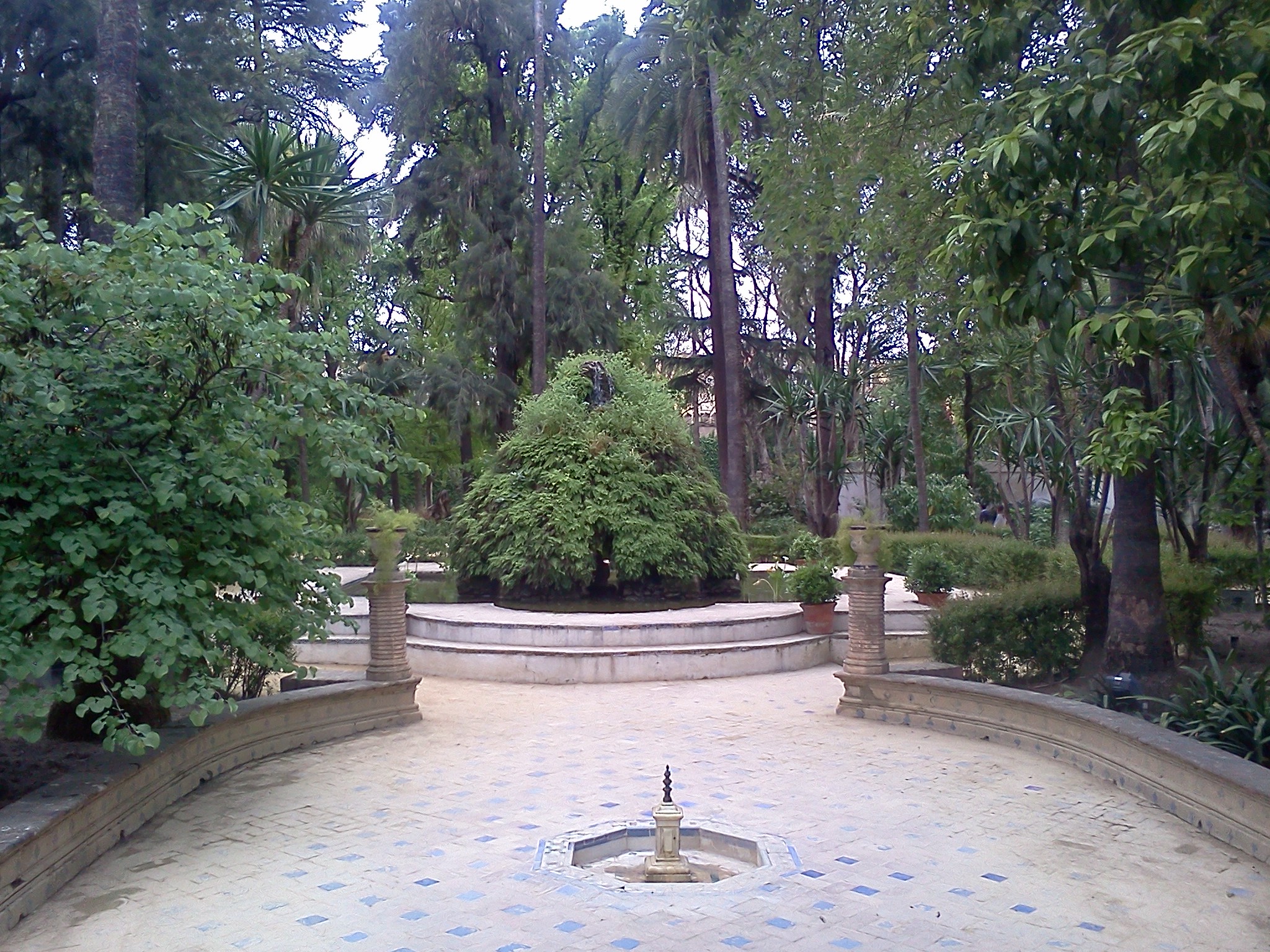
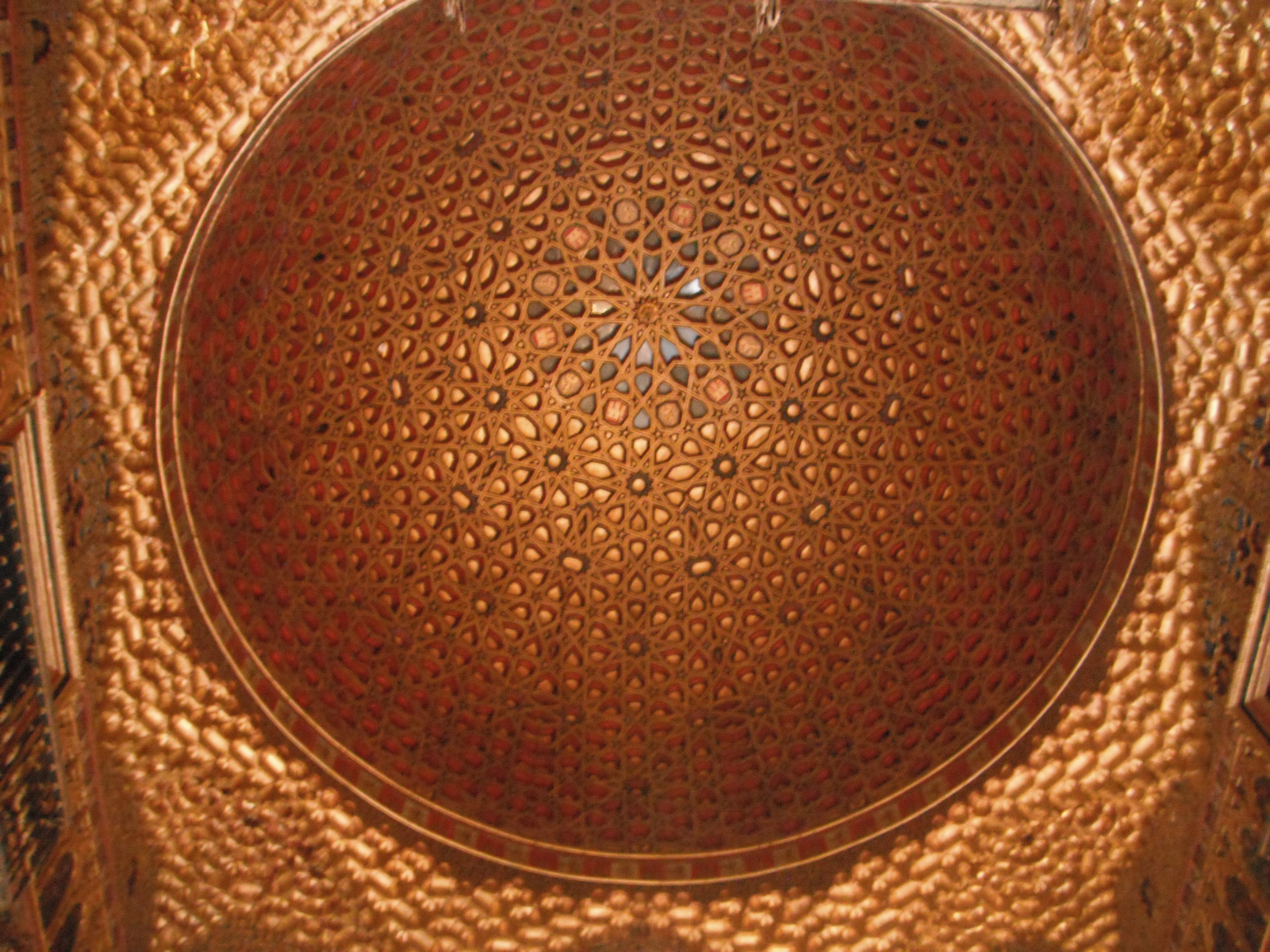
The cathedral was undoubtedly impressive; however, the palaces and gardens of the Real Alcázar of Sevilla impressed us all even more. Though the cathedral appealed to my imagination and evoked days of old with its hushed, dimly lit halls, it was the Alcázar that really conjured images of ancient kings and queens living long ago, moving through the same dazzling rooms and gardens as crowds DSCF3694of camera-clad tourists do today. The modern day Spanish royal family still uses certain floors of the Alcázar, making it Europe’s oldest royal palace still in use. The entire site lies concealed from the rest of the city by a large wall which encircles the network of palaces and gardens. They too were once a Moorish stronghold, and much of the Muslim love of geometric shapes, tile-work and water features remain. The Christians constructed another palace in the mid-1300s, and added to existing ones, so certain sections of the Alcázar are almost entirely Gothic, and the gardens are arranged in different cultural styles, ranging from traditional to modern (including a small labyrinth which I thoroughly enjoyed wandering through).DSCF3651
Rob’s mum and I enjoyed the Alcázar so much that we returned to visit it again before she left Sevilla.
IMG2043 DSCF3689

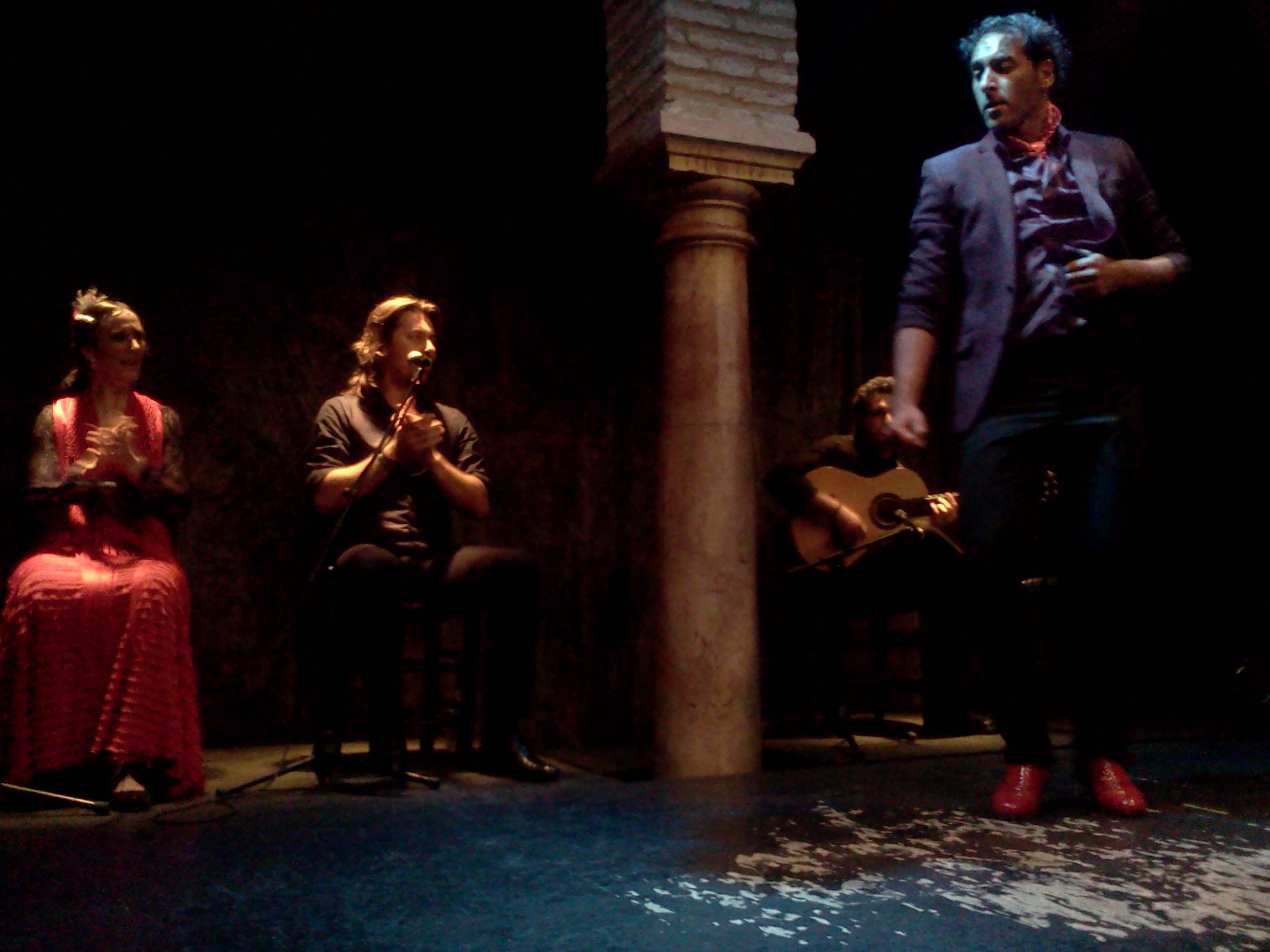
The last event that we had saved for the visit of Rob’s parents was a professional flamenco show, which we attended on their last night in Sevilla. It was incredible. The guitarist wooed the audience with soft lulls and wild rasqueos, weaving the notes together seamlessly and leading us from crescendos to a soft tickle of the IMG2064strings with amazing dexterity. The singer’s voice was rich and gritty, and his long hair and expressive face added to the atmospheric story conjured by his song. Both the female and male flamenco dancers pounded the stage, or tablao, with their high-heeled shoes and twirled, paused and clapped with such passion that you could not help but feel its effect, causing nearly overwhelming surges of emotion to bubble up in the chest at times. Its moving intensity surprised us all.
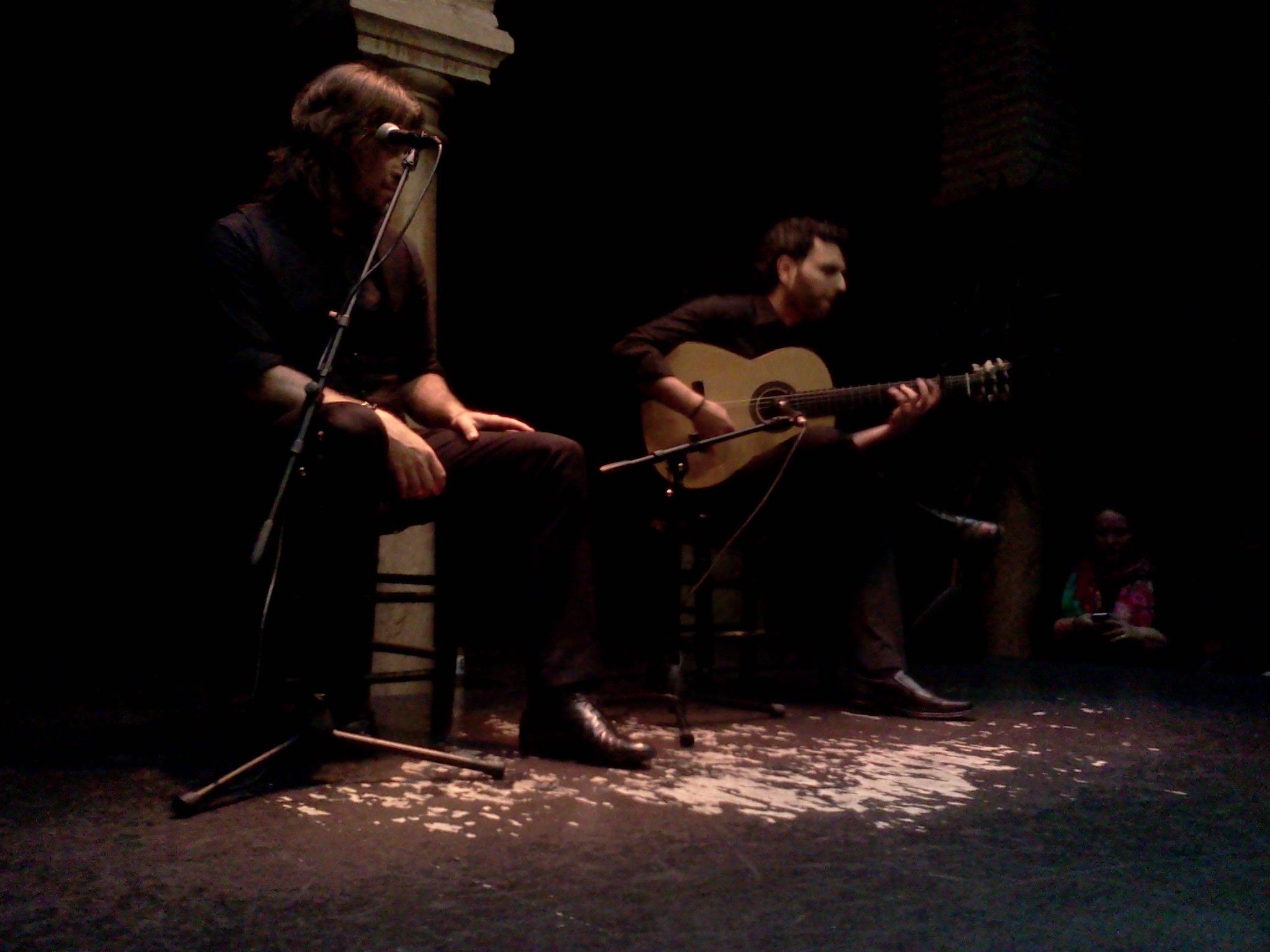
IMG2067 IMG2065

By the end of the two weeks that Rob’s mamá y papá spent in Sevilla, we all felt very satisfied with our exploration of local cultural buildings and customs, and were ready to explore Granada… a tale for next time!
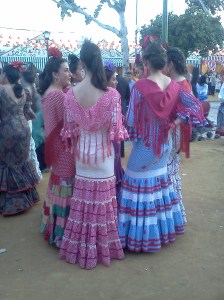
Feria de Abril de Sevilla

If not for all the mobile phones, it would be like stepping back in time. The place IMG2021evokes a sense of the wild west, with dusty dirt roads, horses and ladies in beautiful dresses with full ruffles at the bottom. The women also wear huge painted flowers atop their heads and tasseled shawls which shimmy in time with their hips (which are hugged tightly by myriad colours and patterns, with polka dots as a strong favourite). Men mill about in suits and ties, while others ride horses in broad brimmed hats and grey vests. Whole families ride slowly along the streets in carriages, their horses decorated with bells and pompoms.
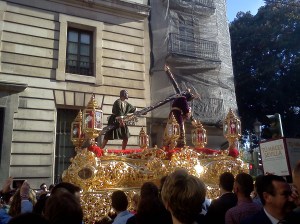
This is the Feria de Abril. Sevilla is a traditional city, and judging from my experience so far, they celebrate all the holidays with much flair and aplomb, upholding the same celebrations of their forefathers for centuries. For example, the Semana Santa (Holy Week) saw thousands of people crowded into plazas and streets to watch parades headed by Nazarenos (the eerily dressed worshippers who sport pointy hats, masks and robes, and generally remind foreigners of the Ku Klux Klan). The Nazarenos were followed IMG1927by huge floats, or pasos—carried on the shoulders of robust and devout young men—depicting figures of crying Mary and crucified Jesus, surrounded by candles, silver and gold lattice work and fresh roses. The feria, however, is not religious in nature, nor as old a tradition as Semana Santa. It began in the mid 1800s as a livestock fair, but quickly transformed into an excuse for a big party. Its purpose today seems to be dressing up in flamenco wear and heading out to a fair-ground to enjoy music, dancing, drinking, eating and general all-day, late-night, wee-hours Spanish merry-making.
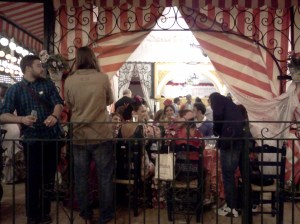
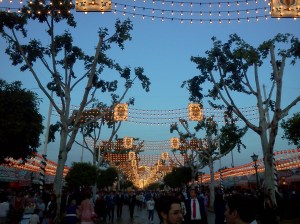
Sevilla’s feria is lined with open-ended marquee tents, called casetas, which individuals rent for the use of their family, friends and friends of friends, where they can enjoy their own personal feria party alongside hundreds of other individual celebrations. The casetas are equipped with tables, dance floor, bar and kitchen (I am not sure if they hire their own kitchen staff or if that comes with the rental of the caseta). There are also a few larger tents open to the public, one to represent each neighbourhood of Sevilla. However, these tents are “not as good” asIMG2017 the private ones, according to Sevillanos, and some consider it not worth going if you have no invitation into someone’s personal caseta. Having been warned of this, I was not sure what to expect going to the feria. I was happy to discover a scene that felt like an enormous game of dress-up, and even had I not known someone (who knew someone who knew someone) with a caseta, it would have been well worth it to walk the dirt roads, admire the beautiful dresses, watch the carriages pass and listen to the horses clip-clop by.

As it turned out, we were fortunately invited into a few casetas thanks to friends from school and language exchanges, and we celebrated by staying out until 2am or so—a moderate departure time by Spanish standards (the brightly lit streets were still pulsing with music and festivities when we left). IMG2027 IMG2024

The feria runs for a week straight and children get two days off school in its honour. Many people attend the grounds every afternoon or evening, and stay until late. Sevillanos are not the only ones who take the Feria de Abril very seriously, and many people from out of town also come to rent their own casetas and partake in the city’s famous celebration. Not that their own hometowns would not have a version of the feria, but the festivals of other towns and cities are not as big and traditional as that of Sevilla (for example, in some towns the women only dress up on one day instead of all week long—not nearly enough fun). There is also a large area with rides and attractions beside the rows of casetas if you want a break from eating and drinking in exchange for a spike in adrenaline or some carnival games.IMG2022

The more time I spend in Spain, the greater the sense I have that these people really know how to celebrate. They love food, drink, dancing, music and good company, and that love results in true feasts of the senses, such as that of the Feria de Abril de Sevilla.

Fruitful Patience

Sitting down to reflect on the past week, thoughts and images parade through my mind at a languid pace, out of order, drifting here and there. The day is hot and my fingers feel lazy now that I have put them to work at the keyboard. What can be said about this past week?

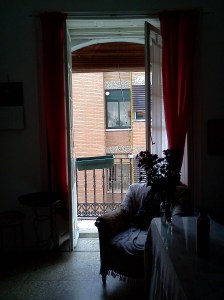
Well, we have at last moved into our own flat. IMG1976I have unpacked everything, found places for things,  hung our Sunshine Coast calendar on the wall, and begun to settle in and stretch out like a cat in its favourite box. There is a desk to write at, space to practice yoga, and two balconies with wrought iron railings to lean out over and watch the scurrying day unravel below. We can reach the Spanish school in a five minute walk, the river flows wide and deep a block or so away, and this old apartment—with high ceilings, a quirky mix of furniture, sloping floors—is large enough to give private lessons or small group classes in English and yoga. The plan for finding work is developing. We have ventured deeper into the country, seen the coast, explored another city. We have made a few friends, both Spanish and foreign. The days grow longer and the sun shines hot in the afternoons and the breeze rocks the open windows gently back and forth. Things are coming together.

Sound echoes around the Casco Antiguo—the central area of Sevilla, all old buildings—as though conversations could take place in midair, right outside a balcony two storeys up. If this balcony leads to your bedroom, and you are sound asleep, you might curse the narrow lanes and their excellent acoustics. But when some flutist in the opposite building is practicing with an open window on a sunny afternoon, or the night is warm and laughter drifts up from below, it feels like a privilege.

Finding myself here alone for a few days, I have found the sounds a friendly companion. Robin is in Madrid meeting his parents, who have come to visit all the way from Australia; the three of them are spending several nights in the capital before they make their way to Sevilla. I am looking forward to their arrival, and in the meantime I have been enjoying the time to myself—the first I have had in many months. Living in this old apartment, I like to imagine myself as Amelie from the lovely French movie, making dinner for one, enjoying the simple pleasures of watching people from my creaky old window in an old European city, IMG-20150411-WA0011cracking the tops of crème brulée and things like that—not that I have had any crème brulée, but I have enjoyed other sensual food moments like slicing up strawberries and bananas and eating them with honey, or cooking myself a mushroom risotto with a glass of a wine and music. Moments like those make me feel independent and chic, but also a bit like a kid who has finally been deemed old enough to be left home alone. Either way, a bit of solo dancing round the kitchen lends itself to making the most of a night by yourself.
Late at night, the silence settles in. Sometimes it settles softly and serenely, while at other times with a lonely hue, like a cool night through a thin sweater. But these ebbs and flows are part of the natural order of things—our very breath moves in and out with the same organic cycle, and I am doing my best to embrace such movement in my daily life as well. Certainly one half of that equation is easier than the other but with a bit of patience we generally do come out on the other side—just as my fingers have thankfully managed to rouse themselves after all.

Caleta de Cádiz

Sea crash
Spray of salt
Rock tunnels and passageways
Carved by eons of eternity

Wave splash
Stony fault
Water widens pushes splays
Walls wrought in fraternity

Human hand against the sea
Untamable and free
Living  heaving  dancing wildly

Timeless power
Renders stone
Tumbles tower
Dissolves bone

Yet walls remain
Half-eaten and holed
Patterns revealed
Like corals below

Three thousand years
Against this pier
Ancient city standing strong
History shining beneath the waves
Amid the ocean’s ever song
Human order misbehaves
Answering the wild watery call
The eternal origin of all

A cove exposed by long low tide
Footprints laughter photographs
A fortress on the southern side
Ice-cream cones and concrete paths

Civilizations rise and fall
Ocean waves are evergreen
Olden days and modern sprawl
The cove lies sleeping in-between

DSCF3479DSCF3463

Córdoba

The sun burst through the thick grey slab ofDSCF3363 cloud at last this week, and shines as though it is here to stay. “Nature knows best,” an old Sevillan man told me as I waited in front of the Spanish school one afternoon with a group of students, all talking about the recent weather changes. “The olive trees, the orange blossoms, the fruits of the harvest need the rain! Soon the sun will scorch everything—you will see—it will be hot and dry until October. Nature knows best.”

Rumours of the summer’s temperatures do have us a little nervous, but for now, the sun reflecting off the buildings outside our window enlivens me when I wake up and pull the shutter open, knowing a long, bright, warm day is ahead.

Robin and I were invited by a new friend to take advantage of one beautiful day with a trip to Córdoba. This friend is from Paris, a lovely and lively woman who drove all the way here with the company of people she met on a ride-share website. Having her car here she offered to drive us, so off we went one morning to spend the whole day exploring somewhere new.

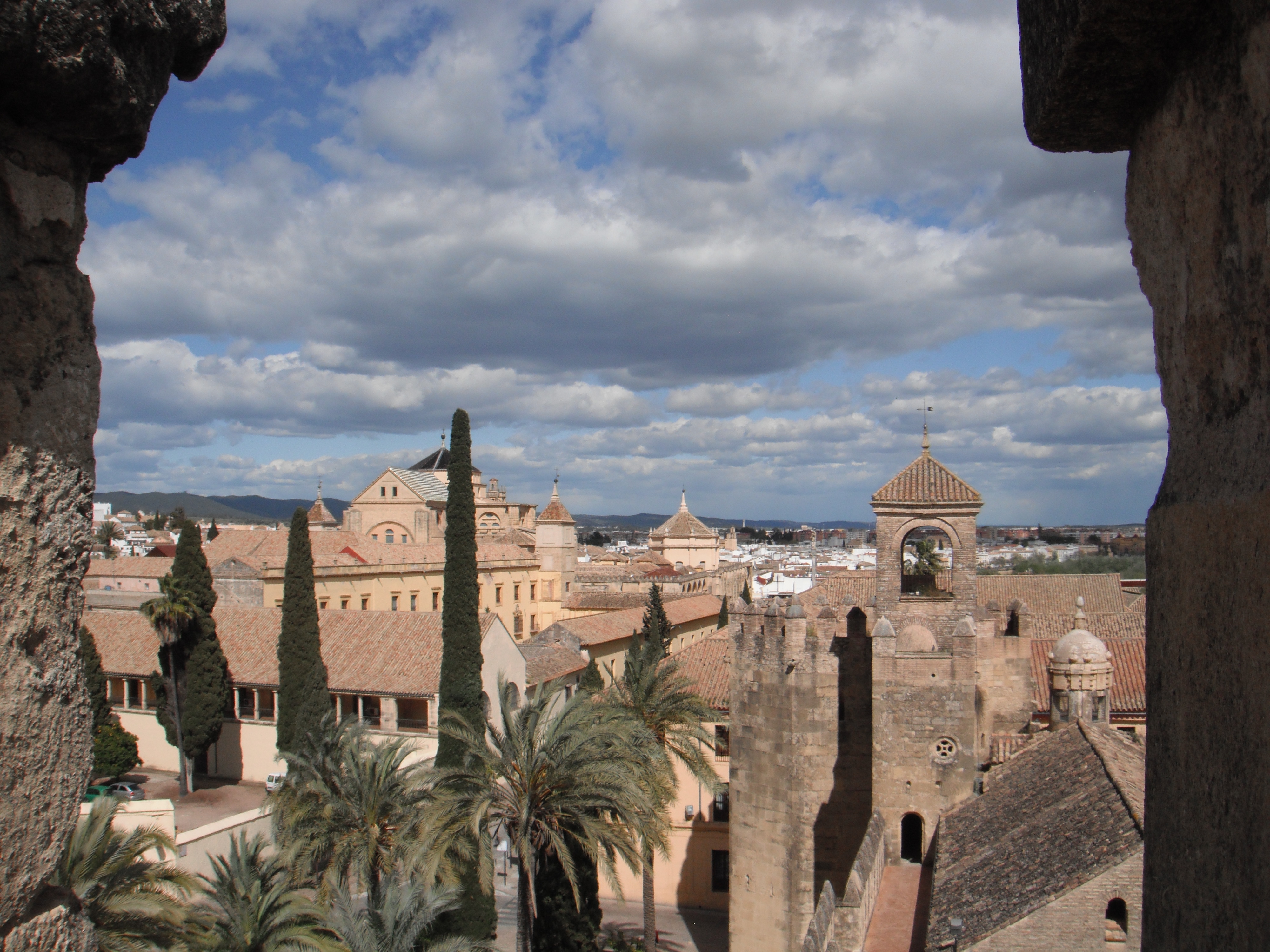
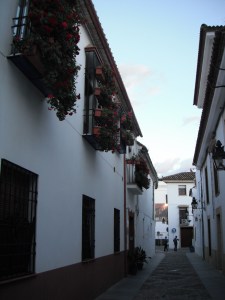
Córdoba is a place dear to the hearts of DSCF3377many Sevillanos, and we found that it lived up to all praise. The Arab influence on Andalucía is especially evident in this city, particularly in the many water features throughout the city. Water is extremely important in Islam, as a symbol of purity, as a means to cleanse the body and as the source of life for all living things. The tiny stone alleyways apparently also come from the Arabs, which are common in Sevilla as well, but Córdoba is much smaller and lower in building height, giving it a small town feel and making it a truly charming place to wander through.
DSCF3422

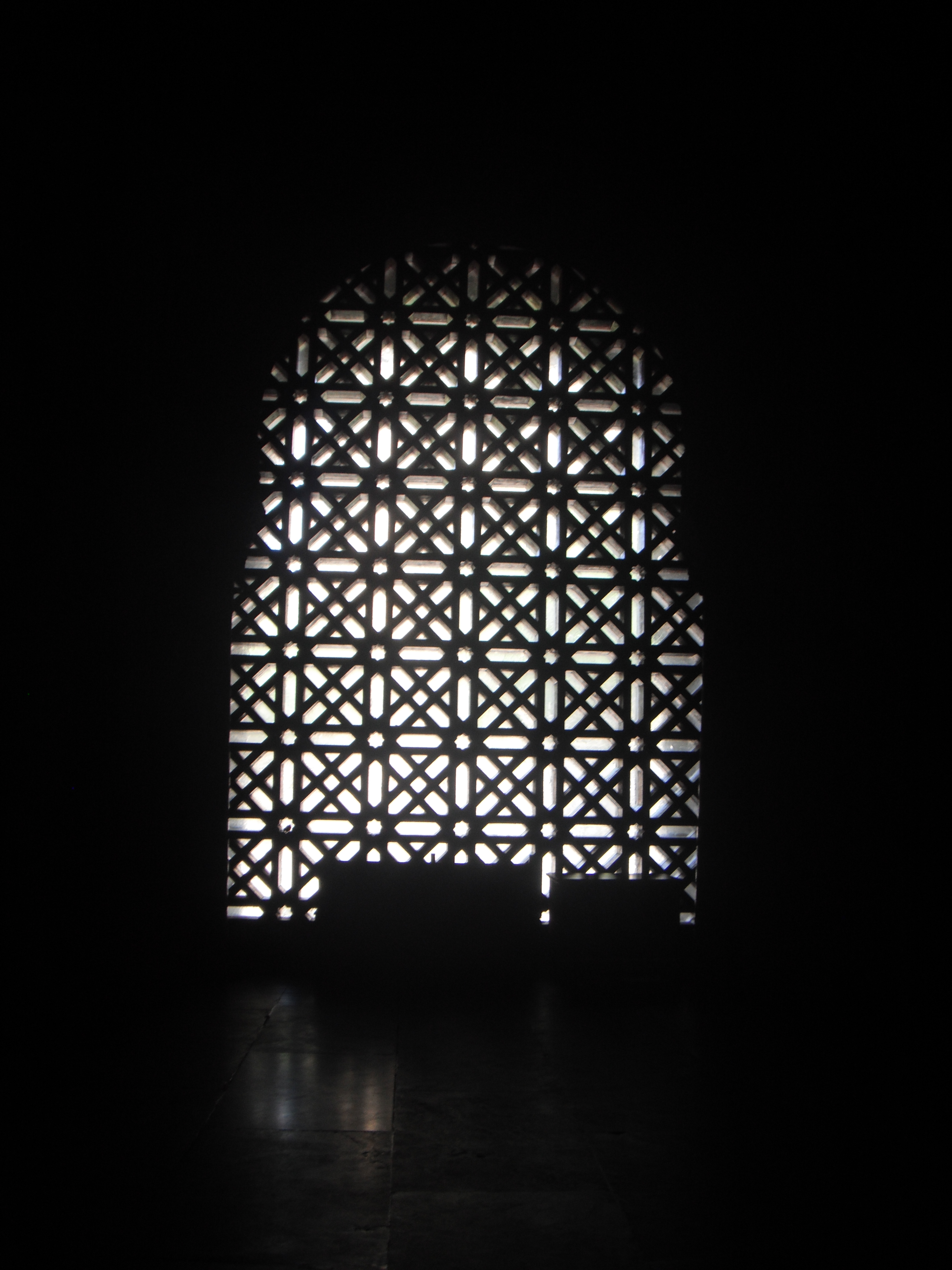
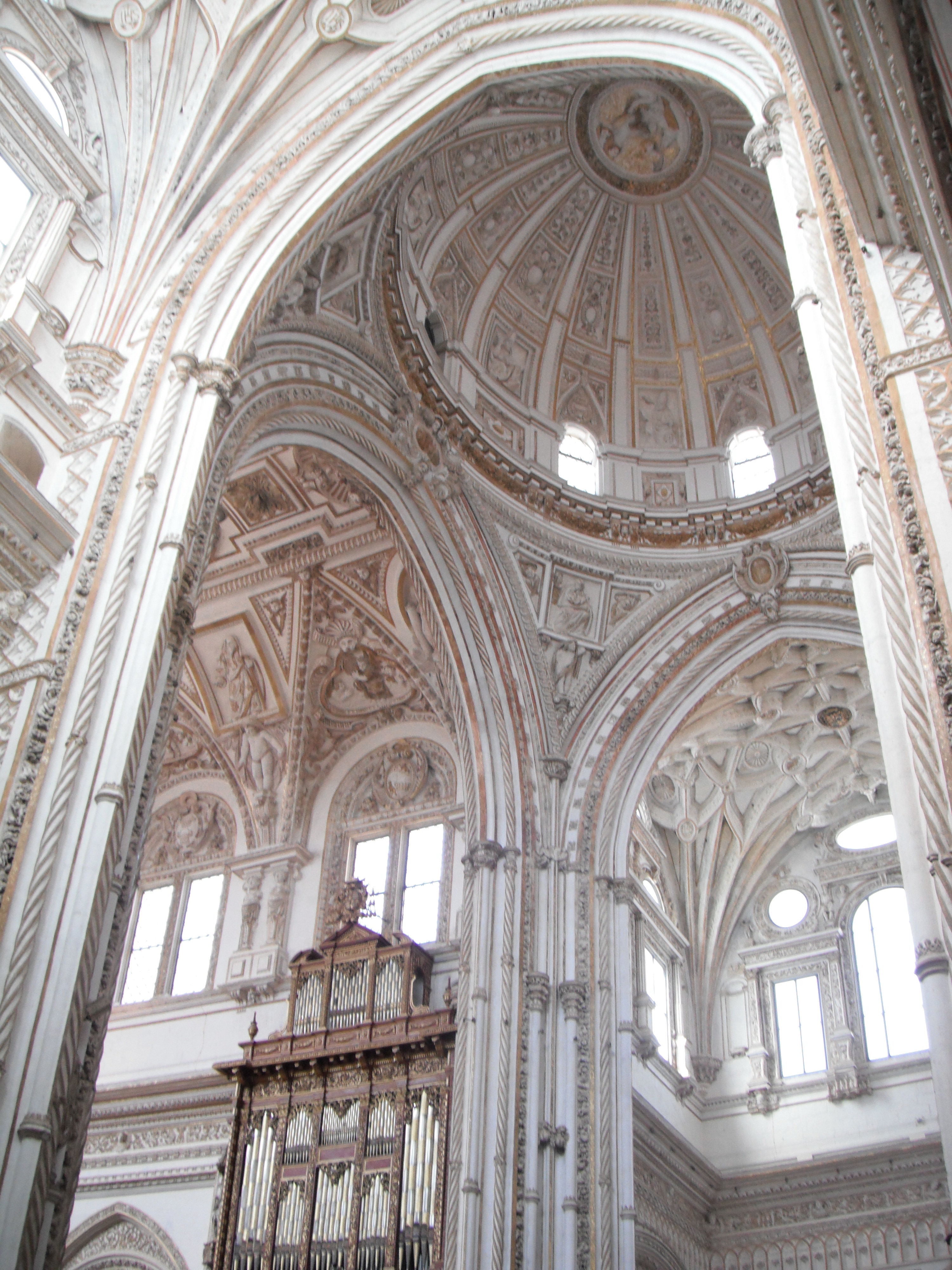
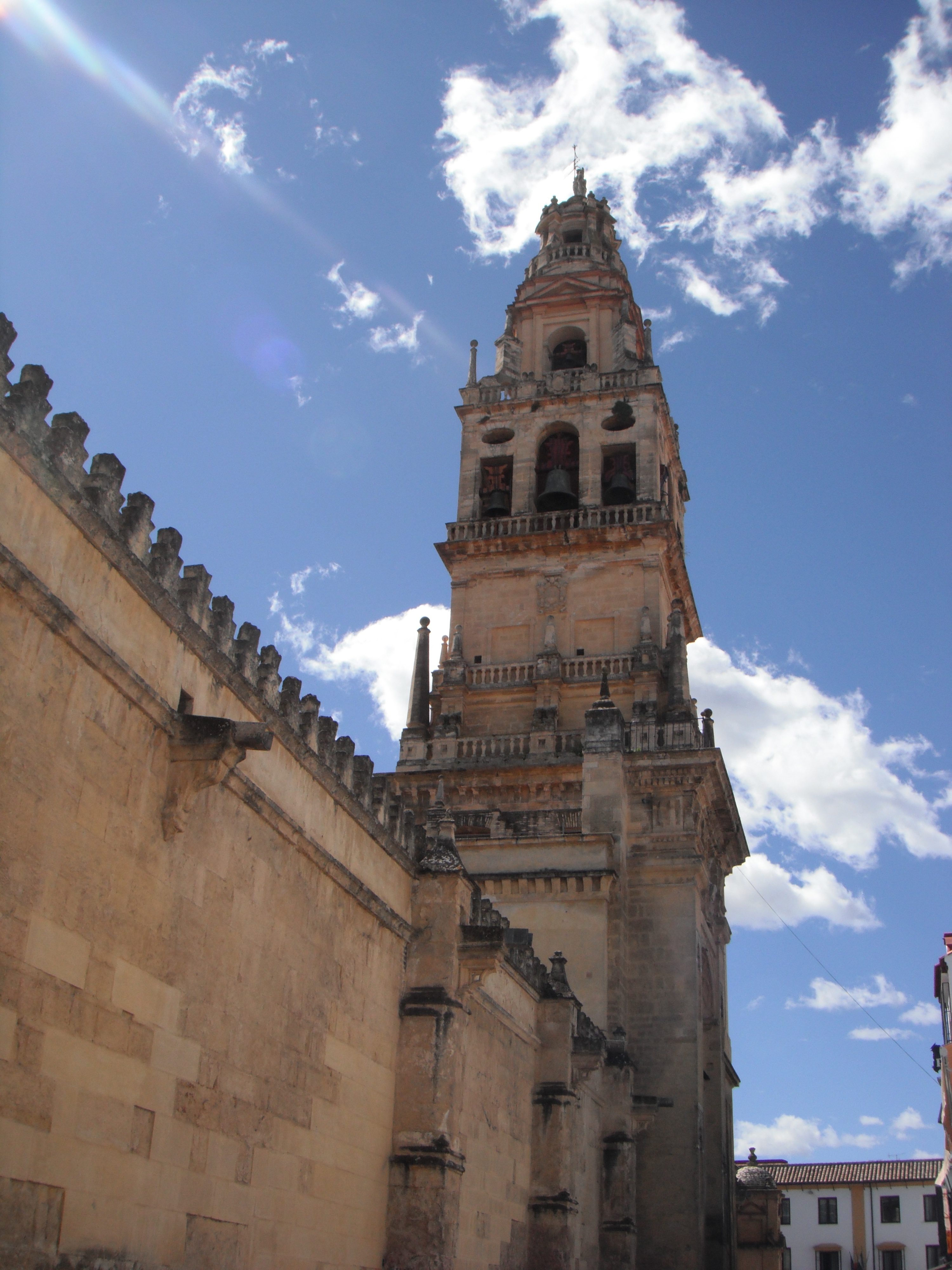
Having only one day to see as much as we could, we had each asked around regarding the must-see sites of the city. Everybody agreed the Mesquita (mosque) and the Alcázar (main palace or fortress) were unmissable. We started with the Mesquita, where the layers of Anducian history can be seen in the very walls. Hundreds of pillars held up the dimly lit, incense-laden air of the once-mosque, displaying the ancient work of the Romans. After the Arabs invaded the region, they used the pillars to build their own mosques and structures. And after the Christians began the Conquista and pushed the Moors out seven centuries or so later, in 1492, they used the Muslim buildings for their own. Mosques became Catholic churches, either renovated or partly torn-down and reconstructed in the elaborate baroque style of the era. This layering of cultures has endowed Andalucía with some of the most interesting and beautiful churches in Europe.

DSCF3291 DSCF3297 DSCF3314

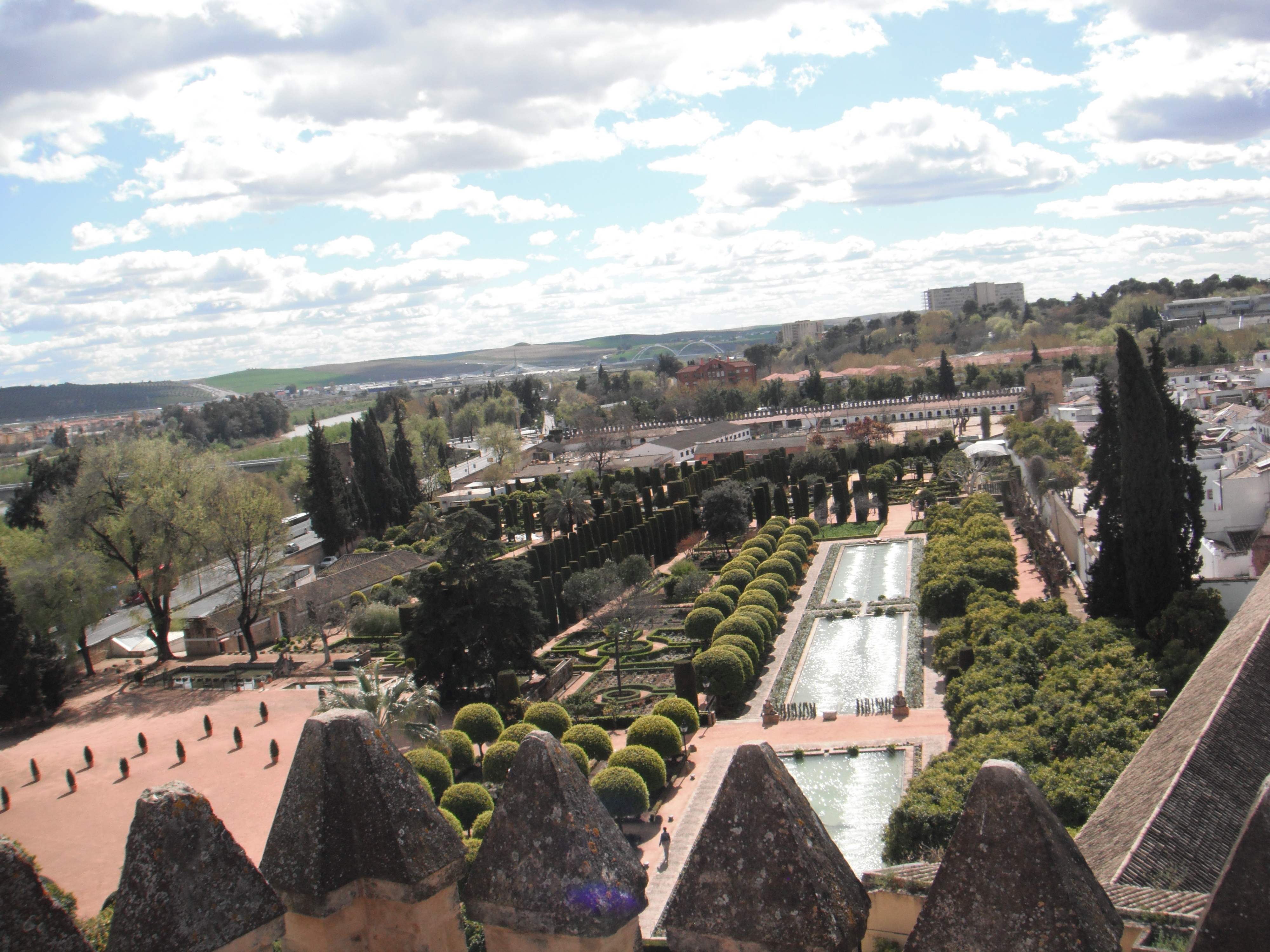
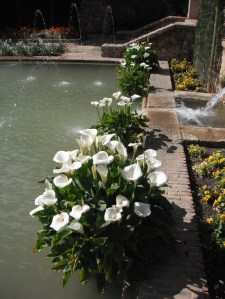
The Alcázar remains a striking fortress, with amazing views from the top of its tower, but the most impressive part is the immaculate expanse of the gardens. The importance of water can be seen in beautiful pools and fountains rimmed with flowers and filled with black and orange fish.

DSCF3344  DSCF3351

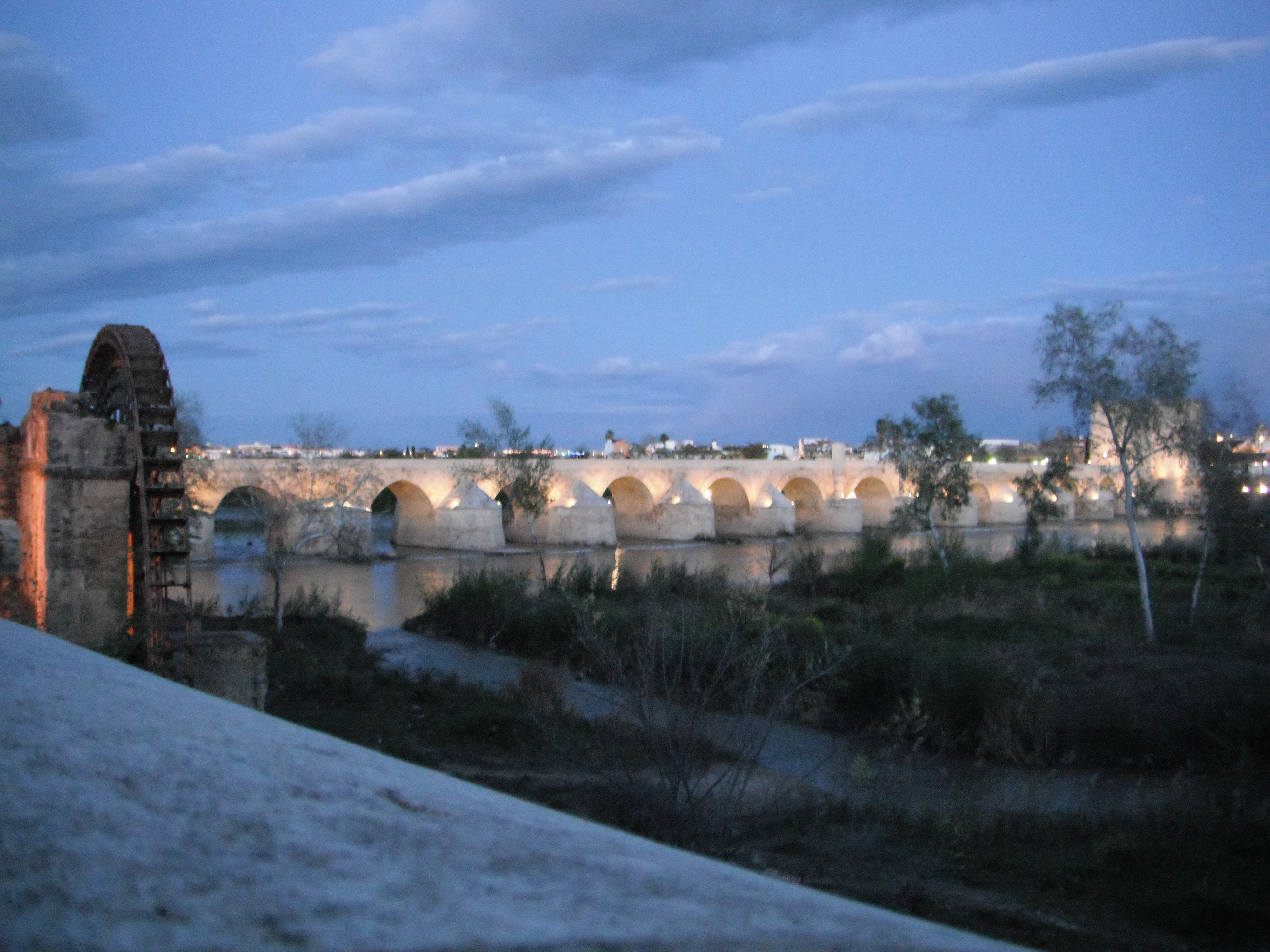
After we spent a good long while soaking up the atmosphere of the gardens,we spent the rest of the day wandering through the city, which sits along the banks of the same river, Guadalquivir, that runs through Sevilla. A Roman bridge crosses from the Mesquita to the other side, a sight evocative of ancient history, today reserved for pedestrians and cyclists. We also enjoyed some delicious food, including the famous salmorejo of Córdoba, a cold tomato soup with lots of garlic, and the classic potato filled tortilla; tortilla is everywhere in Spain and is almost always very tasty, but there definitely was something particularly good about the one we found in Córdoba.

DSCF3429

We drove back after dinner—which we ate around 10pm like good Spaniards (topped off with a generous portion of chocolate cake)—and got back to Sevilla around midnight, tired but happy. It was a beautiful day, with good company, good food, good sight-seeing. It was also a good day for Spanish, which for the past week or so, Rob and I have been using as our main mode of communication. This can get tiring at times (and sometimes you just need to indulge in a little English), but the tangible results of easier communication and better comprehension provide the motivation to keep going. It feels as though we are at last settling into being here, and our adventure to Córdoba has left me excited for all the other places we can explore during the year. I still miss home something fierce, but I am ready to embrace this Spanish experience as fully as possible.

DSCF3441

The Storm

Life is wild. Sometimes the chaos spins up around us and howls so loud we cannot help but shake and wail, or leap with excitement, or buckle in a heap of tears. Sometimes life seems to ask us to jump, sometimes to hide, sometimes to dream, sometimes to act. At other times it seems to ask nothing of us. We may wander aimlessly, wondering what the meaning of it all is, where we came from, where we are going, why we are here. During these quiet moments, the wildness of life occurs within the space of our own chest, in the tension and release of our limbs, in the leaps and crashes of emotion and the babbling of our mind. This can be as challenging as the worldly ups and downs that take place without. At least external chaos offers some distraction from the unruliness of the mind, the overpowering emotions of the heart. Stillness around us reveals the noise within, and we do not always like what we hear.

Leaving the strict, busy schedule of yoga teacher training has revealed the intense play of my inner peaks and valleys. My days lie open before me, waiting for me to make of them what I will, and faced with the pressure of an open canvas my mind spins too many plans and I cannot keep up. A mixture of emotions begins to whirr. I feel excitement at all the possibilities before me, but also doubt and fear in wondering how to take advantage of them. I feel the smart of past failures (both real and imagined), and worry if self change is truly possible. Sometimes a wave of depression takes hold, which feels like a warning shot; I could slide down a slope that would end in a grey soup of the mind, chemically deprived of joy, where dark stories take hold and motivation is a foreign word with no meaning. An invisible lead apron descends upon the chest, and under its weight comes the terrible sensation of not enough breath.

We all feel depressed at times. However, there is a line where feeling depressed becomes more than an emotion. Many people in our society have suffered—or still suffer—from depression to varying degrees, and it can be debilitating. The times I have been depressed were often not apparent to me until after I began to emerge from the fog, and I could see more clearly how low the baseline from which I was experiencing life had dropped. I am grateful for the people, the life changes, the activities that helped me move through and up and out again. I know some people suffer more severely and require other treatments to regain light inside the brain. Whatever the degree, I will always have deep compassion for all those dealing with depression, and for their friends and family too. The feelings of isolation that accompany the state make it hard to connect with others, and the ensuing hurt affects everyone.

It is no wonder that the fear of depression underlies my other feelings of trepidation. Things are changing, new possibilities really do exist in all directions, but not if my inner landscape darkens beyond my reach. Incidentally, my struggles of this past week have matched the sky, which has been sealed over with grey clouds, like a steel dome. On occasion the sun does burst through with blinding brightness. More often the droplets gather dark and close above and let loose all at once. Depending on the climate of my mind, the rain can feel either calm and comforting or like a cold heavy curtain blocking out the sun’s warmth.

When I find myself teetering on the edge of a downward slope, I know I must do whatever I can to catch a glimpse of hope. A song, a conversation, a walk can make all the difference—anything to shake up the settling shadows and allow even the tiniest ray of light through. Circumstances may remain as they were, the mountain to climb still stands, but something physically releases. The invisible weight on the body starts to evaporate, and the breath comes more easily. The return of the breathe carries us through the storm.

“The basic thing,” says the Dalai Lama, “is that everyone wants happiness, no one wants suffering… we are all the same.” The Buddha said, “you can search the ten-fold universe and not find a single being more worthy of loving kindness than yourself.” Rumi said, “close your eyes, fall in love, stay there.” The wise words of these sages help me to remember: we are not alone, we deserve to be happy, and it is worth doing whatever it takes to remind ourselves of this any time we forget.

DSCF3182

Yoga Limbs

An unexpected class cancellation finds me sitting in a pagoda with the sun on my back, birdsong in my ears, and breeze tickling my skin. It has been nearly three weeks since I arrived, and in just a day or so more I will be on my way, as a certified yoga teacher.

The journey has coursed many ups and downs. But we all are nearly there, and having taught our classes and written our tests, the nerves are subsiding and our impending departure feels tangible. The sun feels extra sweet shining down as the wind ripples through the grass fields and shakes the leaves of the orange trees. We have begun to hug each more often, supporting one another through the crunch time and savouring the friendships we have made; it will be no easy task to say goodbye to one another. But even as we all go forth to different lands and adventures, we share a knowledge of the tools we can use to bring yoga to others, with a deeper understanding of the physical and philosophical workings of the practice.

Yoga comprises an eight-limbed path, which is ultimately a path of meditation as a way to reach enlightenment, or to remove the ignorance that causes suffering, allowing us to experience our infinite nature. The path also includes many specific observances to help us on our journey to remembering our True Self, and live good, pure lives along the way.

The first limb consists of restraints, loosely translated from Sanskrit as non-violence; truthfulness; non-stealing; sexual integrity; and non-greed. The second limb focuses on practices to observe, including purity and cleanliness, both physically and mentally; contentment (stemming from bringing awareness to the present moment and finding gratitude for what is); self-discipline; self-study and the study of spiritual texts; and surrender to the Absolute, meaning acceptance of the mystery of life and our lack of control over it, not in resignation, but rather by embracing whatever life has in store for us, trusting in its ultimate positive nature.

The third limb consists of the postures, or asanas, the physical practice and poses that we in western society generally associate with yoga. The postures traditionally made up the smallest part of the yogic path, and the Yoga Sutras—the ancient yogic text in which the eight limbs were first penned—refers mainly to the posture of sitting in meditation. In order to keep the body healthy and allow a person to meditate comfortably without distracting physical pains, postures transformed into series of dynamic poses, although it was only in the last few centuries that the number of poses really increased and diversified. It has been interesting to learn how small a part that asana practice played in the yogic path until relatively recent times, and also how the tradition has evolved and changed to meet the needs of the current day.

The fourth limb of yoga is pranayama: practices to control and extend the breath and the life force energy we access through breath. Breathing exercises and movement with the breath remain key components of physical yoga practice.

The fifth limb is withdrawal of the senses—turning our gaze inward—the first step of meditation. Concentration follows as the sixth limb, which leads to the seventh limb, meditation itself. All previous limbs lead to the eighth and final limb of the yogic path, which is enlightenment, waking up to our true nature as infinite consciousness that encompasses everything and everyone; separation is an illusion, and we discover that “we” are actually the infinite, blissful, creative, capital-O One.

Yoga may be practiced alongside any other spiritual practice, and devotion to some sort of higher power is also considered a yogic practice.

At first when learning this philosophy, it was easy to feel a little overwhelmed, or daunted by some of the traditional or extreme interpretations. However, the eight limbed path as an overarching guide makes quite a lot of sense. It provides tools to keep the body healthy and steady the mind, and lays out basic principles for living a good life.

After years of moderate practice and three weeks of more intensive daily practice, I can attest to the difference that yoga makes in everyday life. The first difference I noticed is the amount of energy I have. I first became aware of the change in Vancouver, getting up tired and underslept on dark cold mornings to attend yoga before work. Every time the alarm went off I began a battle with myself to get out of bed, and I admit that yoga did not always win, but every time it did I felt a world of difference afterwards and throughout the remainder of that day.

Doing so much yoga over the past three weeks has energized me despite many nights of not quite enough sleep, but another subtle difference has also begun to emerge. Perhaps it stems from the peace of moving with the breath and observing without judgement during practice, or perhaps from soaking up some of this philosophy, but whatever it is, I have noticed a bit more space blooming within my mind, from which to notice thoughts and feelings without necessarily reacting. This is the space we are promised by following the yogic path, and having begun to experience it, I have hope that it is indeed the place from which I can live more consciously and make positive changes.

I feel excited to bring this space I am creating within myself out into the world and into my relationships. I know it will take work (even a few conversations with family shows me that old patterns are very strong and it is going to take a lot of awareness to change them!). Still, I can feel just a little more room to breathe, a little more room to observe, a little more room to just be in this present moment. I look forward to experiencing this at play in daily life, and furthermore, to being qualified to teach this practice that not only benefits the body but also energizes us and encourages an inner peace. Many of us in the west come to yoga for physical health, but the well-being we experience runs so much deeper. The postures of yoga can be modified to be accessible to all bodies, and I believe the philosophy can also benefit us no matter what other beliefs we may hold. I am grateful to now know more about both aspects, and it will be an honour to teach others in this practice which gives so much to the body, mind and spirit.

IMG1907

Stamina

The end of this week draws nearer. Tomorrow morning at 7:30 I will be teaching my first official class. I have written out a sequence on some flash cards, with a number of optional sequences penciled in, given the very good chance I will speed through my planned poses in an anxious whirl, and be left wondering what to say next in order to fill the 75 allotted minutes. Of course, it all has to flow nicely as well, and include all the necessary elements (warm-up, standing postures, backbends, etc) in the right quantities. It feels a bit like baking a cake at this point, and I am worried that if I stir too much or too little the whole thing will flop. Hopefully it is more like making pasta or stir-fry or something, and a little extra dash of this or that will not ruin the overall taste.

The weather has been beautiful for most of this week. Warm enough, in fact, to entice me and one of my new friends to hop in the outdoor pool—a short but very (very!) refreshing dip. A couple of days ago, on the day we passed the halfway mark of this course, the sun beamed down like a midsummer’s day on the BC coast. It was also the only day off from classes we get during this course, and I had a fantastic time; Robin rode the bus to a neighbouring village, where I met him on foot. We spent the day eating and wandering, walking over the hill back to the yoga compound, passing through some lovely old ruins on the way, and enjoying the beginnings of a beautiful sunset spilling out over the hills before he had to leave and catch the last bus home. I sat a while after he left, holding the warmth of the day close to my heart as the air quickly cooled, before settling into the knowledge that there are no more days off and we students are beginning the last and steepest incline before getting through this course.

IMG1872

I woke several times that night, thinking it must be time to get up. Otherwise I slept lightly, lost in restless dreams that I was teaching my class—or trying to—as the head teacher constantly interrupted me to give me feedback. The next morning the hills were covered in mist. The air was quiet and thick, and added to the feeling of being very much back-to-the-grind. Today, however, the mist has been blown away by a rambunctious wind that whips all the laundry drying on the line into a big clump at one end, and makes the doors and windows bang. I hear the temperature will drop this evening. And tomorrow morning, just after the chilly dawn, I will be one of the first students to teach. I am happy enough to get straight to it (and get it over with). We have reached that stage where no more lectures, reading, note-taking or demo watching can make us become better teachers; we will just have to start out as the shaky, fledgling instructors we are, with the aim to just get through as gracefully as we can, because it is the only way. I think we have a painful habit in the west of wanting to be perfect at everything before we do it, which is madness. We often feel embarrassed at not doing something well, even when we have only just started. Why should there be shame in learning something new? If only we could embrace being beginners; there is a kind of magic in that space I think, if only we would allow ourselves to see it—we are creating, we are leaping, we are living.

Hopefully such thoughts will stay with me as I begin my class tomorrow morning… and at the end of it too, when everyone will go round and critique my performance (including the teachers). At this point I feel so tired that I am more worried about my intensely aching shoulders picking tomorrow morning to give out on me. We are certainly building stamina here, of different kinds.

Goodnight and sweet dreams all,
whenever your night may fall.
And good luck with any and all
beginner’s wobbles and falls.

IMG1879

Yoga Teacher Training: Week One

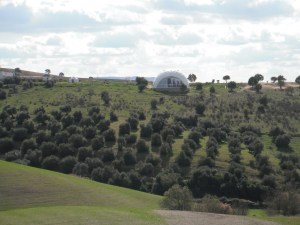
Six-thirty in the morning and the night is still firmly tucked up against the windows. Behind the glass, behind curtains, on the top floor in a large room with a wooden ceiling and rafters,  a group of women get out of bed and dress in silence. We make our beds, we walk wordlessly to the dining hall, where others are also preparing for their practice in silence. A cup of tea, a piece of fruit. Then we slip out of the hall into the brisk morning, our footsteps crunching along the gravel path that leads to a large white dome, which sits like an enormous egg nestled on the hillside.

The stars look alive, breathing softly before dawn, with awing brilliance. I walk along in the cold morning with my face turned upward. They shine so bright, the hills look black against the sky. I find myself thankful for the silence we all maintain until breakfast (three hours later), as with such full days ahead of us, the rest from interacting is a welcome relief. And beneath the starry cathedral above, it feels sacred.

We make ourselves as comfortable as we can in the large dome, stacking cushions and placing blankets beneath knees and ankles, before the bell rings at seven o’clock and we all close our eyes for half an hour of meditation. The sun has risen by the time we open our eyes again, having faced our own minds and bodies as best we could, and after a quick break we begin two hours of yoga practice. Each day has so far had a theme: shoulders, hip openers, foreword folds, backward bends, or twists. Having gone through most body areas and yoga shapes already, we are all wondering what tomorrow morning’s practice will be.

This yoga retreat was once an olive farm (actually it still is, though its primary DSCF3253purpose has changed) on top of a wide, sweeping hill in southern Spain. Several towns are visible beyond the red and green swathes of crops and fields, and it is about an hour and a half from Sevilla. The view is incredible in every direction.
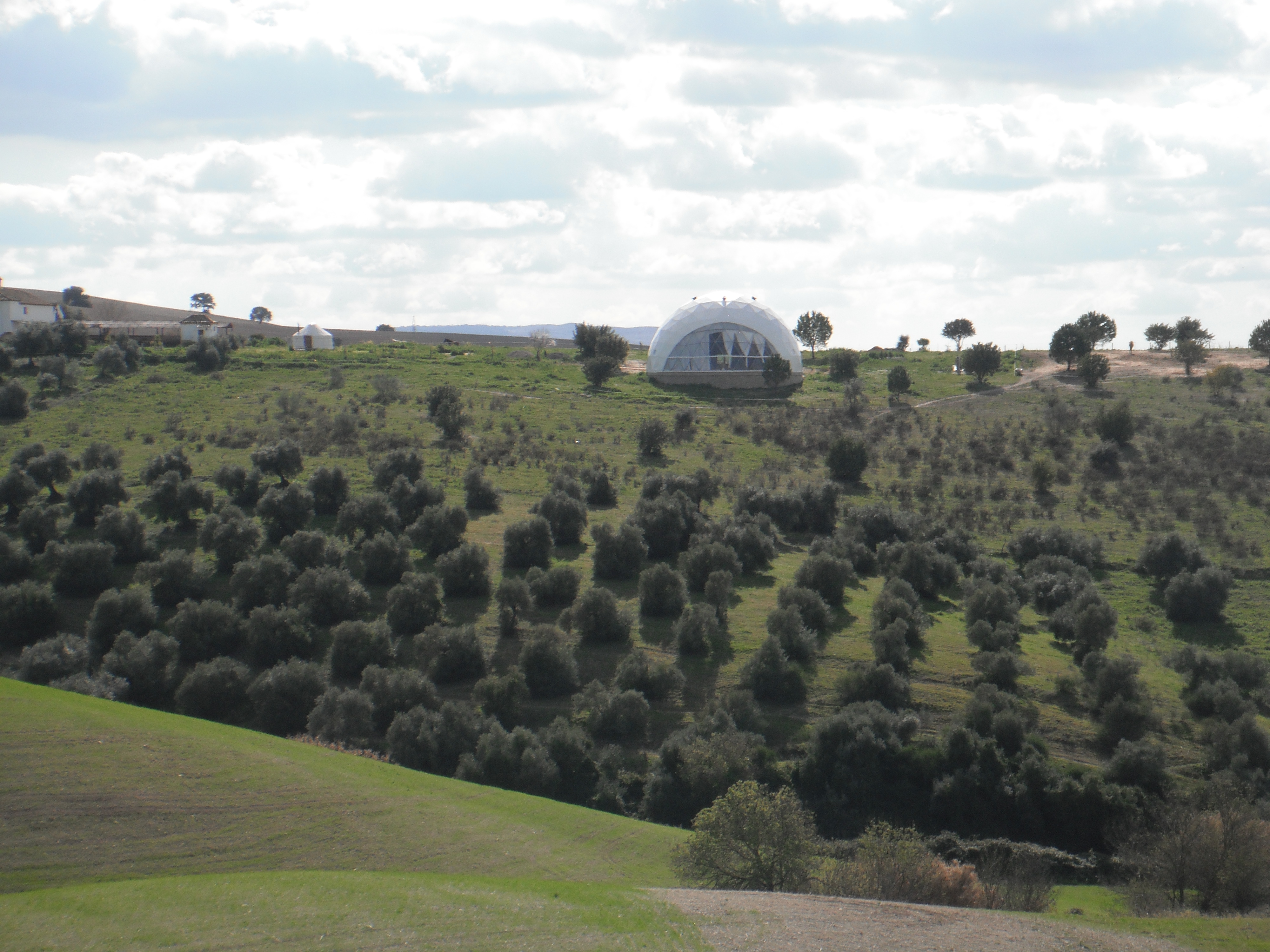
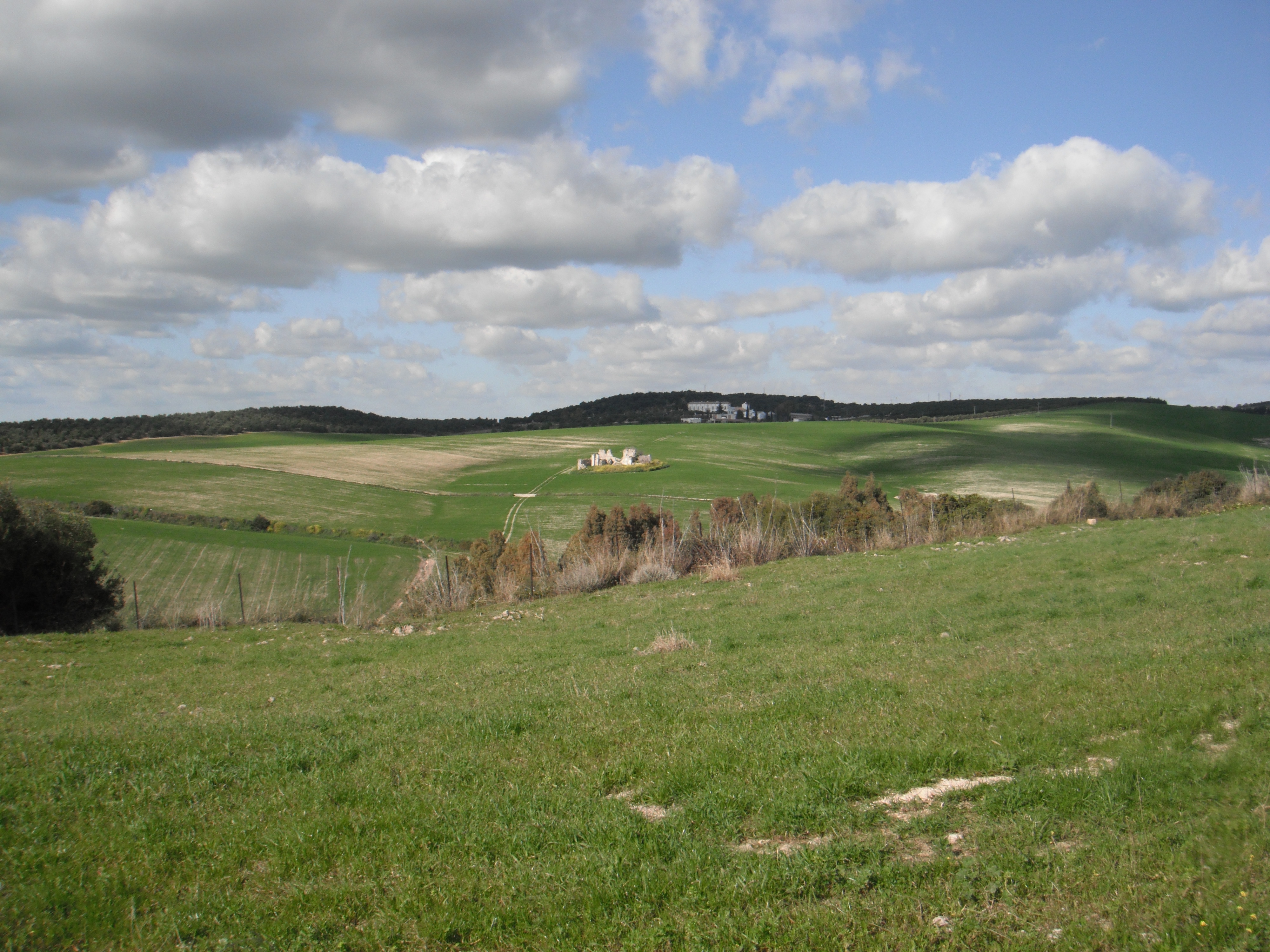
With three weeks to complete 200 hours of training in order to become certified as yoga teachers, we keep a fairly demanding schedule. After yoga practice, we eat breakfast (usually muesli or oatmeal, fruit, and sometimes eggs from the chickens that live here). Our first (classroom-style) class starts at eleven, until 1:45pm when we eat lunch. Our second class goes from 3:45-6:45pm, and dinner is at seven o’clock. The meals are all vegetarian, many vegan, and it feels fantastic to be eating healthy and to have all meals prepared for us. There would not be time to prepare anything near so delicious or varied as we have had, were we cooking for ourselves. After such a long day, including strenuous practice, yoga philosophy and history, posture alignment, assists and adjustments, and anatomy, we are all exhausted. The evenings go by quickly with homework reading and assignments for the following day, and a bit of socializing—everyone is in the same boat, thank goodness, and even a few days in we provide much support for one another.

I suppose any intensive-style course like this would feel overwhelming, but sometimes it feels like almost too much. At the same time, it has been a relief to just get here and begin digging my hands in, rather than nervously anticipating. Although I do feel sore and achy in the evenings, I am not nearly as wrecked as I thought I would be (yet!), and I have been pleasantly surprised a few times at what I have been able to do, both flexibility and strength increasing under this frequent and vigourous practice regime.

Tonight marks the end of the first week here. Each day has felt like just about double, what with the long hours, the new information, the intense activity… it is taking some getting used to! But two more weeks will probably go by fast enough, so we had better aim to be present—good advice at the best of times, but particularly fitting when so immersed in yoga philosophy.

Well, I survived week one; now I had better get to bed so I have a better chance at surviving tomorrow’s class (there is a rumour floating around that the theme will be cardio).

Namaste.


DSCF3237

DSCF3271

Spanish in the Streets

It’s 9:30pm, on the eve before leaving for yoga training. Rob and I have just finished eating an early dinner by Spanish standards, and I feel like I could fall into bed this instant. The week has been full and festive, thanks to a lovely visit from a dear old friend. After many tapas and plenty a glass of wine, I think we are all ready for a rest. But it is sad to say goodbye. On top of that, I will soon be saying goodbye to Rob and to this city, and even a few new friends here, and that feels a bit sad too. I know it is not for long, but I feel like I am constantly leaving places these days.

At the same time, I am of course looking forward to this new experience—to learning, to movement, to seeing the Spanish countryside, to eating healthy vegetarian food. I am even hopeful that the weather might permit a few swims in the lovely pool pictured on the retreat website. The temperature has been increasing over the past week or so, to an almost summery warmth during the day (Vancouver summer that is—not by local standards). The evenings are still cool. But judging by the change so far, I have a beautiful spring to look forward to when I finish my course.

I also look forward to settling in a bit upon my return, to finding work, to getting into a routine, to unpacking my stuff and leaving it that way for a while. We have not yet found an apartment that is to our liking. We have decided that it is worthwhile to be both patient and picky, seeing as I already have a place to stay the next three weeks and Rob can stay in a single room rented by the week. Tomorrow we we will get up early to finish packing and move our things to his room, and later in the afternoon I will catch the bus to the small village of Villamartín. There someone will pick me up and drive me to the olive farm acreage on which the yoga retreat was built, where I will begin this new experience, and perhaps a new chapter.

Meanwhile, the rest of the city is celebrating Friday night. A group of young señores y señoritas is laughing and drinking outside our window. Someone had a guitar earlier, playing songs like Stairway to Heaven and Smells Like Teen Spirit while his friends listened with the attentiveness he was surely hoping for. Flamenco seems to appeal to an older crowd than that which has gathered outside our window. We were lucky enough to witness a spontaneous flamenco practice session the other day, performed by leather-jacketed thirty-somethings—long dreads hanging down their backs—in the hip and hipster café area of La Alameda. The really lovely thing was that nearly the whole café got involved, keeping time with loud and rhythmic clapping, some of them even singing, or just smiling and tapping their feet as they smoked their cigarettes and drank beer in the sun. What the Spaniards seem to share is a love of spending time together, of sharing drink and food in the open air, of soaking up the afternoon and evening with a presence that might suggest there is nothing else to do—but not because there actually is nothing, but because this social interaction is just as worthy as anything else on the list, so they give it their all.

My own social interactions this past wDSCF2145eek were thoroughly infused with the Spanish spirit. Strolling and wandering, enjoying afternoon sweets before dinner, reading in the sun, and hours of drinking and eating—it was a lovely way to catch up with an old friend and to enjoy the Sevillan way of leisure before moving on to a more austere lifestyle over next few weeks. But for now, to bed! Buenas noches.

IMG1849