New Year’s Musings

The temperature slips below zero and the wind picks up. An east wind straight from the frozen belly of Russia, my Mormor tells me. The trees clap their branches beneath the grey clouds, which bloom and hurry in a brooding dance across the sky.

The scene is set. Costume on: coat buttoned, gloved hands plunged deeply into pockets, hat pulled down over the ears and hood thrown over the top. I am ready for a cold show beyond the protection of cosy windows and walls, as the front door slaps shut behind me. A chilly wisp of air gets in beneath the scarf. Pull the shoulders up towards the ears, turn the face westward, quicken the pace to get the blood flowing, and onward I plunge into the dark grey afternoon.

The Russian wind quickly drains the feeling from my fingers and toes and I look forward to an upcoming hill to raise my heart-rate. I plough up the slope and then decide to turn around and go back down so I can climb up it again. Reaching the crest for the second time, I can feel my digits once more and I know I will be fine as long as I keep moving. I pause only a moment to gaze around at the rolling fields and naked forests, and the thatched and terracotta rooftops dotting the Danish countryside, before striding onward.

Straight from a warm and balmy Spanish winter into the chilly, windswept breast of northern Europe. Spain’s winter has been one of the warmest in ages, and so has Denmark’s; but its “warm” winter still bites, and today the temperature has finally dropped to a more typical position for the season. It is certainly the coldest I have experienced since leaving Canada a year ago, but I haven’t let it stop me. I roam the paths that wind through bare, open forests and walk by glowing windows and twinkling white lights still up from Christmas. I even say hello to the sea, hiding from the forceful gusts beside a small shed, watching the powerful waves rush towards the shore in a ceaseless white wheel of foam.

Spain now feels far away indeed, but I know that when I board a plane at the end of the month for the long haul to Australia, I will partially be expecting to fly back to Sevilla. It will feel strange to leave Europe after nearly a year living and travelling here. There is so much diversity to explore on this relatively small continent, and within each country as well. The modest slice we have seen has already proved more than I’ve been able to keep up with on my blog, particularly during the last month of backpacking and Workawaying (volunteering in exchange for room and board) in northern Spain. I certainly cannot cover all those experiences in one blog post, though perhaps in this year’s writing I will revisit some of the beautiful towns, cities and landscapes that we travelled through in 2015.

What I will say now is that both Robin and I feel very grateful for our year living in Spain. We learned so much along the way—about other ways of life, about Spanish language, about each other and ourselves—and spent many lovely times with old and new friends. Our circumstances came with their set of challenges, as most circumstances do, but all in all we had so much fun. Looking back on 2015, we’ve also come to the satisfying realisation that we’ve accomplished something we both dreamed about for years. Living in Spain has given us more than many joyful memories; it has increased our confidence in our ability to make our dreams reality, and that is really something.

Now last year is over and a new one has begun. What will 2016 bring, and what will we make of it? As I roam the frosted paths of the small Danish town of Espergærde—the same paths I roamed many a time when this place was my home for a year, nearly a decade ago—I notice how the feet remember, carrying me this way and that without need for pause. My mind is free to wonder at the winter world around me, how it has changed and how it has stayed the same, and how the very fact that I know this place means I have made dreams happen before. I had a goal to live in Denmark, my mother’s homeland, to learn Danish and keep my dual citizenship, and I did that too. Why do I not stop to appreciate such things more often? Probably because I have a habit of jumping to the next goal as soon as one is finished, hardly noticing what I’ve done or taking a moment to enjoy it, running from the fear that what I do—who I am, even—is never enough.

Not today. I take a moment to thank myself for pursuing those wanderlust dreams. Not all of us have the need to travel, but for some, the outer journey is part of our inner journey. Happy 2016 to all, and happy travels, within and without!

Noche Sevillana

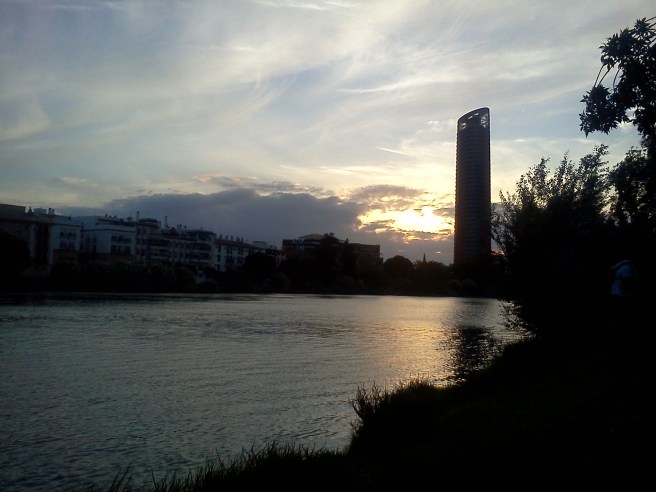
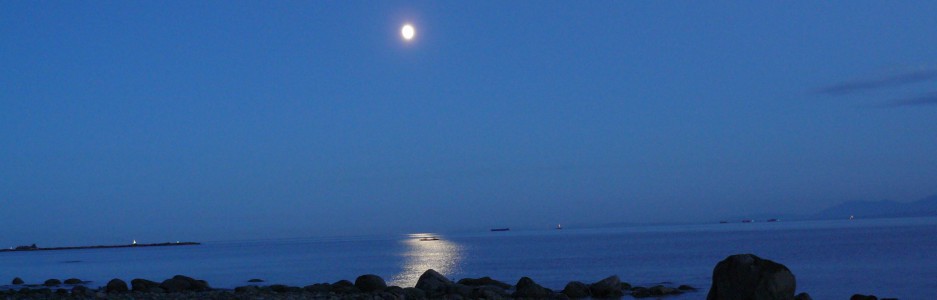
The evening sun shines warm on my face while the breeze flitters with cold fingers against the back of my neck. The grass is tall and uncut, bright and luminous in the light of the low-lying sun, stirring and shivering in the cool currents of air. I sit in a nest of tall blades with a tree at my back, a small green and orange cloud of delicate leaves above me, rustling not only in the wind but with the fitful hopping and pecking of tiny brown birds with tiny black eyes, who seem to know a lot more than they say.

The flies land on everything, from my bare arms to the trembling blades of grass. The river just beyond me has begun to shimmer with the silver and black swirls cast by the angle of the day’s last sunshine. It seems to be rippling towards me as though I sat on the shore of a lake and not a riverbank. And all of a sudden, my paper is bathed in a blue shadow, which is simply the lack of yellow as the sunbeams slip behind the buildings and instant goosebumbs arise on my arms. All at once, we evening park dwellers reach for our cardigans and jackets, look about at the sudden change in light, tuck in our shirts and draw our limbs a little closer in on ourselves.

The hue of the grass is an entirely different green and the breeze seems a little more insistent now. The surface of the river has turned dark green and white, reflecting the sky above and the trees along the bank. Above me the birds still dance about in the sun, but the glow in the west is sinking quickly as the sun somewhere out of sight brings dawn to other lands, leaving the night to claim us. But in the first moments of the sweet liminal space between light and dark, I pull my legs in towards me, balancing my notebook atop my knees, and breathe in the grassy dusk air in thirsty gulps.

My sweater is thin and soon I will wander the cobblestone streets back to my sloping old flat and leave the park to the Spaniards. The twilight will deepen beyond my balcony window and the dinner din will echo in the streets below. Later I will slip into my jacket and go out to meet them. The contrast between my quiet afternoon writing time and the lively noche sevillana feels the same as the contrast between the night and day reflecting on the river.

Sweet river, what a faithful friend you have been; this is the hour I will miss you most.

The city itself is bright and beautiful at all hours, but perhaps I will miss it most at night, when the lanterns illuminate the alleys and the cathedral towers, and laughter and clinking glasses echo through the streets. A week more here before I leave and I miss you already. But tonight I join you.

With my chilly arms it’s time to pack up. Hasta luego, noche sevillana.

IMG2143


¡Madrid!

I have been living in Spain for over nine months now, and I was beginning to feel a bit sheepish when people asked me if I had been to Madrid and I kept answering no. Well, at last I can say yes, and have much to say about it to boot!

Before delving into it, however, let me mention that when Robin and I were choosing a place to live in Spain, he initially suggested Madrid, because the Madrileños (people of Madrid) speak in a clear “Castilian” accent. Also, there is definitely an allure to living in a country’s capital city. But I was keen to live somewhere smaller, and ultimately we both chose Sevilla for a variety of reasons (tapas, flamenco, affordability, Moorish influence, etc). But I must admit that, somewhere between my not-so-thorough investigations into Spain and a friend’s disappointment with Madrid, I somehow got the impression that it was a rather cold city—big, grey, a little dangerous, somewhat sterile-looking. Well, I can now say that I was entirely wrong. Madrid is a mighty cool city indeed, and I had a wonderful time there.

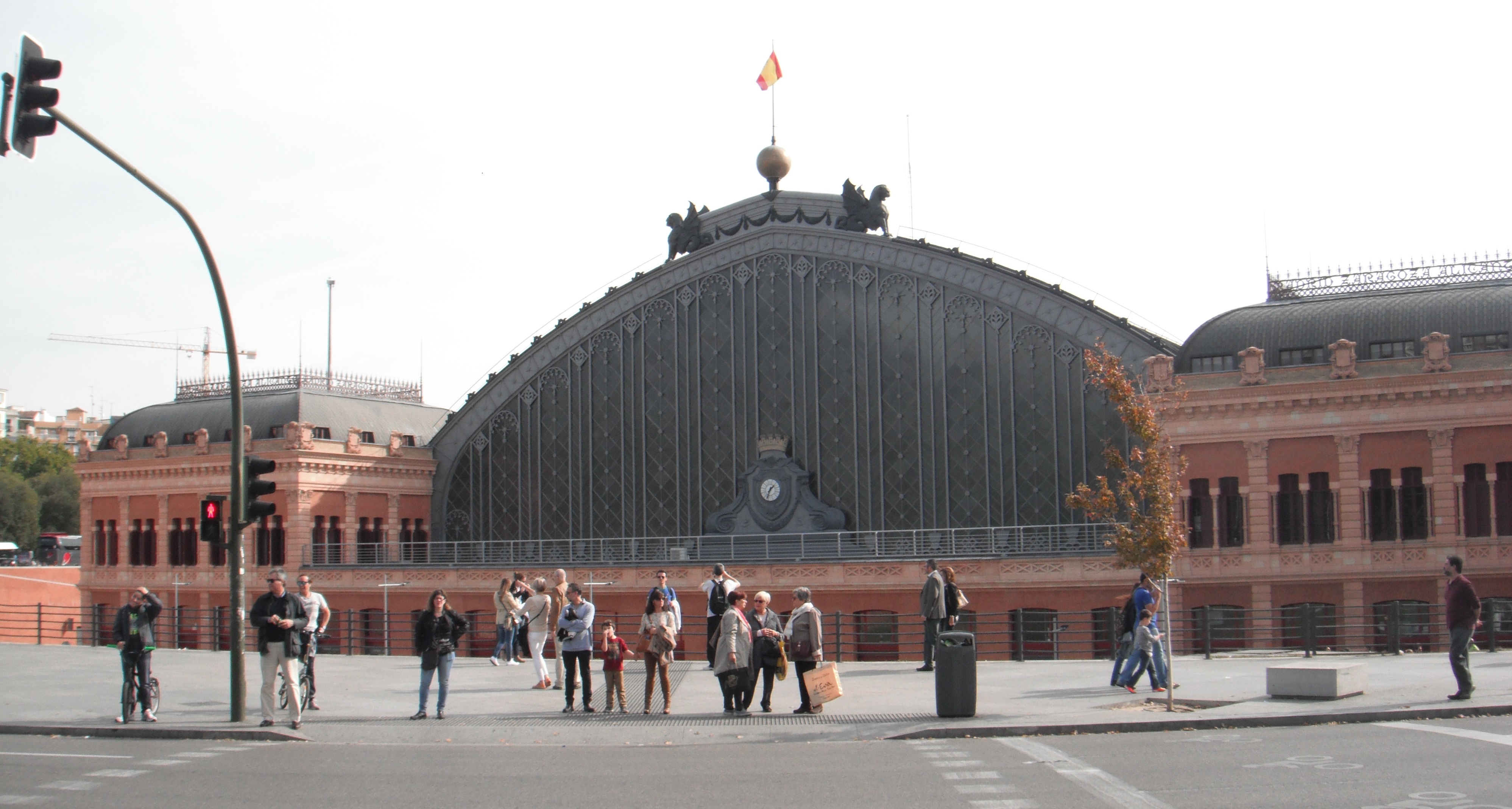
Main Train Station, Atocha
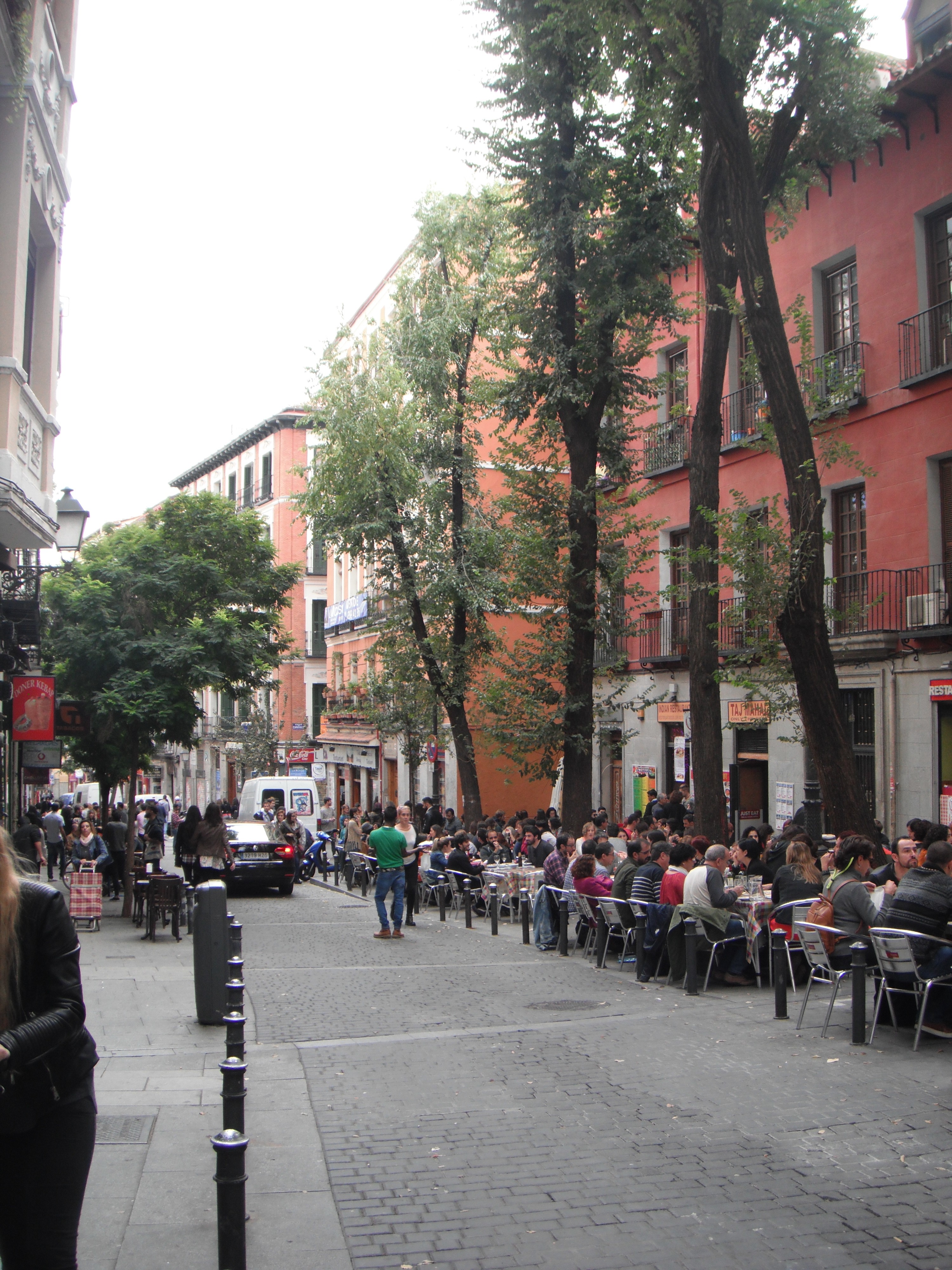
We arrived late at night by train, greeted by a brisker temperature than that we were used to, as we made our way out of the main station, Atocha. The impressive railway station was the first thing to catch my eye, and the fact that the buildings were taller than in Seville, the streets wider, and the architecture in general more like other western European cities I have been to (no Roman and/or Arab features on Catholic cathedrals, for example). Though lacking in Andalucía’s unique style, the next day’s explorations revealed Madrid to abound in its own charm: stately and Lavapiéselegant, yet full of quirky twists and turns, and a bustling blend of different neighbourhoods all within walking distance. Madrid is a hilly city too, which is something I really appreciate. Hills add mystery to a place; you never know what will appear over the crest, and downhill curves fill me with eagerness to find out what lies around the bend. The neighbourhood of Lavapiés was particularly charming in this regard, made up of many sloping cobble streets, all peppered with restaurants and bars and al fresco dining.

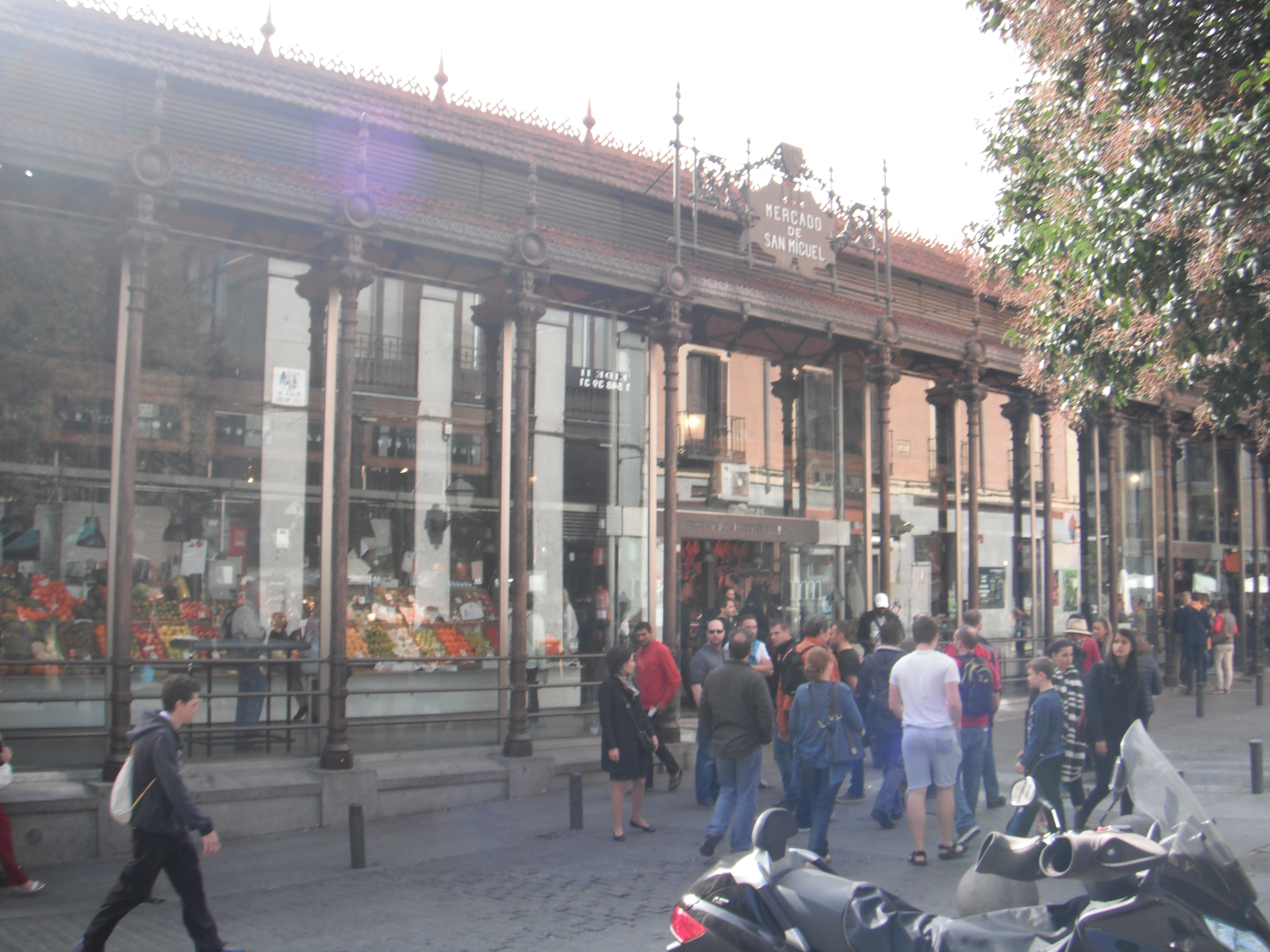
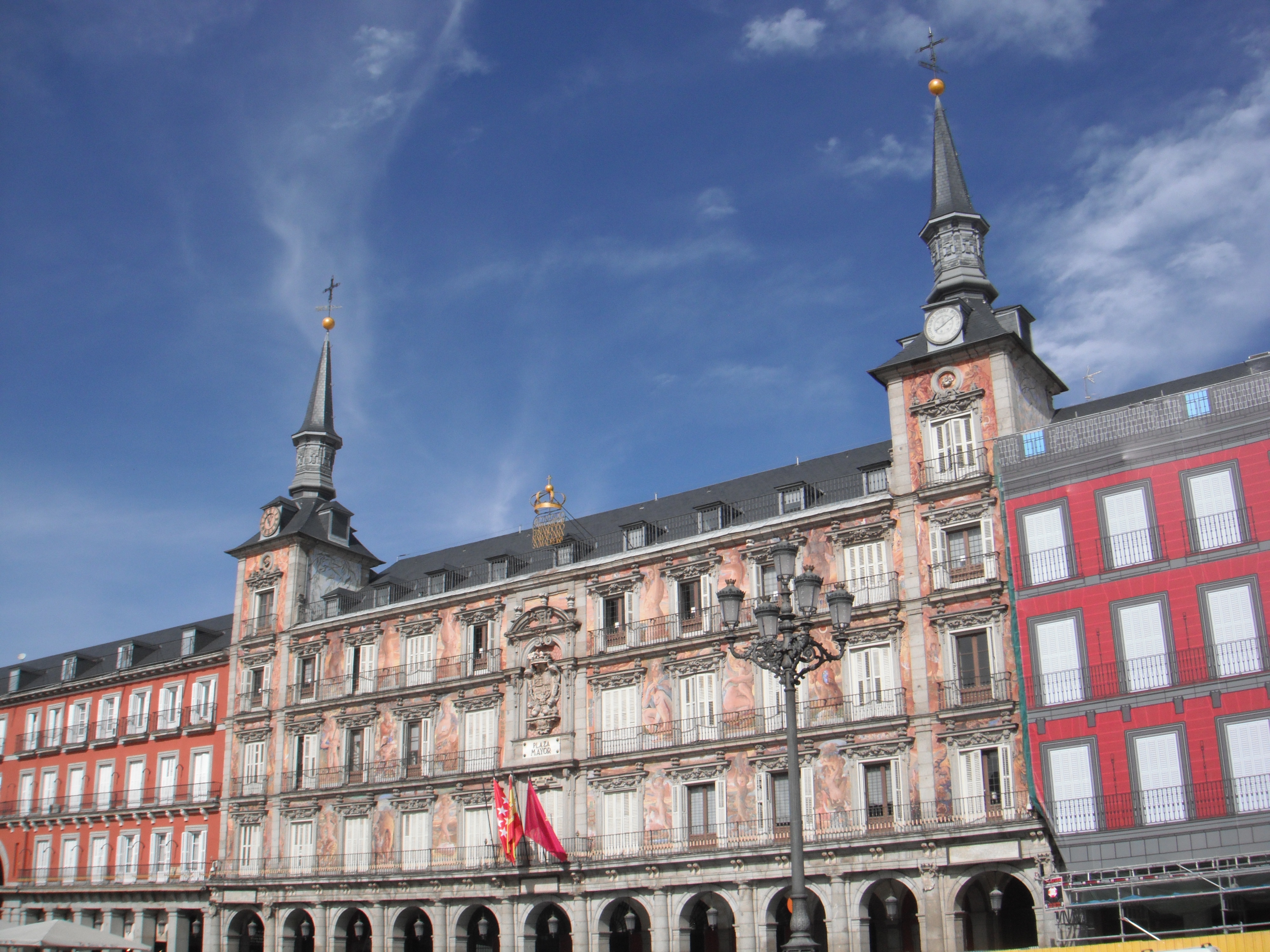
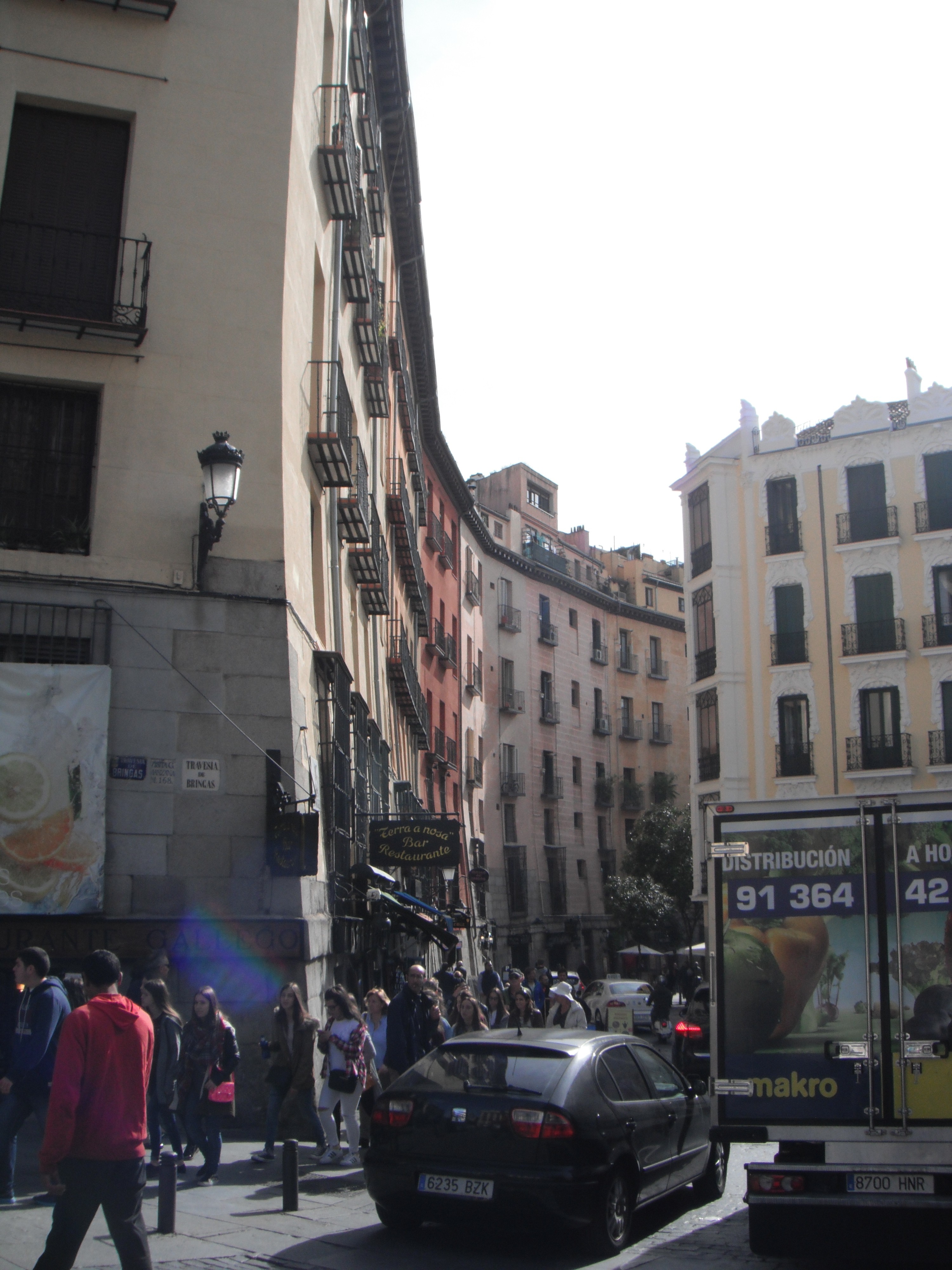
Malasaña also proved a lovely neighbourhood to wander through, with a central pedestrian street and several bright plazas in which to have lunch and an afternoon brew. The city centro had much to offer as well, including the grand Plaza Mayor and one particularly appealing hilltop plaza with a lovely food market, a sun-bathed patio, and a downhill crescent street where the very building-fronts seemed to relax backward against the structures behind them, gently concave like a person leaning on a wall.

    Mercado de San Miguel  Plaza MayorIntriguing downhill curve

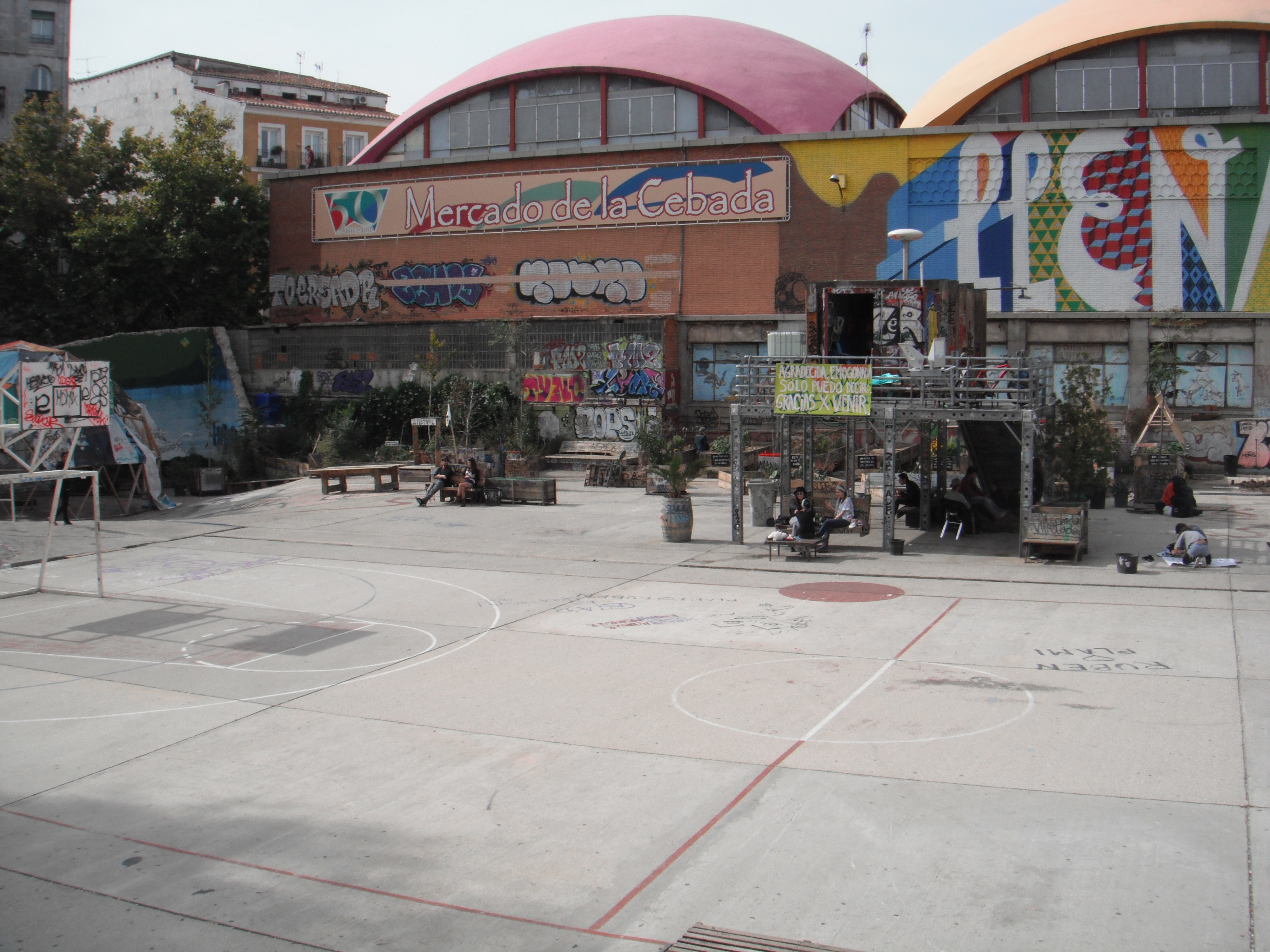
The area of la Latina was little lower in stature and narrower of street, and most of the roads were lined with cosy looking restaurants and bars. The lanes then opened up into a plaza, in the middle of which there was a sunken concrete park walled inA funky plaza, La Latina by plywood, which reminded us a lot of Berlin in its funky use of (what I assumed to be) a once-industrial urban space. As one might imagine, the people of Madrid also varied greatly in style and aspect, a pleasantly colourful reminder that central and northern Spain are generally less traditional than the southern regions of the country.

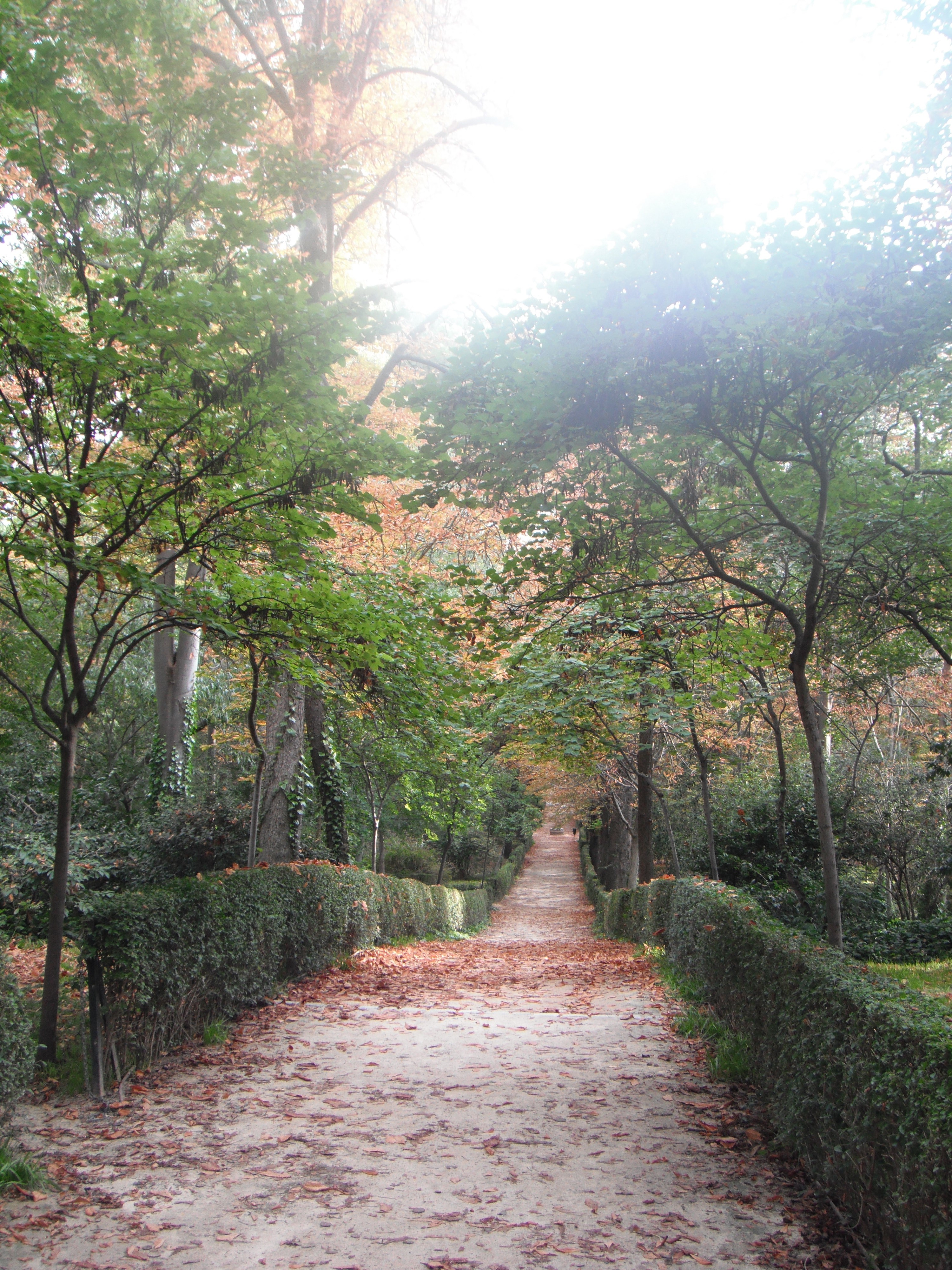
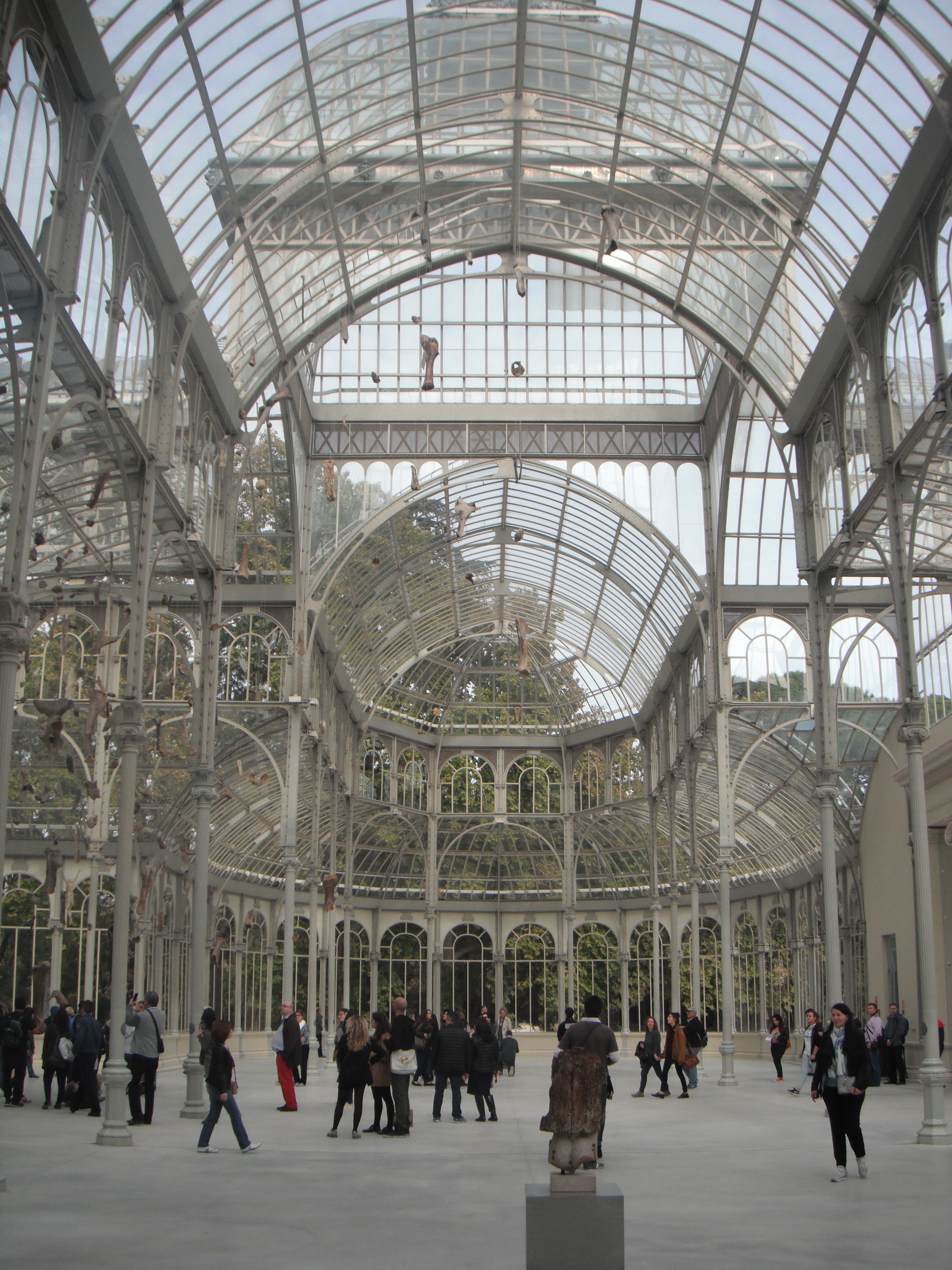
Another impressive part of Madrid, not be overlooked, was el Retiro, the large park near the central train station, which my Spanish teacher described as “the lung of the city”. The word retiro in this context means retreat, hideaway, or refuge, all of which suit the enormous space very well, especially for someone like me, who, although fascinated by cities, needs to get away from that hustle and bustle regularly in order to connect with nature. Perhaps spoiled by having grown up with the forested mountain and rugged west coast shore at a stone’s throw from my El Retirohouse, I do not find a manicured park as recharging as the untamed wild, but it definitely makes a huge positive difference to the atmosphere of a city, and wandering through el Retiro was a highlight. We enjoyed witnessing it in all its autumnal glory, alight with deep reds and oranges. We also saw several interesting structures in the park, including el Palacio de Cristal, or glass palace, which was aptly named, looking like an elegant cross between a gigantic greenhouse and an atrium.

Palacio de Cristal

We ate well on our holiday too. Madrid is bit more expensive than Sevilla, but there is also a lot more variety, and because of that we did not actually end up eating many Spanish meals. Spain boasts an impressive cuisine to be sure, and we appreciate it, but having grown up either in or near the multicultural cities of Melbourne and Vancouver respectively, Rob and I do miss eating food from around the world. So while we did enjoy some Spanish dishes (the pimientos del padron—small green peppers fried in coarse salt—were particularly delicious), we also really enjoyed eating some Indian curries and pad Thai.
Plaza en el centroBesides eating, drinking, and exploring the lovely neighbourhoods of Madrid, we of course visited some of its famous galleries, including el Museo del Prado and el Museo Nacional Centro de Arte Reina Sofia. We wandered for hours through the enormous buildings, which boasted vast collections of the old and the new respectively. In the Prado, I particularly enjoyed the paintings by Goya, and in Reina Sofia, by Dali; I was also very impressed by the sight of Picasso’s Guernica in real life, which took up a whole wall of its own.

With three and a half days to discover Madrid, I certainly could have spent more time there, but I enjoyed myself fully and saw enough to be quite captivated by the city. Knowing what I now know, would I have thought differently when Rob suggested Madrid for our year away? Perhaps I would have, or at the very least I would have given it more serious consideration. But I remain happy with our choice to live in Sevilla. It really has offered us that “quintessential Spanishness” we were after. It still does, of course, though not for much longer; in three to four weeks we’ll be on the road again, heading north to finish up our year in Spain in the country’s verdant, uppermost provinces. Since we will probably fly or bus straight there, I am very grateful to have had the chance to visit Madrid this past week. It is a city I could most definitely visit again, with much to offer in terms of culture, a big “hideaway” park, and lots of intriguing, hilly neighbourhoods to wander.

El Retiro

More Journeys: Lisbon and Edinburgh

Fall has blown into the north countries on cool wings, picking the crisp red leaves off the trees and gathering them together in wet heaps on rainy afternoons. Here in southern Spain, autumn has thus far revealed itself to be more like a lovely, Canadian west coast summer than anything else, albeit shorter in daylight hours. The streets here are filled with people again, enjoying the bright afternoons and balmy evenings, and the city echoes with the din of voices, the clinking of glasses, and the scrape of cutlery over small tapas plates. Rob and I are back in the Sevilla we dreamed about.

But we are literally back here as well, having recently been out of the country. Our summer has actually turned out to be a rather adventuresome one. You might think that this would have lent itself to more blog writing with all that material, but in reality I haven’t been able to keep up a weekly post due to all the action (with a bit of lying around and roasting in-between travels and visits—the slothful effect of that summer heat can’t be underestimated!). But things are starting back up again, from giving English lessons as students return from holidays to reestablishing good yoga habits. In getting the blog-writing gears up and running as well, I feel as though a little review of the past couple months’ adventures is in order.

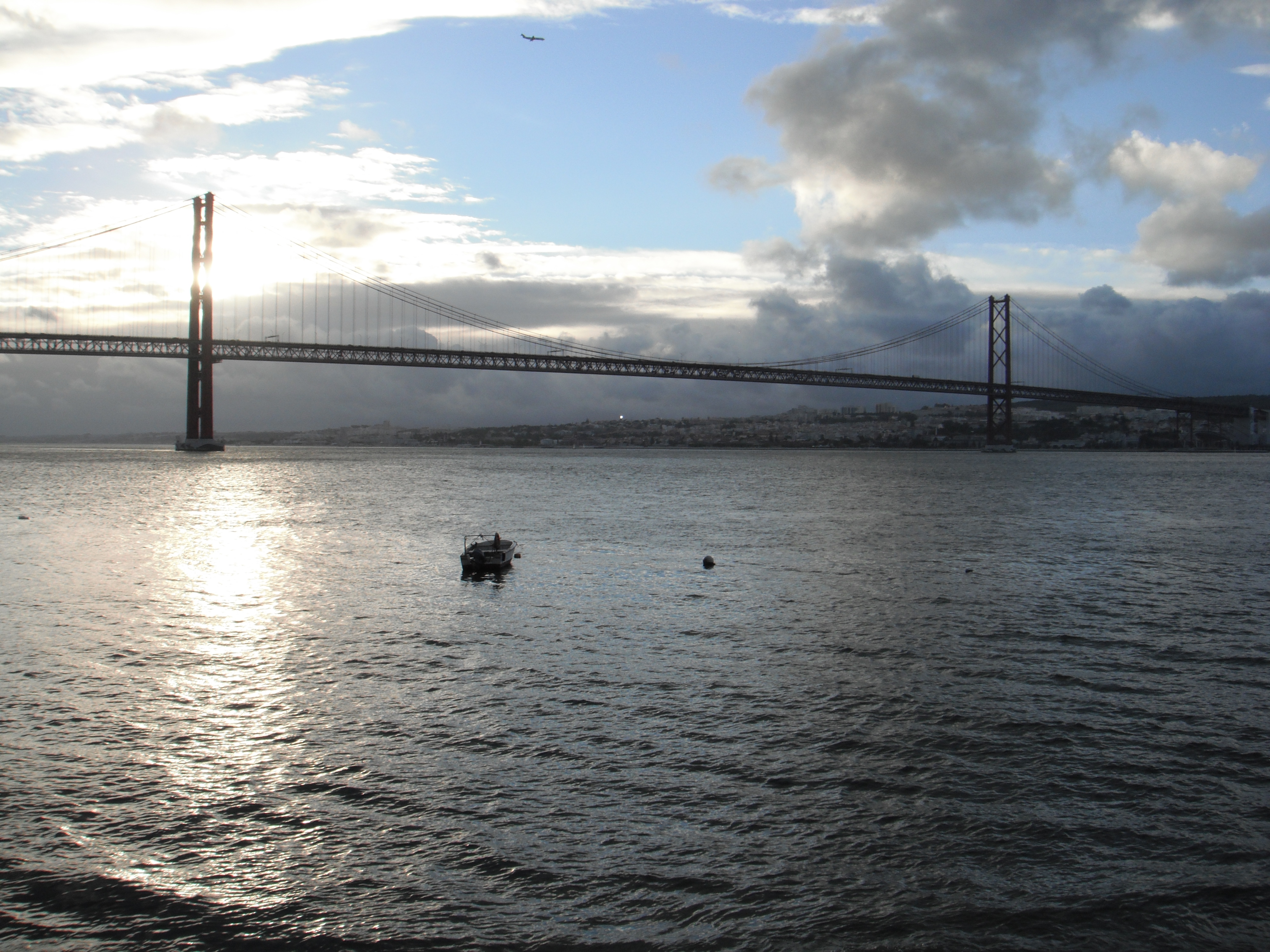
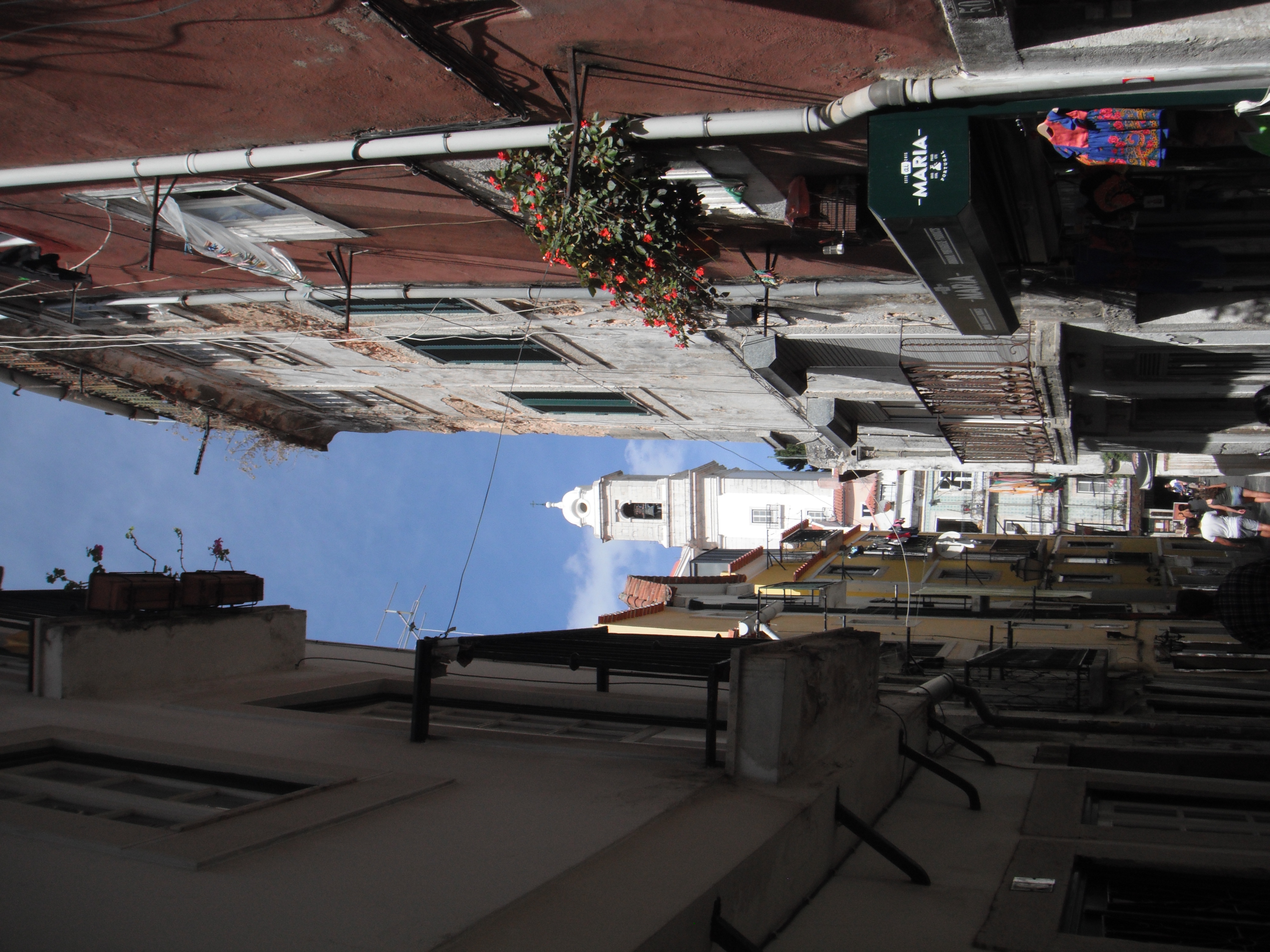
After we got back from Germany and Denmark, only a couple of weeks passed before we climbed onto a toilet-less but air-conditioned bus to Lisbon, or Lisboa in Portuguese (it sounds like “leesh-boa” ), which we discovered to be a charming city. The hills reminded us of San Francisco, or maybe it was the great red bridge that was designed by the same architect who built the Golden Gate, DSCF5056and used the exact same design and style in Lisbon, resulting in an essentially identical sister bridge. Either way, we love San Francisco so the association was a good one. We walked a lot, exploring beautiful winding alleys, numerous old churches (including a stunning roofless cathedral), and the lookouts dotted all over the city, where we would often join the locals in a beer while enjoying the views.

DSCF4956   DSCF4840

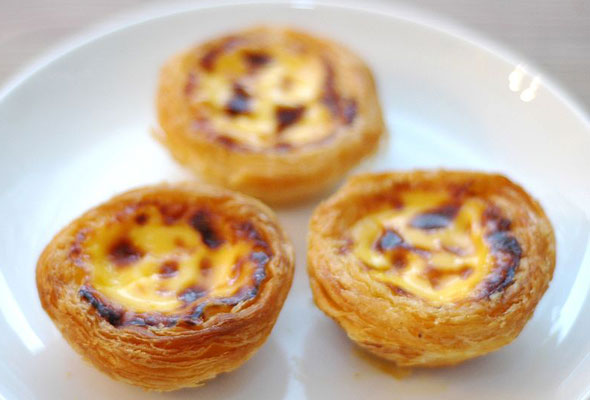
Lisbon lies along a huge river, so wide it feels like an ocean strait, which was a lovely reminder of home. It was not only the city’s beauty, however, that left us dreaming of our time there after we had left; it took a while before I stopped longing for Portuguese pastry! The pastel de nata, or pastel de Belem, is a famous wee tart—flaky, crispy on the outside with the smoothest creamy filling—that had us hooked pretty quickly. The first day Rob and I tried one with a morning coffee. The coffee was good and the pastel was delicious, so we went back to the same café the next day and this time each ate one and a half. Next time it was two each, and when we were joined by one of our best friends who was travelling in Europe, we all were eating at least three a day. I did feel pasteis de nataa bit sick after this new practice (not surprising considering I’m allergic to dairy, and incidentally I have since decided not to make any more exceptions for ethical/environmental reasons as well my health), but that certainly didn’t taint the memory of the famously scrumptious pastel de nata.

The three of us did visit one more place in Portugal before heading to Sevilla together, but it’s not worth dwelling on… I’ll just say that Lagos is packed with partying tourists in August, and depending on your (overpriced) hostel, bedbugs too.

Once in Sevilla, we all settled in together for a week or two, partaking in activities such as: washing all the bed sheets and trying not to scratch ourselves raw; a bit of street wandering and a bit more laying low in the flat as the day’s heat passed; eating tapas and searching for Portuguese bakeries; a few nights in a nearby town camping and lying on the beach; visiting with some of Rob’s friends from Australia who also were travelling in Spain; and just enjoying each other’s company.

When Rob and I first found ourselves alone in our flat again we didn’t quite know what to do with ourselves. Goodbyes are sad of course, and I didn’t have many English lessons to teach with most of my students still on vacation. Furthermore, there was no sign of the cooler days I associate with a coming fall, and the heat was still too oppressive to feel like getting out much. But we didn’t have long before we were off again on another trip, this time to Scotland.

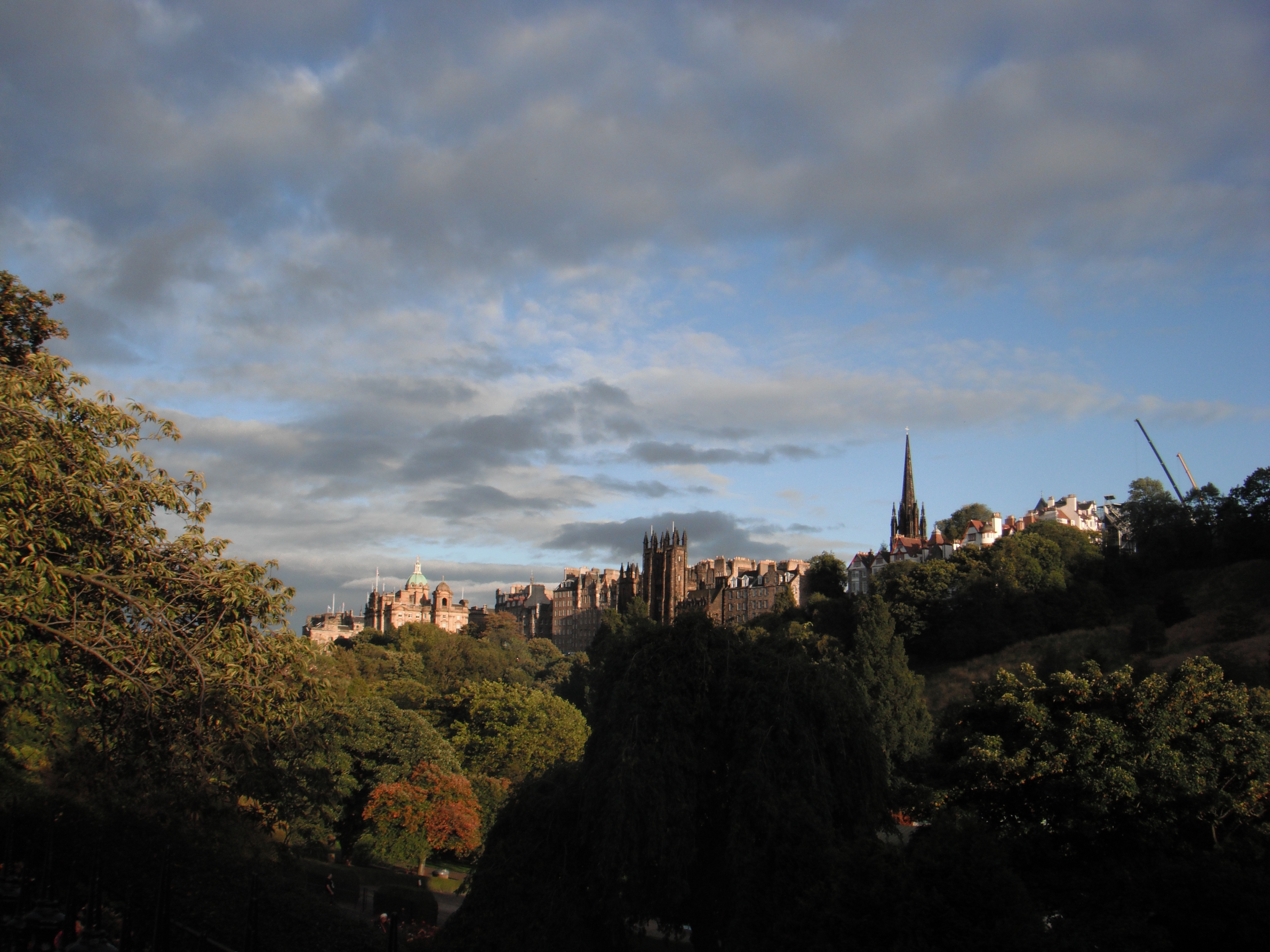
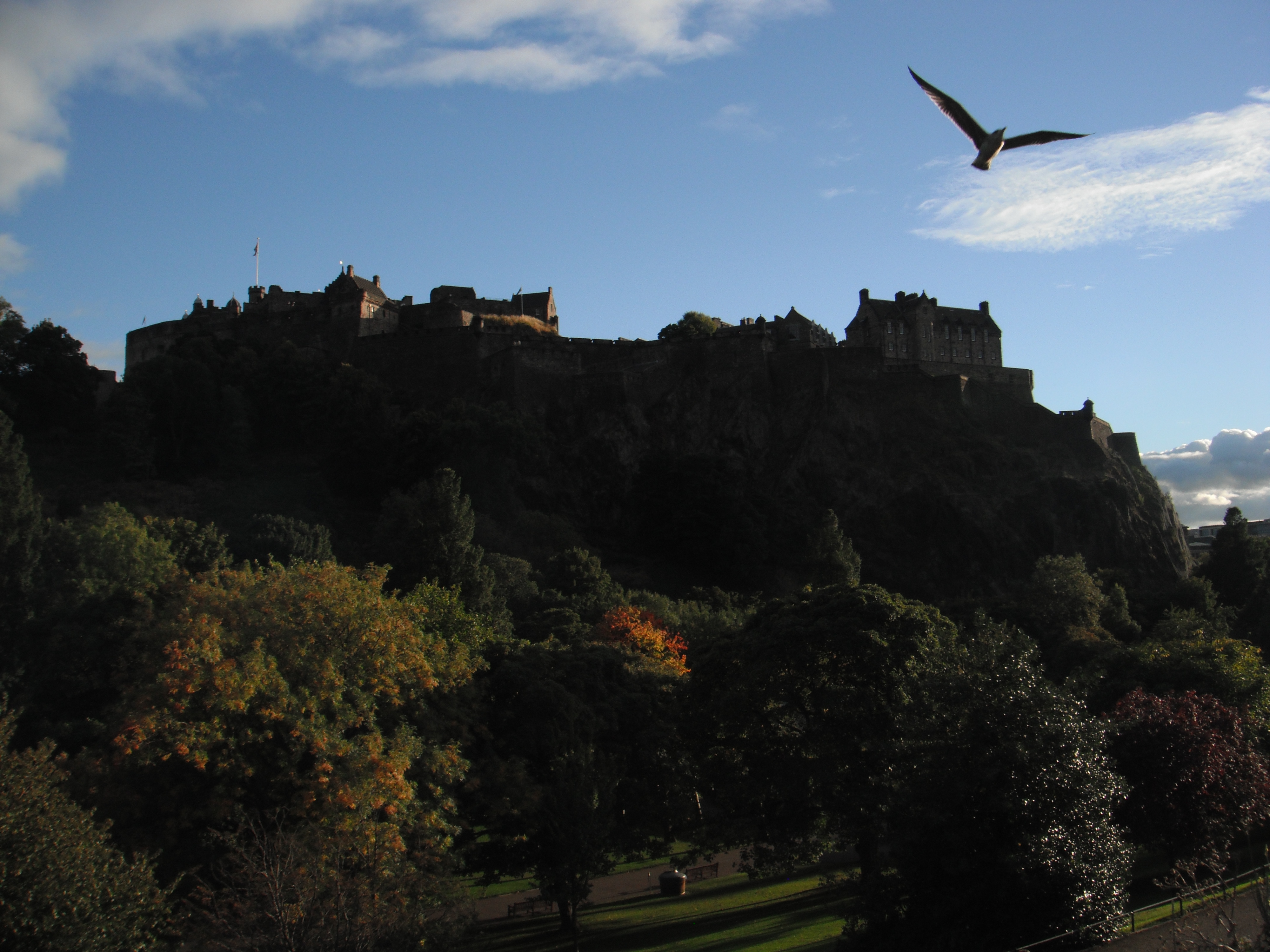
We spent most of our time in beautiful Edinburgh. The Old Town and New Town—divided by a leafy, valley park—hint at the interesting history of this city, the remnants of which can be seen all over the place. The castle looks down from the highest point of the city centre, perched atop the end of the Royal Mile. I like to recall it as it looks in the evening, when the last, low rays of the September sunshine turn rich and yellow, and the castle is the last place illuminated before it is wrapped in chilly shadow.

DSCF5456     DSCF5455
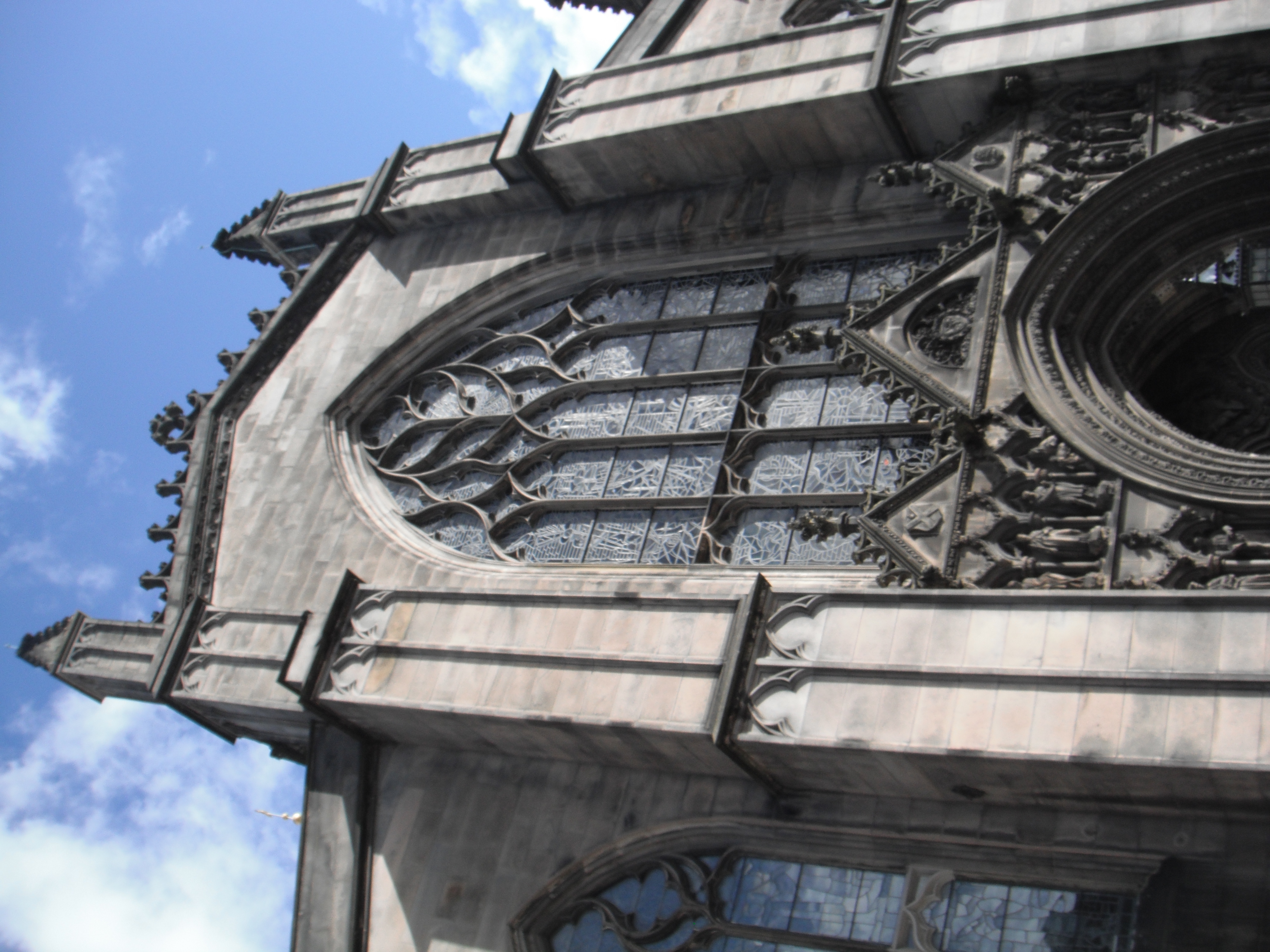
Edinburgh feeds a writer’s imagination, with its narrow closes and medieval churches (stepping into St. Giles cathedral felt like transporting back in time, where I half expected to see Arthur’s knights bowing their head in prayer before riding off to battle). The Writers’ Museum in Lady Stair’s Close certainly helps as well, where one can get lost in the life stories of Burns, Scott, and R. L. Stevenson, easily imagining how the city looked in their times.

DSCF5364    DSCF5433

Edinburgh is a place I have been before, and holds many fond memories for me. It has symbolized a place of friendship for me, associated with cosy dinners and conversation, laughter among old and new friends, and this visit happily preserved these warm traditions.

So, we are returning to Sevilla filled up with the glow of good times, and we have certainly appreciated our welcome into sunny, perfectly warmed days and festive moonlit nights. October is now underway, which means we have been living in Spain for nine months now! It seems that time made a dash for it during all these comings and goings. Oh well, así es—we had better stay put for the rest of the Sevilla chapter.

Journeys

The first morning I woke up back in Sevilla I had to wait a few moments before I remembered where I was. The heat reminded me soon enough, and made me miss waking up in the cool Danish mornings beneath a nice big, proper blanket, and looking outside at the lush green countryside. Denmark happens to be experiencing one of its coolest summers in years, and we had several days of rain while we there. Although the Danes were longing for beach weather—and we enjoyed the few days that were actually sunny just as much as they did—the rain was very soothing for Rob, Anna and me, coming either from roasted southern Spain or drought-stricken BC.

Back in the dry heat of Sevilla (which is experiencing one of the hottest summers in years, incidentally), I reflected longingly but happily on our visit to Denmark. Whether it was raining or shining, I just loved being around trees again—big, leafy, happy green trees—and running water, the sighing ocean, open meadows and fields swaying in the breeze. Northern Zealand, as the area is called, is also an extremely idyllic part of the world, which is home to some of the most enchanting and adorable houses I’ve ever seen. Rob described it as stepping back in time, and it really does feel like that for someone coming from a young country like Canada or Australia, where castles and thatched roofs are few and far between. Denmark is also known for its modern architecture, and for the most part, even the simplest buildings there have style.

Sevilla’s charm is entirely different, but it is also fun to be back in this lively culture among all its al fresco dining and ornate architecture. I’m ready to get back into our Spanish experience and embrace our remaining time here. I still miss Canada and all my family and friends of course, but I’ve been away enough time to have gotten into the swing of things and not long for home so sharply. The intensity of the initial ache has been replaced by a sweet and gentle longing, almost enjoyable. I have experienced this feeling before, having lived in both Denmark and Mexico for nearly a year each time, and I know to savour it. I have never lived abroad before as long as I plan to this time, and I have no doubt there will be times when the ache for familiar faces and places becomes overwhelming. But right now I’m feeling at peace with my surroundings, and quite aware of the fact that our time here is likely to go by before we know it and we’ve got to take advantage of it. Spanish is a beautiful language, and this heat won’t last forever. Soon it will be fall, and then winter, and time to move on.

I have made no secret of that fact that the plan to live several years abroad frightens me. I see now that this fear caused me to resist being in Spain—as exciting and exotic a place as it is—given that it signifies the journey has begun. I had been looking forward to our trip to Germany and Denmark with an excitement I could hardly contain, particularly eager to be reunited with loved ones and walk familiar ground again. I am happy to discover that—now that it has happened—I do not feel simply let down that it is over, but rather strengthened and warmed, and happy to be here. The experience has helped me accept where I am, and to appreciate it on a deeper level. In fact, I’m totally in the mood to dig my hands into this lively, boiling hot city, and soak myself in its crazy Andalusian Spanish. ¡Viva, España!

DSCF3569 - Copy

Hot Air

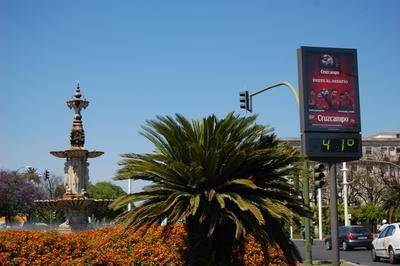
Creating a new routine in 40 degrees Celsius or more presents unexpected challenges for a west-coast Canadian. Back home, living by the sea keeps the temperature moderate; though we occasionally have heat waves into the mid-thirties, the average temperature in Vancouver during the summer would not be more than mid to late twenties. Sevilla recently experienced the hottest recorded temperatures in May ever. On one of these hot, dry afternoons—on my way to give some English lessons—I saw on a large digital thermometer that the air had reached 41 degrees by 3:30pm. The twenty minutes each way left me feeling crispy and exhausted. I came home to our apartment, with the blinds drawn to keep out the hot sun, drank a litre of water or so, landed on the couch and stayed there for a good five minutes without moving. The air is so dry outside that you do not really sweat until you come inside.

When Rob and I visited Australia during their summer a couple years ago, Melbourne also experienced a heat wave where temperatures neared forty degrees. Such heat waves are fairly normal there but luckily they are peaks in the average temperature and do not last the whole season. The air was dry like here, and I recall going for a run one morning, like a true green newbie, and coming back parched as a bone. As soon as I entered the cooler indoors I began dripping with sweat, while outside it had evaporated off my skin immediately. When the breeze blew, it was like standing in front of a giant hairdryer.

This aridity of Melbourne’s climate felt strange to me. I had travelled through hot towns in Central America where the temperature reached 38 degrees or so, but the climate was humid. Instead of feeling crispy you were constantly damp. Immediately after having a cold shower you started to sweat and there was simply no chance of ever having a dry forehead. I have always heard that humid temperatures feel worse, in that they really get into your bones (I have definitely experienced this to be the case with humidity in the winter; wet cold generally feels worse than dry cold). However, I am not convinced that I prefer dry heat. Maybe it has just been too long since I experienced those dripping afternoons of the tropics, but the task of crossing an arid landscape while the sun burns down with obscene intensity has begun to really scare me.

What scares me most is that the temperatures we just experienced are only the beginning. Sevilla is known for hot summers, ranging somewhere in the forties for at least a month or two. The other day my Spanish teacher told me he had once seen 53 degrees emblazoned on one of those digital thermometer signs (but luckily that is not the norm). The streets are deserted in the afternoons and everyone shuts up their windows as if something sinister were about to blow through the streets. I begin to wonder about our choice of Spanish cities, but there is no point in ruminating too hard on that. We made the decision based on a variety of factors and we are committed now, with Rob’s study visa tied to a great school here and our apartment leased until the fall. So we will just have to make do. We will visit my family in Denmark during the summer and perhaps we can work in a few other holidays. And besides that, well… time will tell. The fear of someone finding me like a dusty peanut husk in the street does frighten me. Alternatively, I fear escaping that fate only by hiding in a dim cave of an apartment all summer, fanning myself in a clammy heap in front of the one air conditioner. Again, time will tell.

From a bit of oral research, it appears that our hope lies in the mornings. The temperature cools through the night, and people get out for exercise and fresh air before midday. Looks like I will have to become an early bird for a few months, although with Spanish dinner culture not really coming alive until nine or ten… well, it is a puzzle we have yet to solve.

In the meantime I am enjoying the positively balmy days of 32 degrees or so, as the heat wave has temporarily given us reprieve. Yesterday I accompanied some friends to a beach about an hour or so away by car, and the air, the sun, the breeze—it was all perfect. It recharged me and filled my soul. There is hope yet. And the saying does go that what doesn’t kill you makes you stronger, right? Survive this summer and build character!

weather-seville-3

A City Named Pomegranate

We spent five days in the hilly city of Granada. Seeing the mountain range of the Sierra Navada in the distance filled me with a wonderful sensation of both calm and exaltation, making me realise how much I miss not only the sea, but the tall blue mountains of the Canadian west coast too. While in Granada, I loved looking out from a hilltop and seeing the great mounds of indigo topped with white. It was also deeply satisfying to climb the narrow and winding streets, feeling the muscles working and the heart-rate rising, in comparison to the also charming but very flat Sevilla.

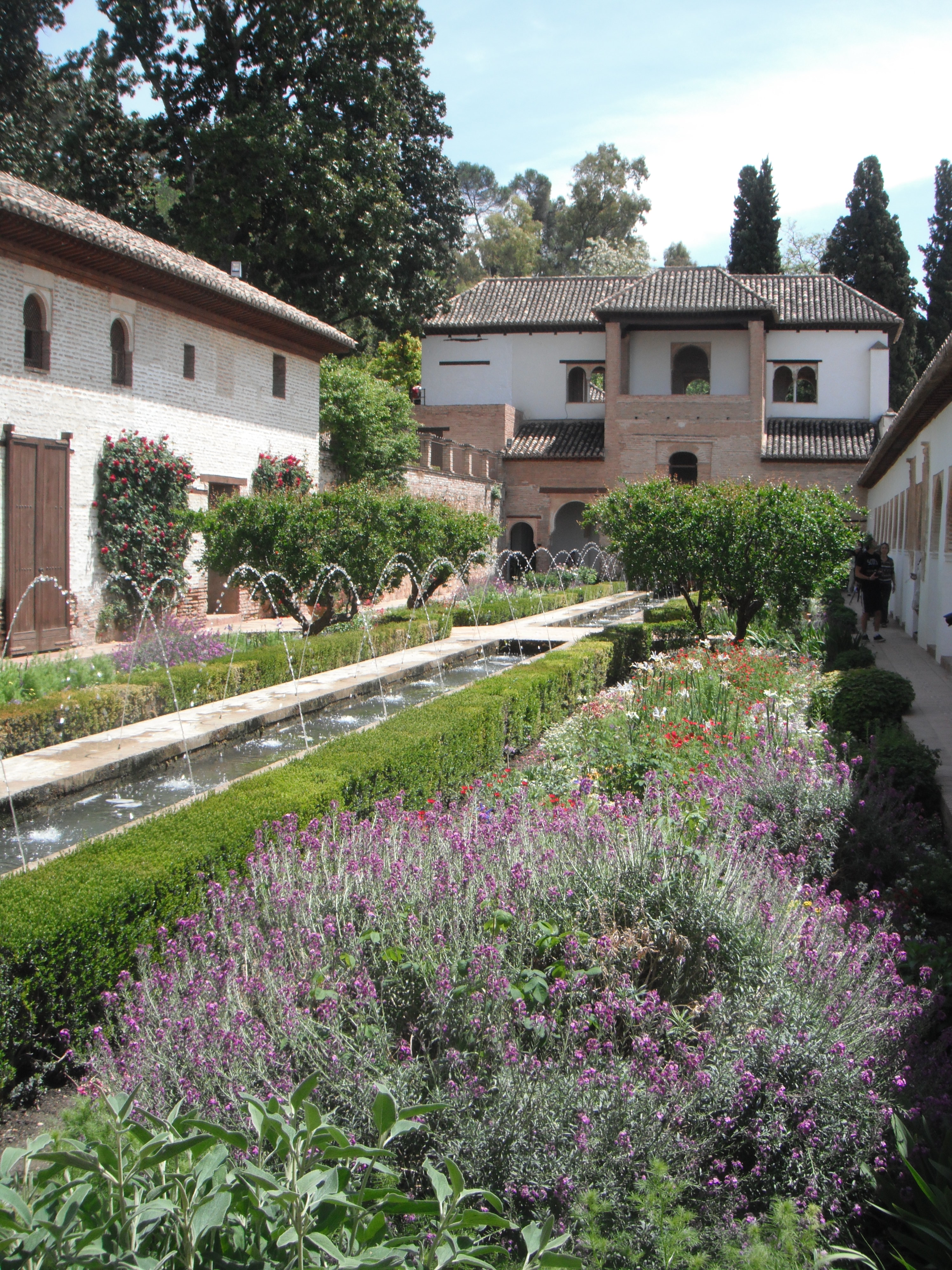
And of course, Granada is home to the famous Alhambra. I do not know where to begin in describing it. The collection of palaces, gardens and fortresses sits atop an enormous hill covered in deciduous forest, which in itself is stunning. Walking through the pathways beneath a luminous green canopy, listening to the sound of running water (Moorish fountains and streams abound alongside every  leafy passageway)—ah, I loved it. Although we only had tickets to enter the Alhambra grounds once (thanks to Robin heroically lining up at 6:20am!), I returned several times to the surrounding park to soak up the peace of trees and water.

DSCF3800

We visited the Alhambra the day after arriving in the city, entering the grounds just after opening time at 8:30am (those also hoping to purchase same-day tickets but who arrived after 7am probably did not make it in, judging by the long, thick, snaking queue that had formed when Robin’s parents and I joined him around 8am). We began wandering through the immaculate gardens in the clear, chilly morning, making our way to the Nasrid Palace for our entrance time of 10:30. Those Moorish kings really knew a thing or two about architecture! The vaulted ceilings, the archways, the brilliantly patterned and coloured tile-work, the minute details everywhere that form a breathtaking whole… an incredible place to visit. And throughout nearly every room and courtyard, the gentle babble of water flowed through fountains and troughs carved into the marble floors.

DSCF3825 DSCF4033 DSCF3826
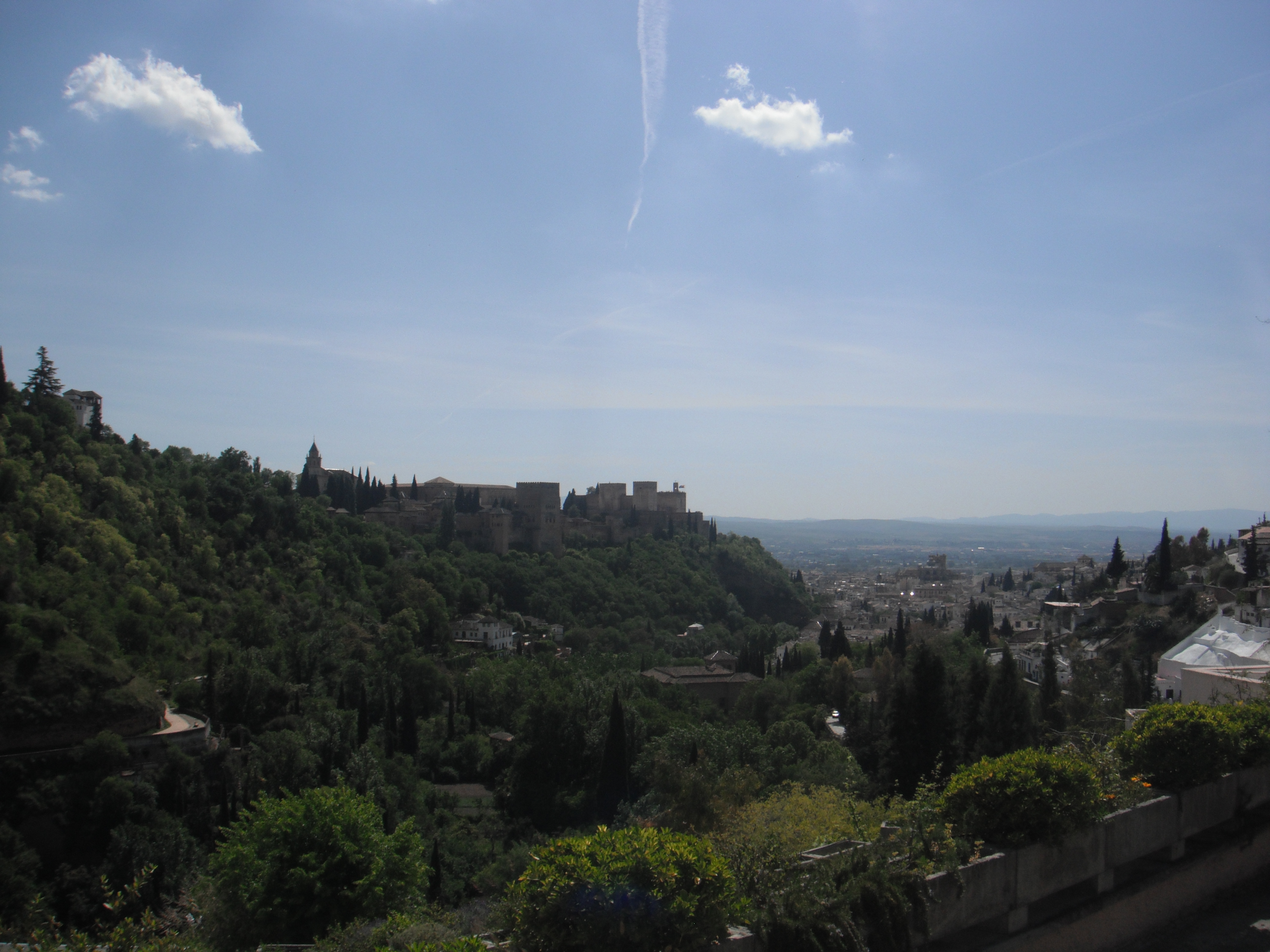
Furthermore, you could not ask for a better view of Granada than from atop the Alhambra. With the control of such a vantage point, it is no wonder that, when the Spanish began to push the Islamic rulers out during the Reconquista, this city was the last to fall.

DSCF3924 DSCF4124

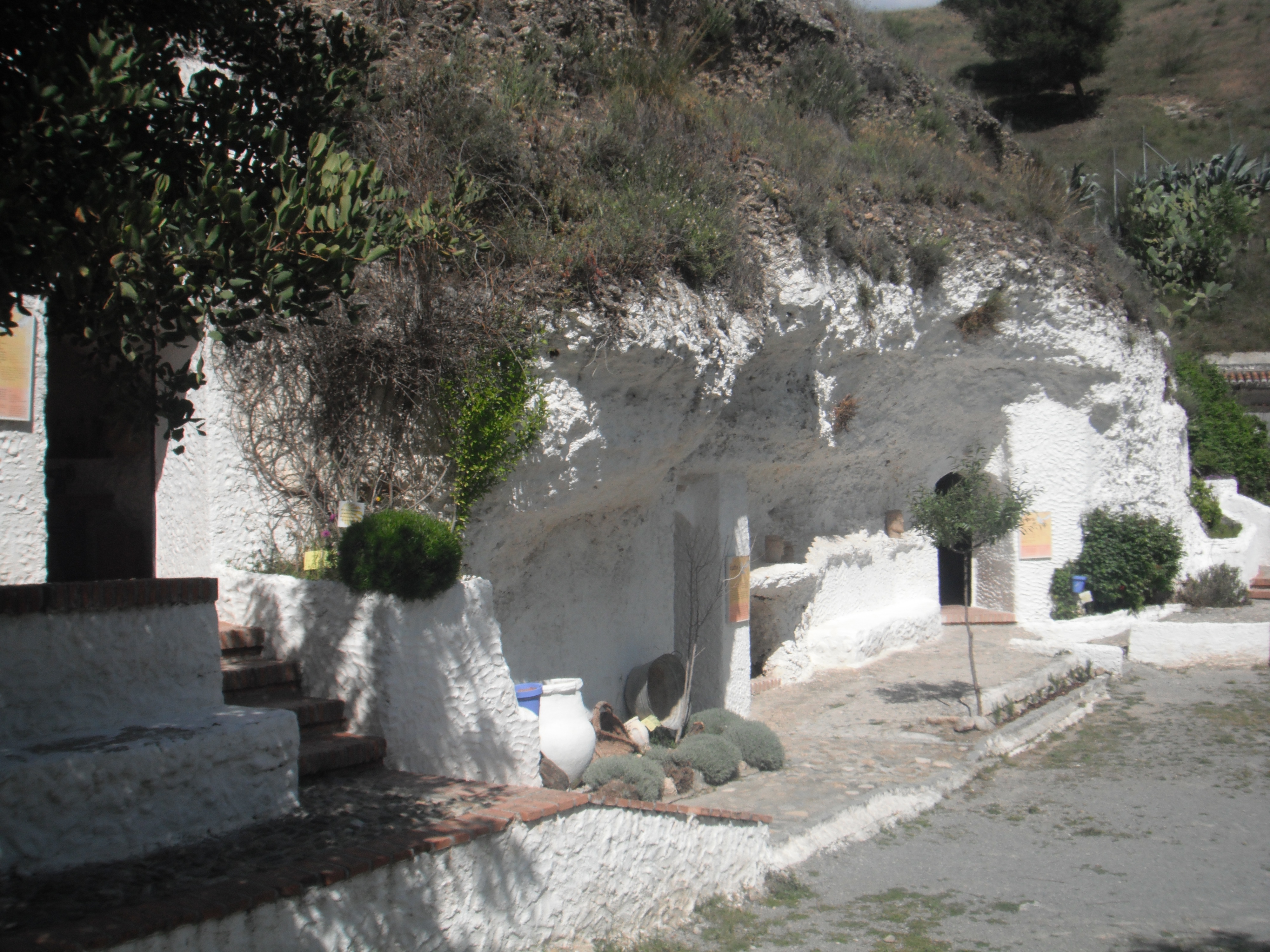
In order to obtain another beautiful view of the city and also of the Alhambra itself, we walked through the cobbled streets and up a hill to the Sacromonte district, which also happens to be the home of Granada’s Roma population (gypsies). These people suffered marginalization during much of Spain’s history, DSCF4127and were not permitted to live in the city with the Catholic citizens. Pushed out to the borders of Granada, they made ingenious use of the natural landscape—found in a semi-desert microclimate—digging caves into the hilly earth that became their homes and workshops, shielding them from the heat and costing very little to build. The Roma population continues to live in the caves in what has become a thriving neighbourhood. Many of the caves have been modernized, though some people still live in very rustic dwellings. Rob’s mum and I visited a fascinating little museum that exhibited some of the traditional caves, where we also learned that the Roma people and their music and dance traditions were key in the birth of Flamenco.
DSCF4128

Granada’s culture, architecture, landscape and delicious food left us all very happy with our time there, and I am sure we could have entertained ourselves for much longer. We said goodbye at the end of the week, Rob’s parents bound for Valencia and Barcelona and Rob and I for Sevilla. We caught the train back in the evening, with that post holiday mixture of satisfaction, wistfulness and readiness for your own routine again, which we are still in the process of building—an exciting prospect, really.

Tourist Tales

There is no better excuse to be a tourist in your own city than having visitors to show around. Not that Robin and I have been living in Sevilla long enough to have gotten over sight-seeing, but our focus has been more on establishing ourselves here and wandering the streets to get a general feel for the place, rather than seeing all the famous must-sees of the city, and we purposefully left the main tourist attractions here unvisited since we knew Rob’s parents would be coming in the spring. At any rate, we certainly have seen a lot cultural sites in the past couple of weeks.

We started out with Sevilla’s enormous cathedral – the largest cathedral in the world, in fact, and third largest church in the world (since the other two are not the seats of bishops, they are not considered cathedrals… or something like that). In typical Andalucian fashion, it was once a Muslim mosque, though most of the structure was rebuilt in the Gothic style in the fifteenth century. The Catholics had already been using the former-mosque for a couple of hundred years at that point, having gained control of Sevilla during the thirteenth century, IMG1984but they decided to reconstruct almost everything under the pretext that the building was in much  need of repair. However, they did keep the original Moorish minaret, converting it into a bell-tower—and christened La Giralda—and the courtyard of orange trees, interspersed with fountains and irrigation channels. Local legend claims that the members of the cathedral who decided to rebuild in a purely Christian style said, “Let us build a church so beautiful and so grand that those who see it finished will think us mad.”
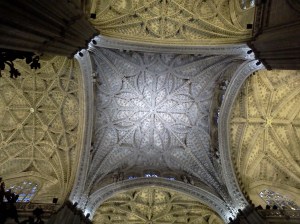
It certainly was awing to enter such a vast, echoing and ornate chamber, and the views from the top of the Giralda reached far across the city of white buildings and terracotta roofs. The cathedral also houses the remains of Christopher Columbus, although we read in Rob’s parents’ Lonely Planet that some of his bones may actually lie buried in the Dominican Republic as well, since DNA testing on the bones has revealed both burial sites as containing his remnants.

IMG1979   IMG1990

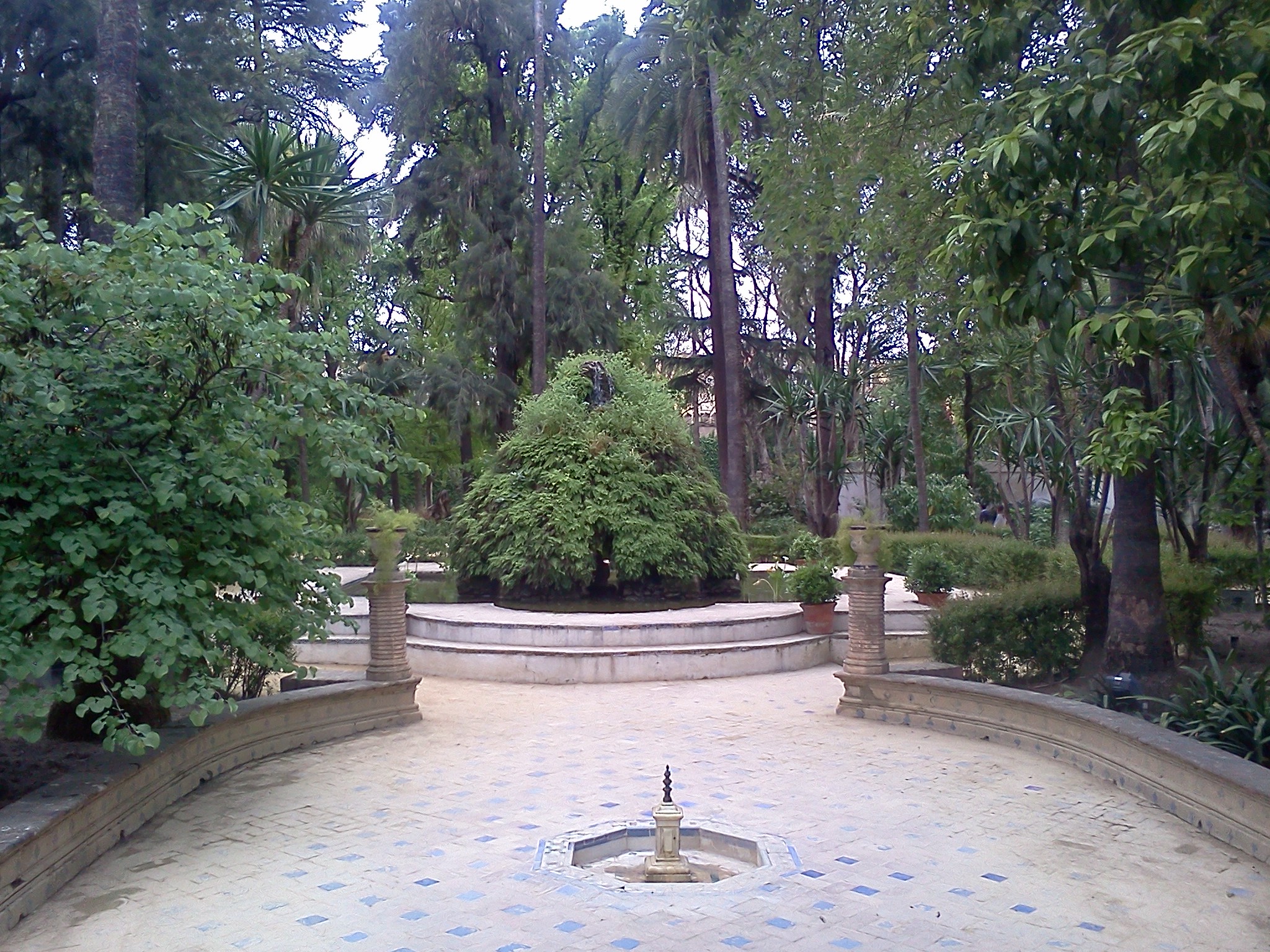
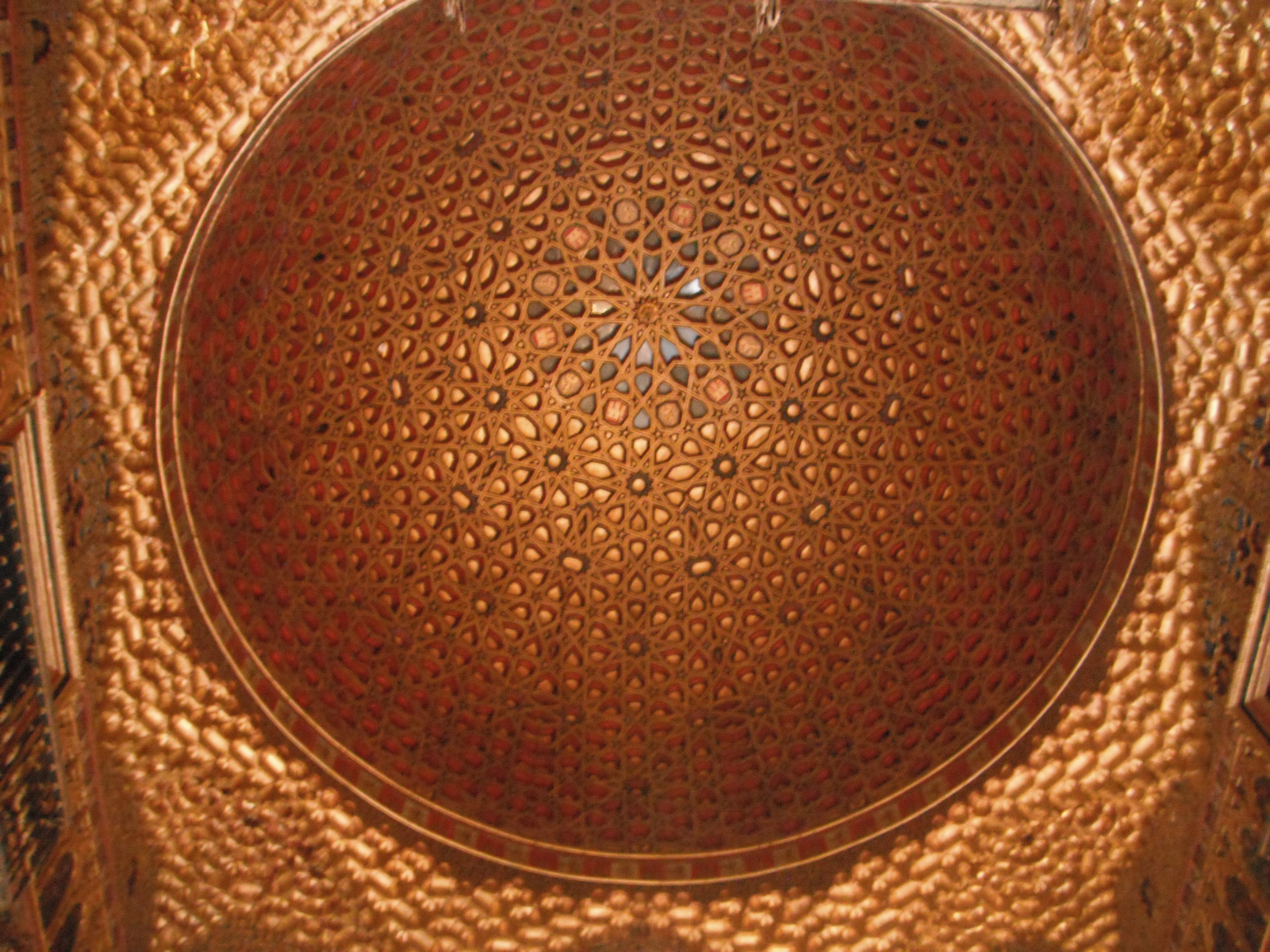
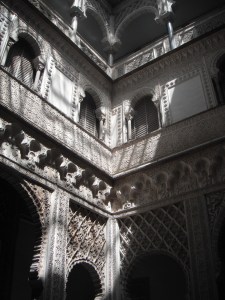
The cathedral was undoubtedly impressive; however, the palaces and gardens of the Real Alcázar of Sevilla impressed us all even more. Though the cathedral appealed to my imagination and evoked days of old with its hushed, dimly lit halls, it was the Alcázar that really conjured images of ancient kings and queens living long ago, moving through the same dazzling rooms and gardens as crowds DSCF3694of camera-clad tourists do today. The modern day Spanish royal family still uses certain floors of the Alcázar, making it Europe’s oldest royal palace still in use. The entire site lies concealed from the rest of the city by a large wall which encircles the network of palaces and gardens. They too were once a Moorish stronghold, and much of the Muslim love of geometric shapes, tile-work and water features remain. The Christians constructed another palace in the mid-1300s, and added to existing ones, so certain sections of the Alcázar are almost entirely Gothic, and the gardens are arranged in different cultural styles, ranging from traditional to modern (including a small labyrinth which I thoroughly enjoyed wandering through).DSCF3651
Rob’s mum and I enjoyed the Alcázar so much that we returned to visit it again before she left Sevilla.

IMG2043 DSCF3689

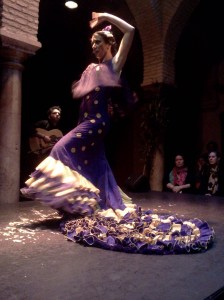
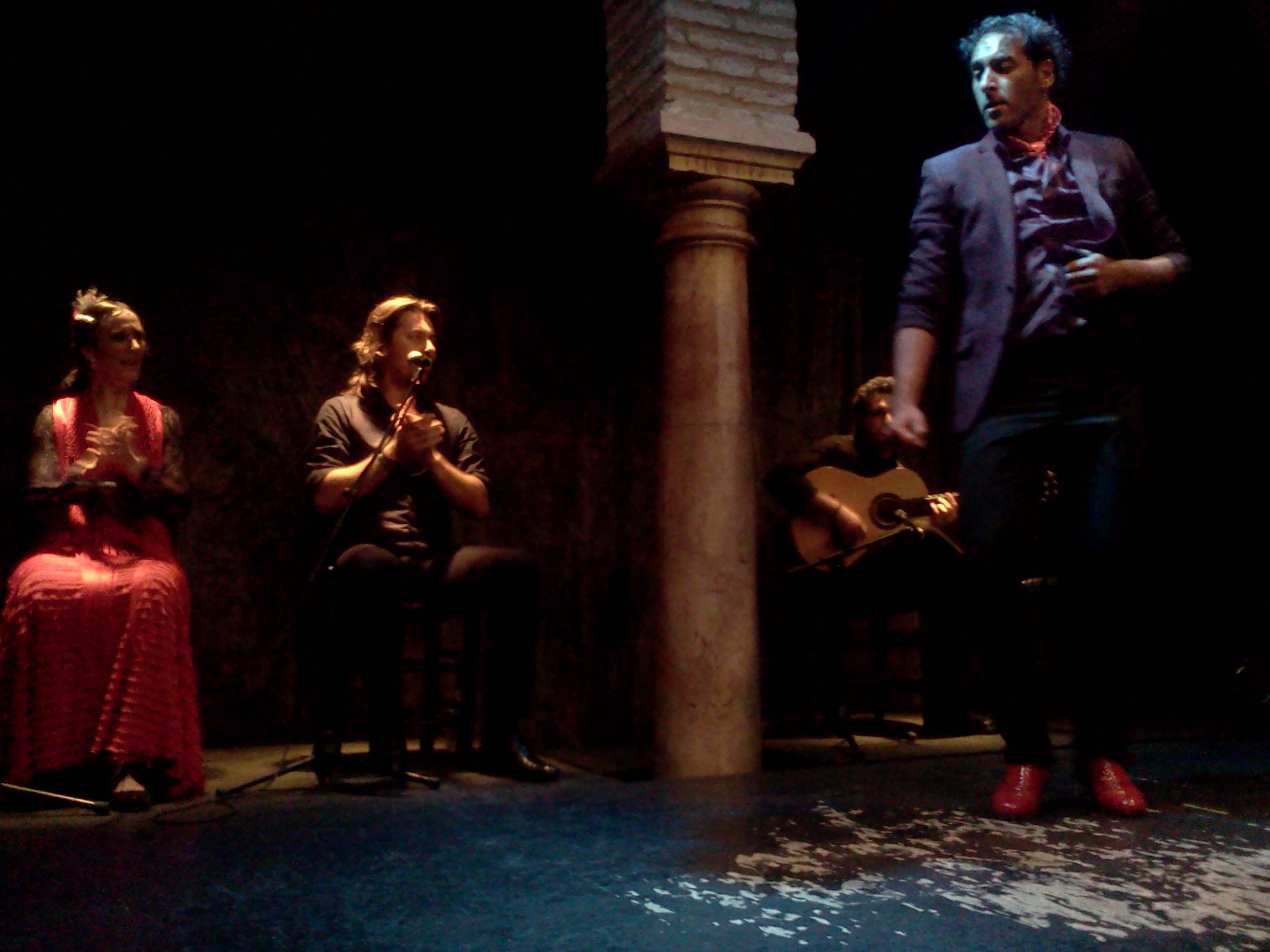
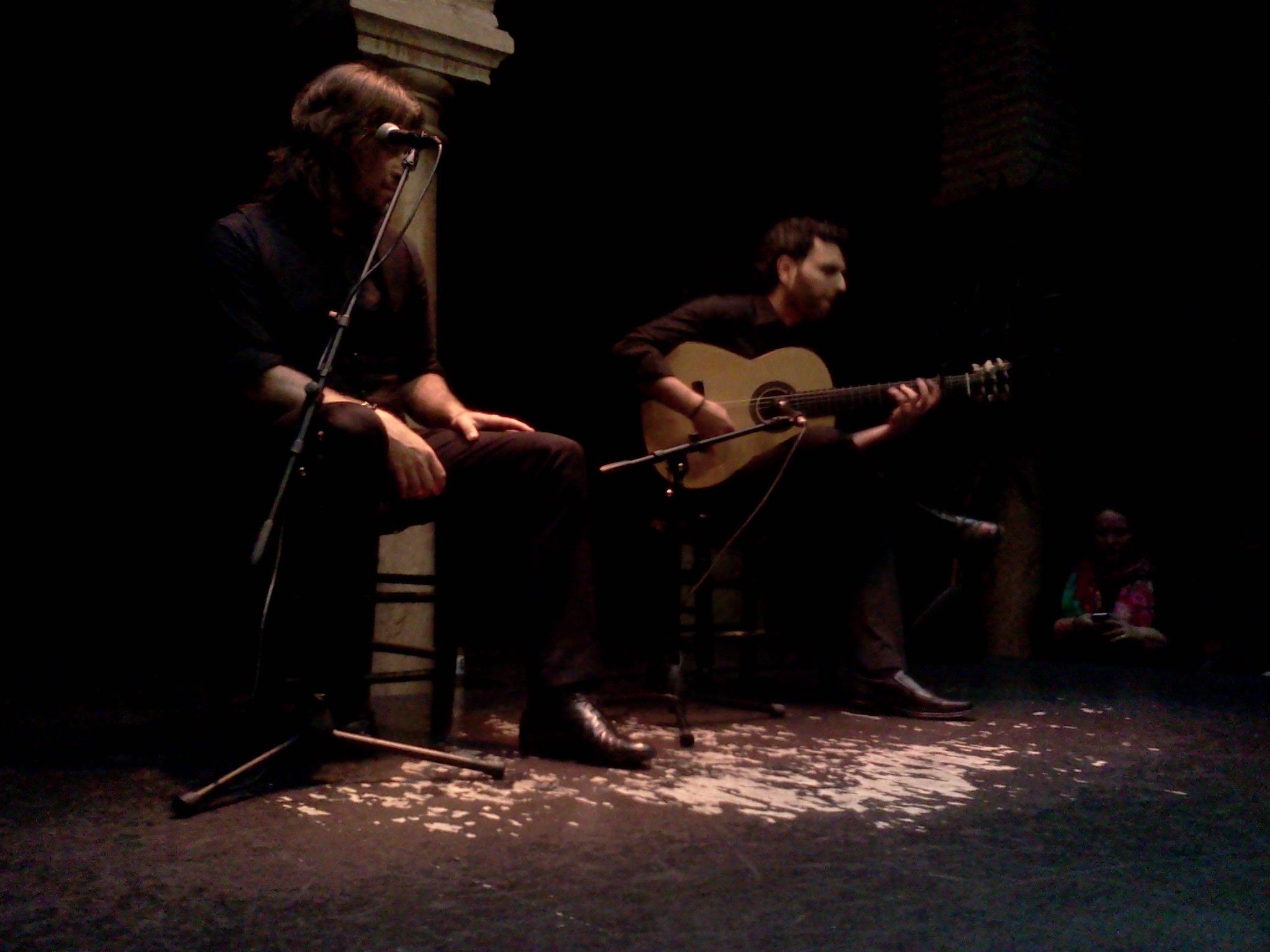
The last event that we had saved for the visit of Rob’s parents was a professional flamenco show, which we attended on their last night in Sevilla. It was incredible. The guitarist wooed the audience with soft lulls and wild rasqueos, weaving the notes together seamlessly and leading us from crescendos to a soft tickle of the IMG2064strings with amazing dexterity. The singer’s voice was rich and gritty, and his long hair and expressive face added to the atmospheric story conjured by his song. Both the female and male flamenco dancers pounded the stage, or tablao, with their high-heeled shoes and twirled, paused and clapped with such passion that you could not help but feel its effect, causing nearly overwhelming surges of emotion to bubble up in the chest at times. Its moving intensity surprised us all.
IMG2067 IMG2065

By the end of the two weeks that Rob’s mamá y papá spent in Sevilla, we all felt very satisfied with our exploration of local cultural buildings and customs, and were ready to explore Granada… a tale for next time!

Feria de Abril de Sevilla

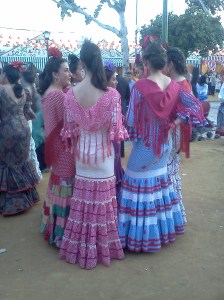
If not for all the mobile phones, it would be like stepping back in time. The place IMG2021evokes a sense of the wild west, with dusty dirt roads, horses and ladies in beautiful dresses with full ruffles at the bottom. The women also wear huge painted flowers atop their heads and tasseled shawls which shimmy in time with their hips (which are hugged tightly by myriad colours and patterns, with polka dots as a strong favourite). Men mill about in suits and ties, while others ride horses in broad brimmed hats and grey vests. Whole families ride slowly along the streets in carriages, their horses decorated with bells and pompoms.
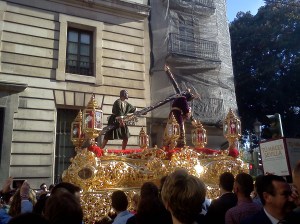
This is the Feria de Abril. Sevilla is a traditional city, and judging from my experience so far, they celebrate all the holidays with much flair and aplomb, upholding the same celebrations of their forefathers for centuries. For example, the Semana Santa (Holy Week) saw thousands of people crowded into plazas and streets to watch parades headed by Nazarenos (the eerily dressed worshippers who sport pointy hats, masks and robes, and generally remind foreigners of the Ku Klux Klan). The Nazarenos were followed IMG1927by huge floats, or pasos—carried on the shoulders of robust and devout young men—depicting figures of crying Mary and crucified Jesus, surrounded by candles, silver and gold lattice work and fresh roses. The feria, however, is not religious in nature, nor as old a tradition as Semana Santa. It began in the mid 1800s as a livestock fair, but quickly transformed into an excuse for a big party. Its purpose today seems to be dressing up in flamenco wear and heading out to a fair-ground to enjoy music, dancing, drinking, eating and general all-day, late-night, wee-hours Spanish merry-making.
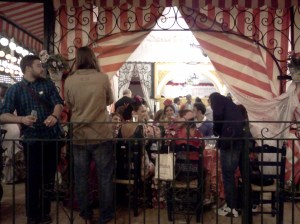
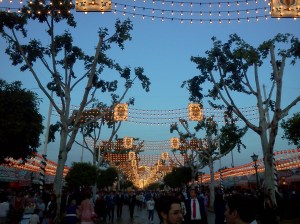
Sevilla’s feria is lined with open-ended marquee tents, called casetas, which individuals rent for the use of their family, friends and friends of friends, where they can enjoy their own personal feria party alongside hundreds of other individual celebrations. The casetas are equipped with tables, dance floor, bar and kitchen (I am not sure if they hire their own kitchen staff or if that comes with the rental of the caseta). There are also a few larger tents open to the public, one to represent each neighbourhood of Sevilla. However, these tents are “not as good” asIMG2017 the private ones, according to Sevillanos, and some consider it not worth going if you have no invitation into someone’s personal caseta. Having been warned of this, I was not sure what to expect going to the feria. I was happy to discover a scene that felt like an enormous game of dress-up, and even had I not known someone (who knew someone who knew someone) with a caseta, it would have been well worth it to walk the dirt roads, admire the beautiful dresses, watch the carriages pass and listen to the horses clip-clop by.

As it turned out, we were fortunately invited into a few casetas thanks to friends from school and language exchanges, and we celebrated by staying out until 2am or so—a moderate departure time by Spanish standards (the brightly lit streets were still pulsing with music and festivities when we left). IMG2027 IMG2024

The feria runs for a week straight and children get two days off school in its honour. Many people attend the grounds every afternoon or evening, and stay until late. Sevillanos are not the only ones who take the Feria de Abril very seriously, and many people from out of town also come to rent their own casetas and partake in the city’s famous celebration. Not that their own hometowns would not have a version of the feria, but the festivals of other towns and cities are not as big and traditional as that of Sevilla (for example, in some towns the women only dress up on one day instead of all week long—not nearly enough fun). There is also a large area with rides and attractions beside the rows of casetas if you want a break from eating and drinking in exchange for a spike in adrenaline or some carnival games.IMG2022

The more time I spend in Spain, the greater the sense I have that these people really know how to celebrate. They love food, drink, dancing, music and good company, and that love results in true feasts of the senses, such as that of the Feria de Abril de Sevilla.

Fruitful Patience

Sitting down to reflect on the past week, thoughts and images parade through my mind at a languid pace, out of order, drifting here and there. The day is hot and my fingers feel lazy now that I have put them to work at the keyboard. What can be said about this past week?

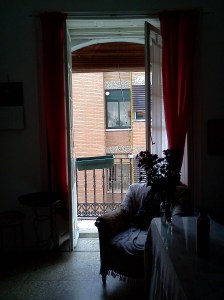
Well, we have at last moved into our own flat. IMG1976I have unpacked everything, found places for things,  hung our Sunshine Coast calendar on the wall, and begun to settle in and stretch out like a cat in its favourite box. There is a desk to write at, space to practice yoga, and two balconies with wrought iron railings to lean out over and watch the scurrying day unravel below. We can reach the Spanish school in a five minute walk, the river flows wide and deep a block or so away, and this old apartment—with high ceilings, a quirky mix of furniture, sloping floors—is large enough to give private lessons or small group classes in English and yoga. The plan for finding work is developing. We have ventured deeper into the country, seen the coast, explored another city. We have made a few friends, both Spanish and foreign. The days grow longer and the sun shines hot in the afternoons and the breeze rocks the open windows gently back and forth. Things are coming together.

Sound echoes around the Casco Antiguo—the central area of Sevilla, all old buildings—as though conversations could take place in midair, right outside a balcony two storeys up. If this balcony leads to your bedroom, and you are sound asleep, you might curse the narrow lanes and their excellent acoustics. But when some flutist in the opposite building is practicing with an open window on a sunny afternoon, or the night is warm and laughter drifts up from below, it feels like a privilege.

Finding myself here alone for a few days, I have found the sounds a friendly companion. Robin is in Madrid meeting his parents, who have come to visit all the way from Australia; the three of them are spending several nights in the capital before they make their way to Sevilla. I am looking forward to their arrival, and in the meantime I have been enjoying the time to myself—the first I have had in many months. Living in this old apartment, I like to imagine myself as Amelie from the lovely French movie, making dinner for one, enjoying the simple pleasures of watching people from my creaky old window in an old European city, IMG-20150411-WA0011cracking the tops of crème brulée and things like that—not that I have had any crème brulée, but I have enjoyed other sensual food moments like slicing up strawberries and bananas and eating them with honey, or cooking myself a mushroom risotto with a glass of a wine and music. Moments like those make me feel independent and chic, but also a bit like a kid who has finally been deemed old enough to be left home alone. Either way, a bit of solo dancing round the kitchen lends itself to making the most of a night by yourself.

Late at night, the silence settles in. Sometimes it settles softly and serenely, while at other times with a lonely hue, like a cool night through a thin sweater. But these ebbs and flows are part of the natural order of things—our very breath moves in and out with the same organic cycle, and I am doing my best to embrace such movement in my daily life as well. Certainly one half of that equation is easier than the other but with a bit of patience we generally do come out on the other side—just as my fingers have thankfully managed to rouse themselves after all.